Rough in plumbing cost is one of the first numbers homeowners, builders, and contractors need to understand when planning a new house. For a typical new construction home in the U.S., plumbing rough in costs can vary considerably depending on the home’s size, number of bathrooms and fixtures, pipe materials, layout, local labor rates, and site conditions. Current 2026 cost guides put whole-house new-construction plumbing around $4 to $8 per square foot as a broad planning range, while a typical two-bathroom new home can have rough in costs in the neighborhood of $6,000 to $12,000, depending on the fixture count and project complexity.
That does not mean every 2,000-square-foot house will cost the same. A compact home with two bathrooms positioned close to the main plumbing stack can be much easier to plumb than a larger house with three or four bathrooms, a laundry room, outdoor plumbing, a kitchen island sink, and long drainage runs. This is why using square footage alone can give you a rough starting point but not a dependable construction budget. If you are preparing a bid or trying to control the cost before construction begins, a fixture-by-fixture takeoff and detailed estimate can provide a much clearer picture.
What Is Rough In Plumbing?
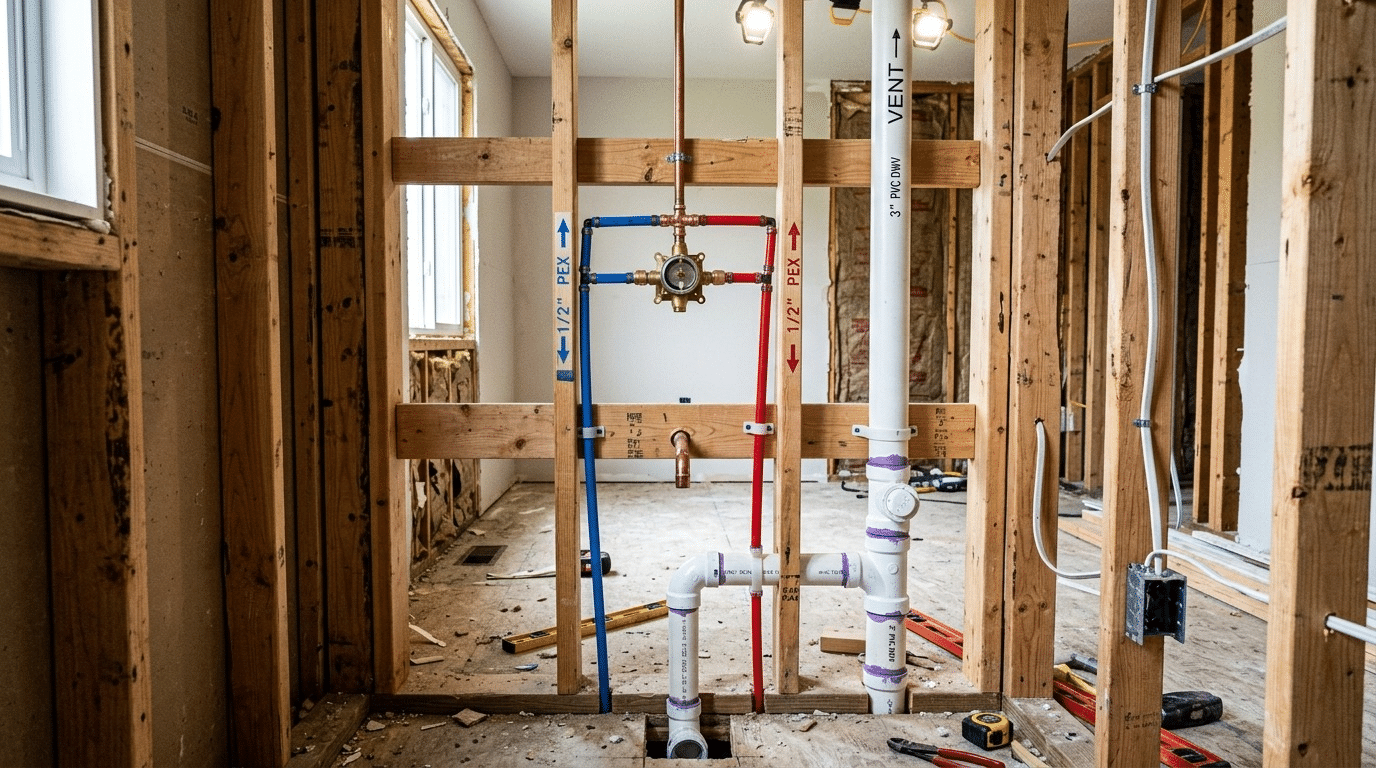
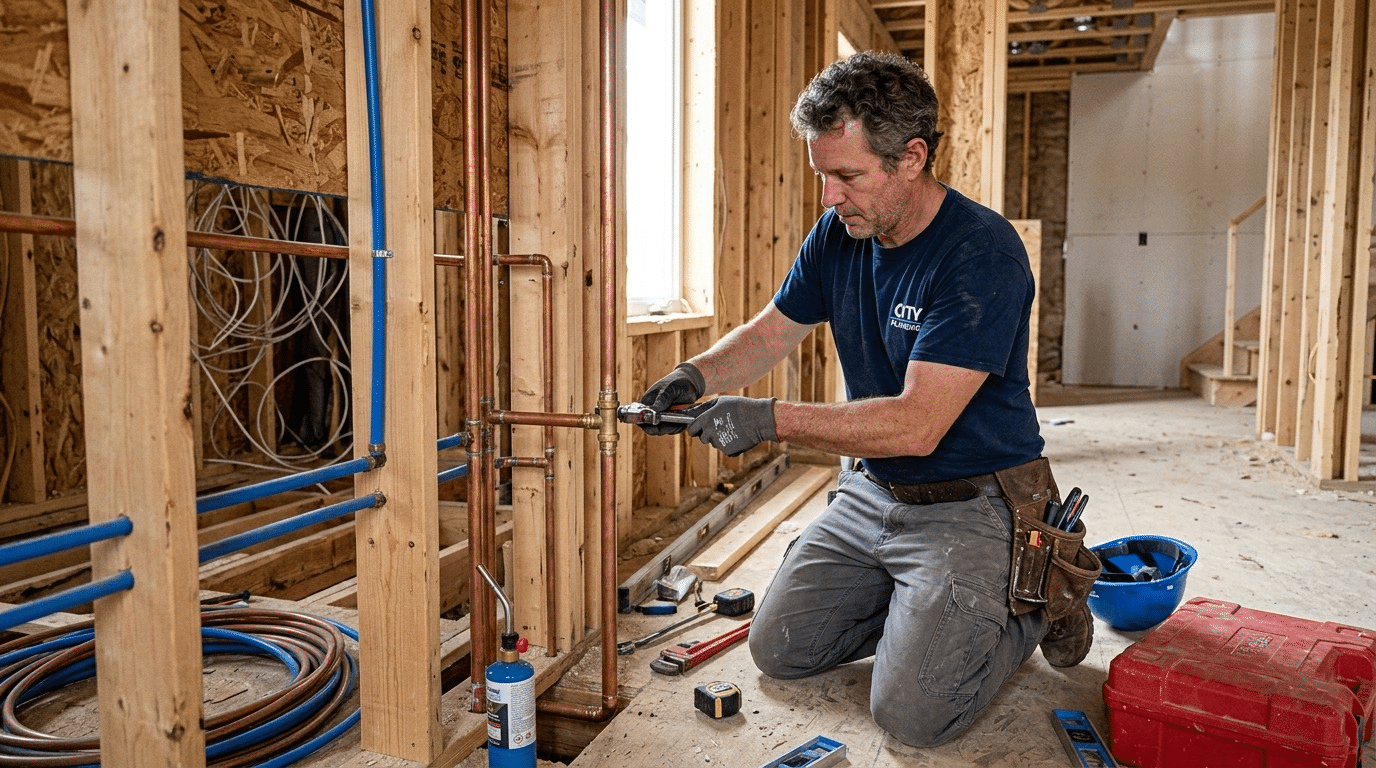
Rough in plumbing is the stage when the main plumbing infrastructure is installed before walls and ceilings are closed. It generally includes hot and cold water supply lines, drain-waste-vent piping, fixture connection points, and other concealed plumbing required for the home’s final system. The plumber is essentially building the hidden network that will later connect toilets, sinks, showers, tubs, appliances, and other fixtures.
Think of rough in plumbing as the road system underneath a city. You may not see most of the roads once the buildings are complete, but every destination still needs a reliable route. The same idea applies to a house: the finished sink or toilet may be visible, but the pipes behind the walls and beneath the floors determine how water gets there and how wastewater leaves. Because the work is performed while construction areas are accessible, new construction generally provides better access than a renovation where finished walls, floors, or concrete may have to be opened.
What Is the Average Rough In Plumbing Cost for a New House?
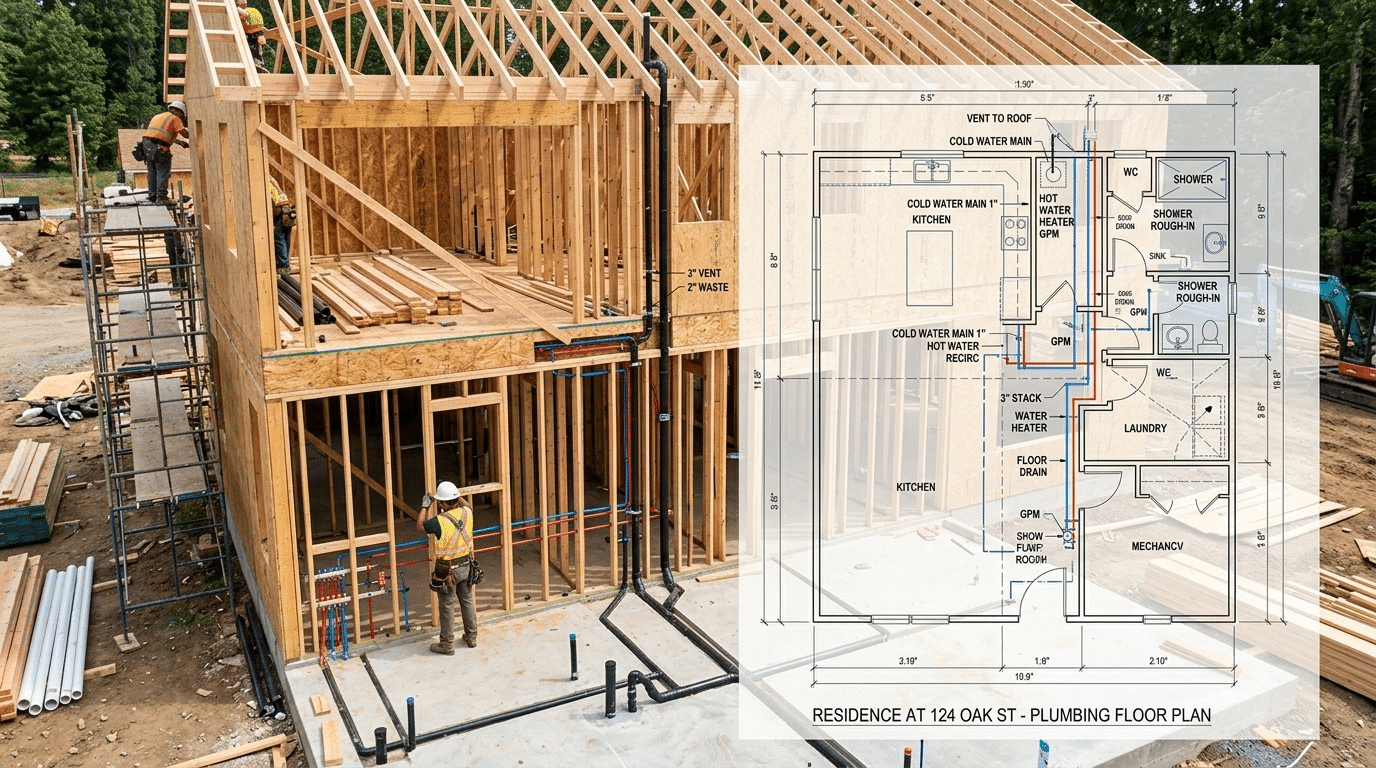
For a preliminary U.S. budget, a new construction plumbing allowance of approximately $4 to $8 per square foot is a commonly cited planning range. Using that range, a 1,000-square-foot house could have a broad plumbing budget of around $4,000 to $8,000, while a 2,000-square-foot home could fall around $8,000 to $16,000 for a broader new-construction plumbing scope. These figures should be treated as planning numbers rather than a contractor quote because the actual project can move substantially above or below them.
Rough in plumbing is also better evaluated by the number and type of fixtures. A recent 2026 estimator places new-construction rough in work around $500 to $1,000 per fixture at the lower end for typical new construction, while more complicated conditions can increase the cost considerably. Angi’s current 2026 bathroom data also shows how widely individual fixture rough-ins can vary, with examples ranging from roughly 230–480 for a faucet to 1,500–3,500 for a shower rough-in.
| New House Size | Broad Plumbing Planning Range at 4–8/Sq. Ft. |
| 1,000 sq. ft. | 4,000–8,000 |
| 1,500 sq. ft. | 6,000–12,000 |
| 2,000 sq. ft. | 8,000–16,000 |
| 2,500 sq. ft. | 10,000–20,000 |
| 3,000 sq. ft. | 12,000–24,000 |
These numbers are useful for an initial budget, but they should not be used as a substitute for a project-specific estimate. A 1,500-square-foot house with three bathrooms could require more plumbing work than a 2,000-square-foot house with one or two bathrooms. The fixture count, distances between fixtures, drainage layout, pipe selection, foundation type, and local labor market can all change the final number.
Rough In Plumbing Cost Per Fixture
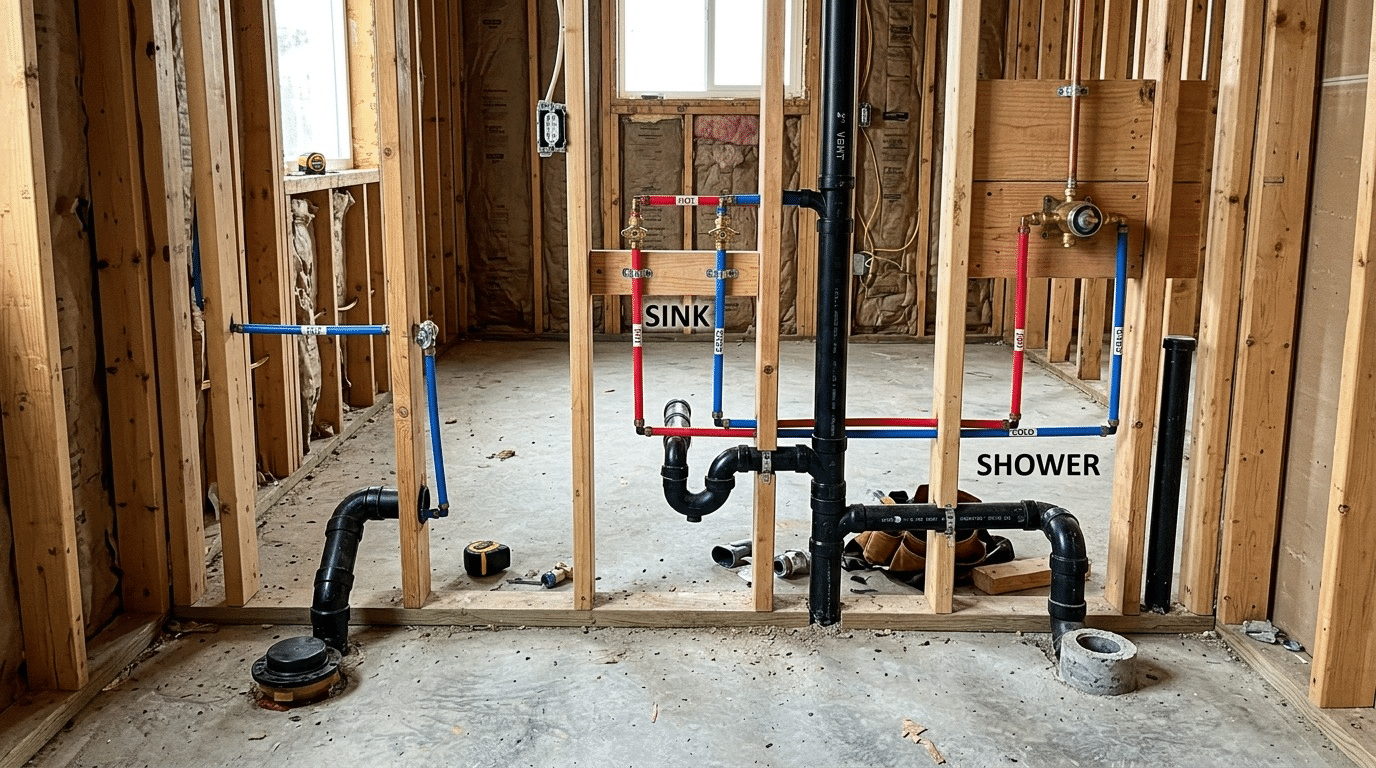
One of the more practical ways to estimate plumbing is to look at the fixtures rather than relying entirely on square footage. Each fixture has different requirements for supply lines, drainage, venting, fittings, valves, and labor. A shower, for example, can require considerably more work than a simple faucet because the plumber may need to account for multiple water connections, a drain, valve placement, and additional piping.
Current 2026 data shows substantial variation between fixture types. Angi lists rough in ranges of approximately 230–480 for a faucet, 350–3,500 for a toilet, 300–5,500 for a sink, 500–2,750 for a bathtub, and 1,500–3,500 for a shower. The wide ranges exist because the exact scope, fixture configuration, accessibility, materials, and local pricing can change the job considerably.
| Fixture | Example 2026 Rough In Range |
| Faucet | 230–480 |
| Double faucet | 400–600 |
| Toilet | 350–3,500 |
| Sink | 300–5,500 |
| Bathtub | 500–2,750 |
| Shower | 1,500–3,500 |
These figures are best viewed as reference points rather than fixed prices. For estimating purposes, contractors should identify the actual fixture schedule, quantities, piping requirements, and project conditions before assigning a final cost.
How Much Does It Cost to Plumb a House?
The cost to plumb a house depends on whether you are talking about rough in plumbing only or the complete plumbing installation. Rough in work represents the concealed infrastructure, while the finished plumbing stage can include setting fixtures, connecting appliances, installing visible valves and trim, testing the system, and completing final connections.
For a new home, the total plumbing scope can therefore be much broader than the rough in number shown in a basic calculator. A house with multiple bathrooms, a kitchen, laundry room, water heater, exterior hose bibs, utility connections, and specialized fixtures requires more material and labor than a simple home with fewer plumbing points. This is one reason professional estimating should start from the plans and fixture schedule instead of simply multiplying square footage by a generic number.
Plumbing Cost for a 1000 Sq Ft House
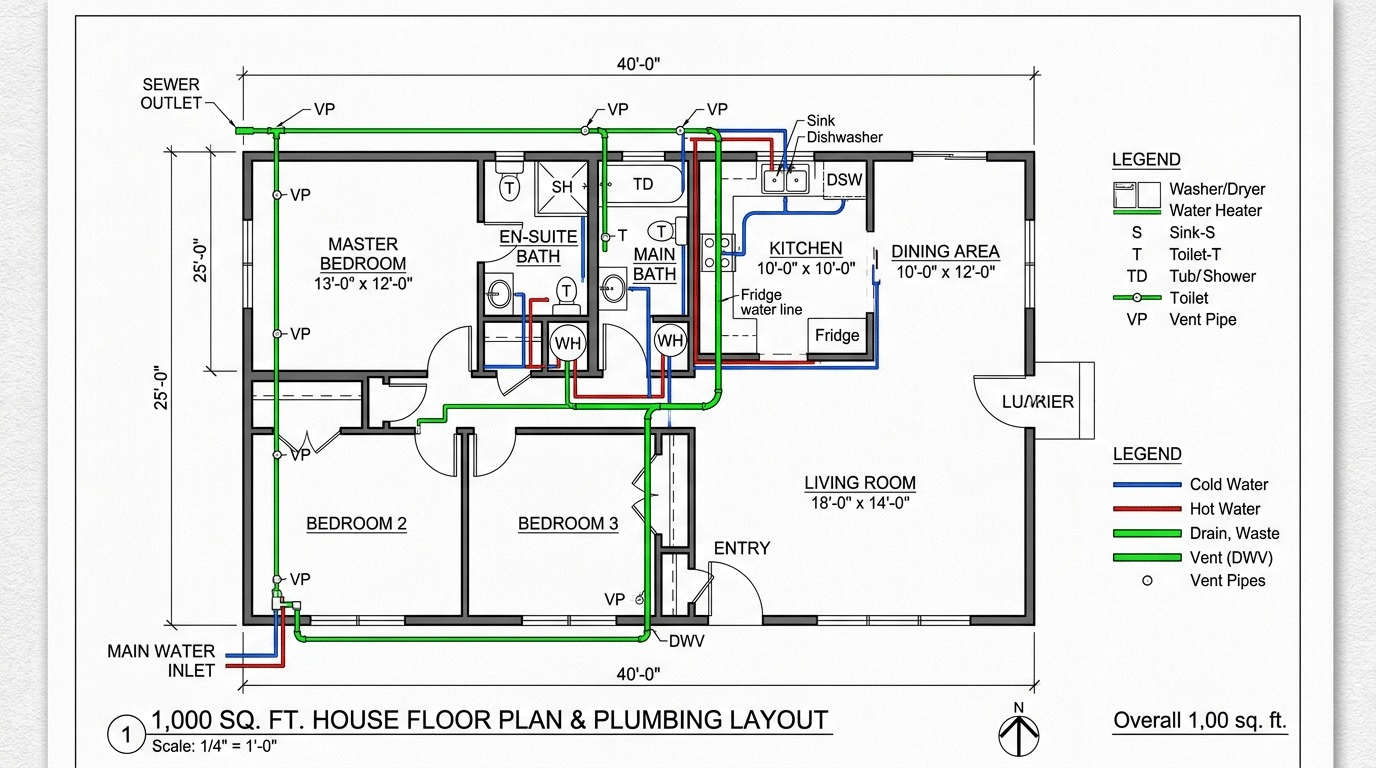
If you are searching for the plumbing cost for a 1000 sq ft house, a 4–8 per-square-foot planning range produces an initial allowance of approximately $4,000 to $8,000. That range can be useful when creating an early construction budget, but it should not be treated as a guaranteed price. A 1,000-square-foot home can have a surprisingly complex plumbing system if the design contains several bathrooms or fixtures.
For example, imagine two homes with exactly the same floor area. House A has one bathroom, one kitchen, and a laundry area with short pipe runs. House B has two bathrooms, a kitchen island, laundry room, exterior hose connections, and fixtures spread across different sides of the structure. Their plumbing requirements are clearly different even though the square footage is identical. That is why a rough in plumbing cost per fixture approach can complement a square-foot calculation and produce a more realistic preliminary estimate.
What Factors Affect Rough In Plumbing Cost?
Several factors can push the price of rough in plumbing up or down. The first is the number of fixtures because each fixture adds connections, piping, fittings, drainage, and labor. The second is the distance between fixtures and the main plumbing lines. Long supply and drainage runs require more materials and labor, while complicated layouts can also make installation slower.
The foundation and site conditions matter as well. Slab construction can make certain plumbing changes more labor-intensive because drainage lines may need to be installed below or through concrete. The pipe material also affects material pricing and installation requirements. Local labor rates, permit fees, inspection requirements, accessibility, the number of floors, and the location of the main sewer connection can all influence the final estimate. Current 2026 guidance also identifies home size, bathroom layout, piping material, fixture count, and labor as important cost drivers.
New Construction Plumbing Cost Per Square Foot vs. Per Fixture
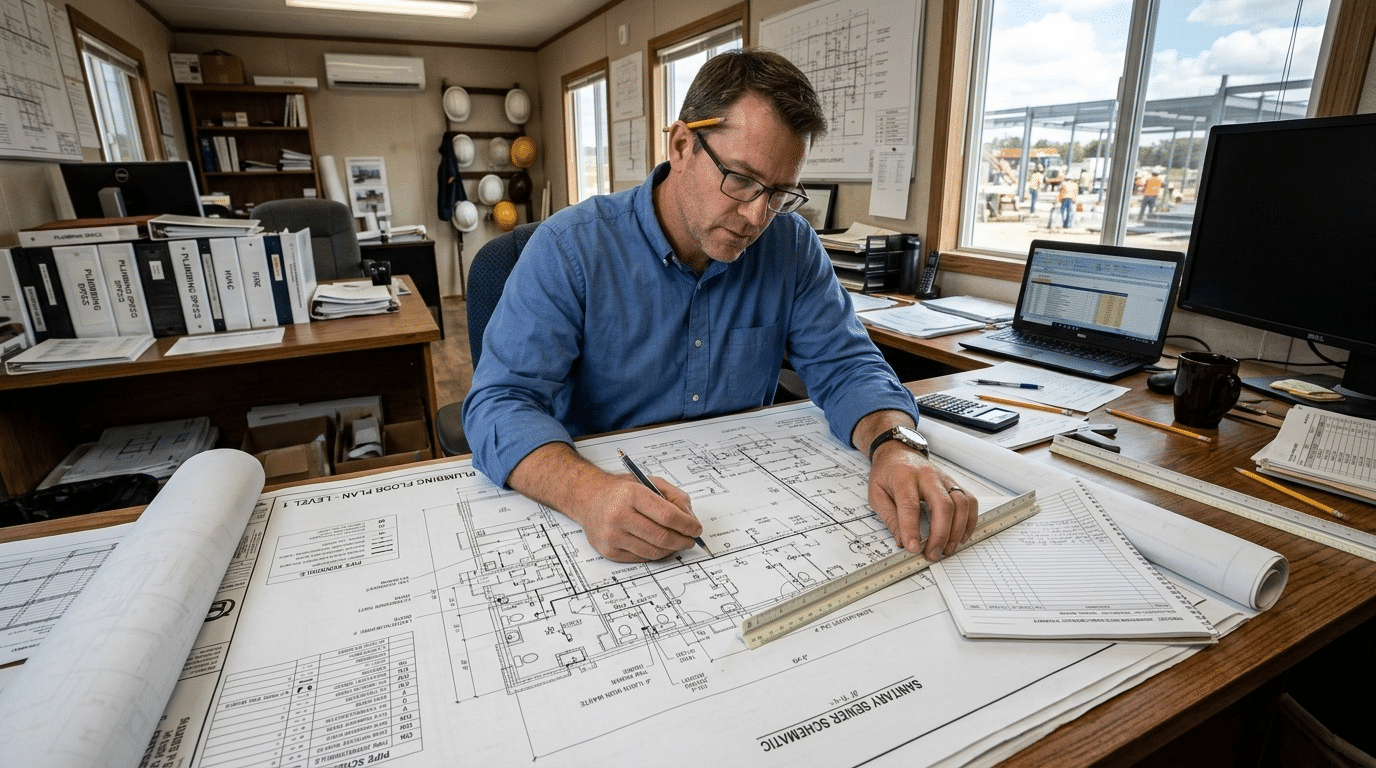
There is no single calculation method that works perfectly for every house. New construction plumbing cost per square foot is convenient during the early budgeting stage because the floor area is usually known before every plumbing detail has been finalized. It gives builders a quick way to establish a preliminary allowance.
A fixture-based estimate becomes more useful as the plans become more detailed. Instead of asking only how many square feet the house contains, the estimator can ask how many toilets, sinks, showers, tubs, kitchen fixtures, laundry connections, hose bibs, and other plumbing points are included. Combining both approaches is often more useful than relying exclusively on one. Square footage helps establish the overall scale, while the fixture count and plumbing layout explain where the money is actually going.
How to Calculate Rough In Plumbing Cost
A basic preliminary calculation can start with the home’s square footage and then be adjusted based on the fixture schedule and project complexity. For example, a 2,000-square-foot home using a 4–8 planning allowance produces a starting range of 8,000–16,000. The estimator can then review the plans to determine whether the house has an unusually high fixture count, long pipe runs, multiple floors, difficult foundation conditions, or other requirements that justify adjusting the allowance.
A more detailed rough in plumbing cost per fixture calculator can be structured around fixture quantities, fixture complexity, labor rates, piping materials, estimated linear footage, and additional site conditions. That approach is much closer to how a construction estimate should be developed because it connects the cost to the actual scope of work. A professional estimator can then organize the result into labor, materials, equipment, subcontractor costs, allowances, and other relevant line items rather than relying on one broad number.
Rough In Plumbing vs. Cost to Replace Plumbing
The cost to replace plumbing is not the same as the cost of roughing in plumbing for a new house. New construction typically gives the plumber open access before drywall and finished surfaces are installed. Replacing plumbing in an existing home can involve demolition, opening walls or floors, removing old pipes, repairing surfaces, and working around existing structures.
That difference can be significant. A new home allows the plumbing system to be planned from the beginning, whereas a replacement project may require the installer to work around an existing layout. If pipes are located beneath concrete or behind finished walls, access itself can become a major part of the project. This is why an old-house pipe replacement estimate should never be copied directly from a new-construction rough in price.
How Much Does It Cost to Plumb a Bathroom?
The cost to plumb a bathroom depends heavily on whether it is part of new construction, a remodel, or a completely new bathroom addition. Current 2026 sources put bathroom rough in costs into a wide range, with Angi reporting approximately $3,000 to $20,000 per bathroom depending on piping material, fixture count, layout, and labor, and a national average around $6,500.
A simple three-fixture bathroom with the toilet, sink, and shower located near existing plumbing can be much easier to estimate than a bathroom located far from the main stack. A bathroom addition can also require additional drainage, venting, excavation, or other work depending on the structure. The important point is that the phrase “one bathroom” does not describe enough information to produce an accurate construction estimate.
Electrical and Plumbing Cost for a New House
Homeowners sometimes ask about the electrical and plumbing cost for a new house together because both systems need to be coordinated before walls are closed. Although they are separate trades, their work can overlap in areas such as mechanical rooms, kitchens, bathrooms, ceilings, and utility spaces. Poor coordination can lead to conflicts between plumbing lines, electrical conduits, structural members, and HVAC systems.
For this reason, construction estimating should consider the plans as a complete system rather than treating every trade as an isolated number. Plumbing takeoffs should identify the required piping, fittings, fixtures, valves, and related components, while electrical estimating should address its own material and labor scope. When both are properly quantified, the builder has a clearer picture of the project’s overall budget before construction moves too far forward.
How 1st Estimator Can Help With Rough In Plumbing Estimates
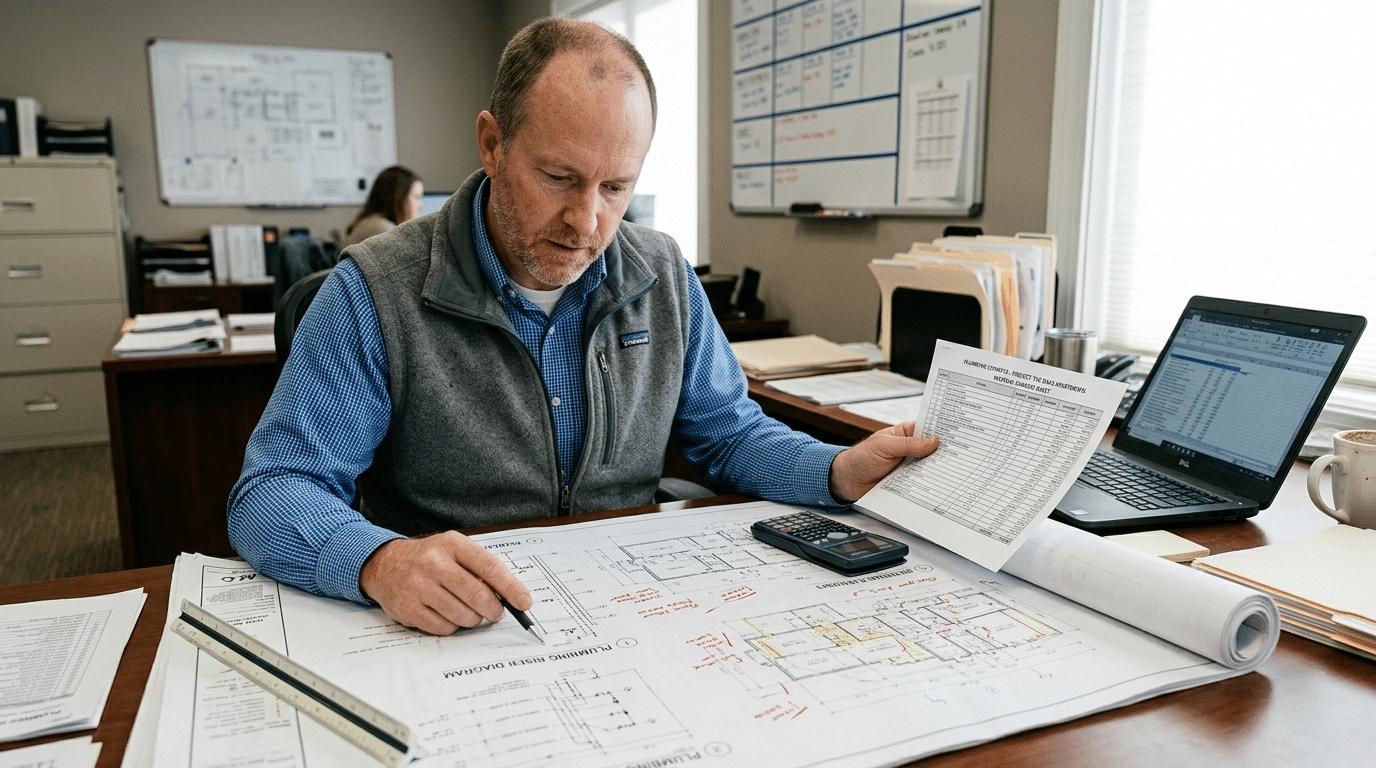
If you need more than a rough online price range, 1st Estimator can help turn construction drawings and project information into a more detailed estimating package. Instead of relying only on a generic square-foot allowance, a professional estimate can review the plumbing scope, fixture quantities, materials, and other project details to create a clearer cost picture.
This can be particularly useful for contractors preparing bids. When a project involves multiple bathrooms, commercial-style plumbing requirements, unusual layouts, or a large number of fixtures, small quantity errors can add up quickly. A detailed estimate gives the contractor a stronger basis for reviewing material quantities, labor assumptions, and the overall plumbing budget before submitting a price.
For contractors who regularly bid new construction, the goal is not simply to find a number that “sounds right.” The goal is to understand where that number comes from. That is where professional construction estimating can make the process easier to review and adjust.
How to Keep Your Rough In Plumbing Budget Under Control
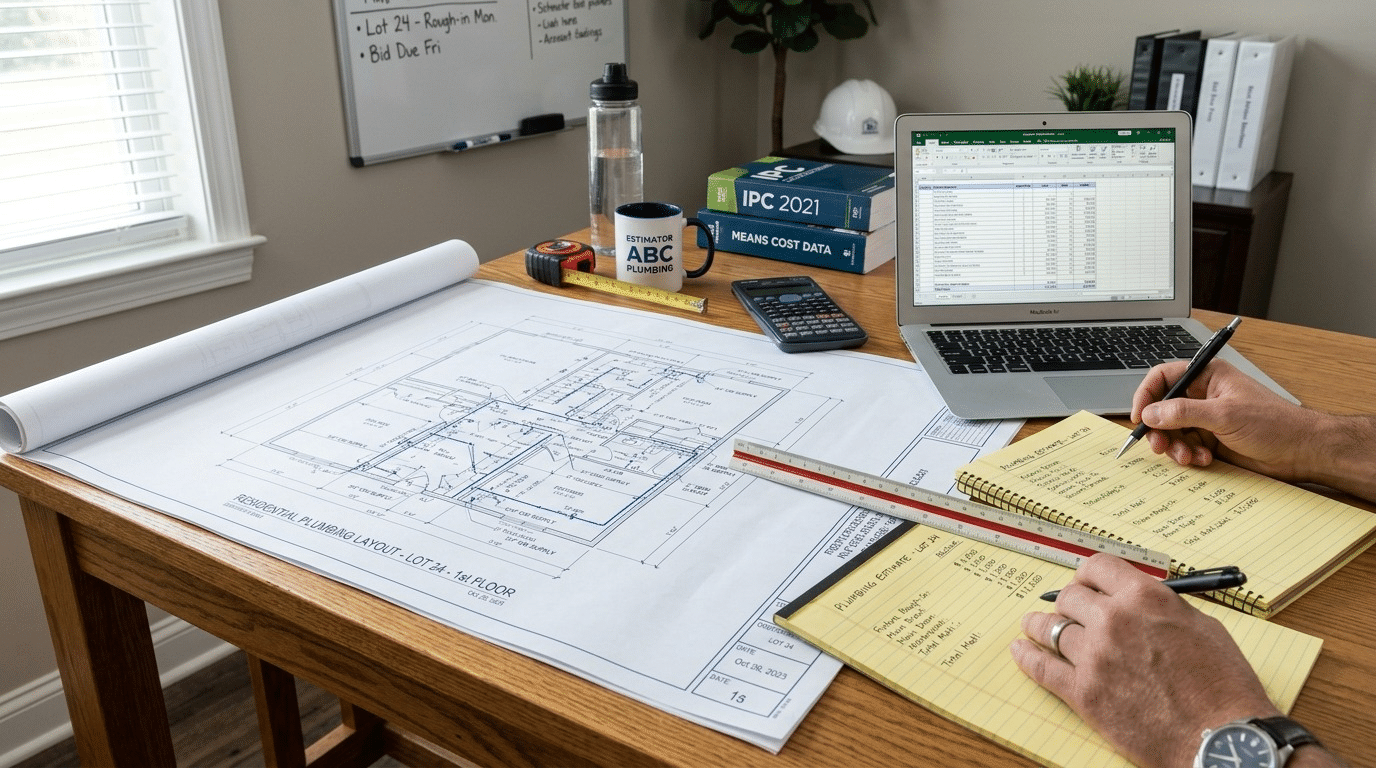
The easiest time to control plumbing costs is before installation begins. Finalizing the fixture layout early can prevent expensive changes later, while coordinating plumbing drawings with architectural and structural plans can reduce conflicts during construction. Keeping bathrooms reasonably close to plumbing stacks can also reduce unnecessary pipe runs, although the best layout will always depend on the specific building design.
It also helps to separate rough in costs from finish plumbing costs when reviewing a budget. That way, you can see whether an increase is coming from concealed piping, labor, fixtures, or finish selections. If a contractor provides only one lump-sum number, asking for a clearer scope breakdown can make it much easier to compare proposals and identify missing items.
Conclusion
The average rough in plumbing cost for a new house cannot be reduced to one universal number. As a 2026 starting point, a broad new-construction plumbing allowance of about 4–8 per square foot can provide an early budgeting range, while fixture-based estimating can provide greater detail as the plans develop. A 1,000-square-foot house might therefore start around 4,000–8,000 using that broad planning range, while a 2,000-square-foot home might start around 8,000–16,000.
The final cost depends on the actual plumbing design, fixture count, pipe materials, labor rates, foundation, pipe distances, permits, and site conditions. If you are preparing a serious construction budget or bidding a project, don’t rely on square footage alone. A detailed quantity takeoff and professional estimate can give you a much clearer understanding of the actual scope before you commit to a number.
FAQs
1. What is the average rough in plumbing cost for a new house?
A broad 2026 planning range for new-construction plumbing is approximately 4–8 per square foot, although the actual rough in cost depends on the number of fixtures, plumbing layout, materials, labor, and site conditions.
2. How much does rough in plumbing cost per fixture?
There is no single fixed price per fixture because toilets, sinks, showers, tubs, and other plumbing points require different amounts of labor and material. Current 2026 estimates show individual fixture rough in prices can range from a few hundred dollars to several thousand dollars depending on the fixture and project conditions.
3. How much does it cost to plumb a 1,000 sq ft house?
Using a broad 4–8 per-square-foot planning range, a 1,000-square-foot new home could have an initial plumbing allowance of approximately 4,000–8,000. The actual price should be adjusted according to the fixture count and plumbing plans.
4. Is rough in plumbing cheaper in new construction?
It can be because plumbers have easier access to open walls, floors, and framing before the building is finished. Renovation and pipe replacement projects can require demolition and repairs to finished surfaces, which can add labor and material costs.
5. How can I get a more accurate rough in plumbing estimate?
The most reliable approach is to estimate from the construction drawings, fixture schedule, plumbing quantities, materials, labor requirements, and project conditions. A professional construction estimating company such as 1st Estimator can help contractors develop a more detailed estimate instead of relying solely on a generic cost-per-square-foot figure.