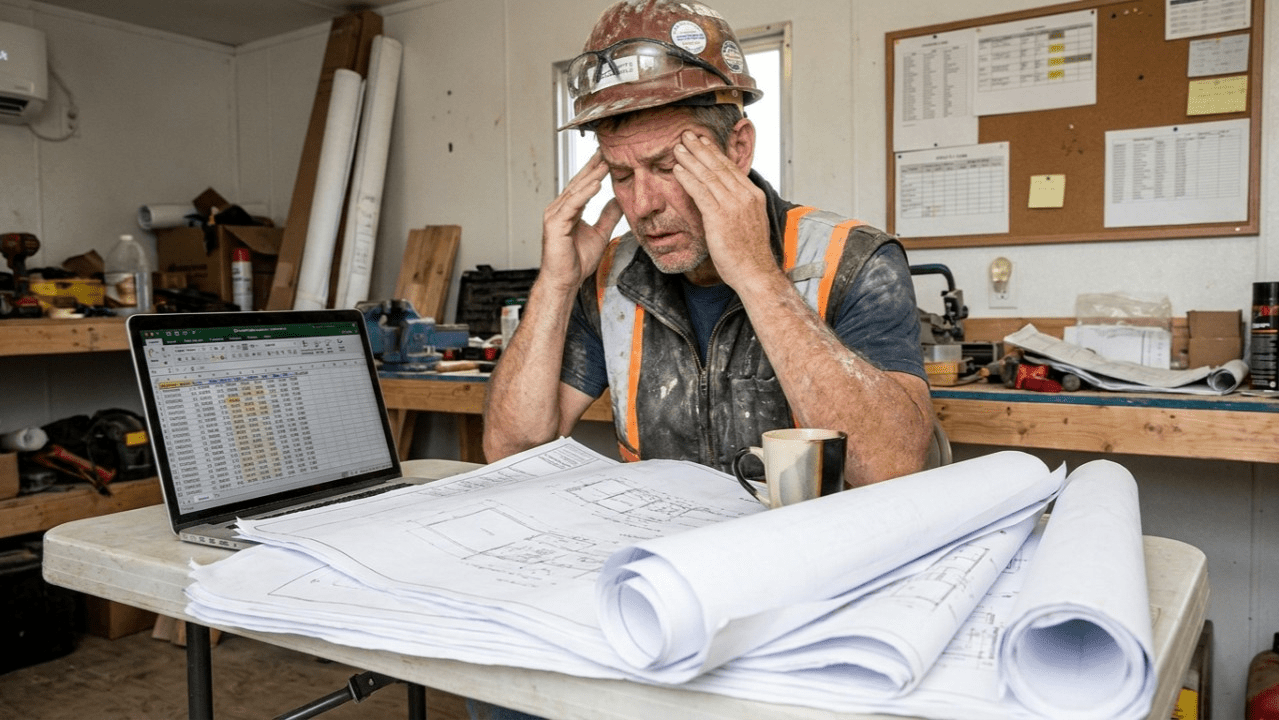
If you’ve ever submitted a bid that felt like a guess dressed up in a spreadsheet, you’re not alone. Every general contractor, subcontractor, developer, architect, and owner-builder has been there: a tight deadline, a stack of drawings, and a nagging feeling that the mechanical, electrical, and plumbing (MEP) numbers just aren’t tight enough.
That feeling isn’t paranoia. It’s a signal.
MEP systems are some of the most complex and most expensive parts of any build. When the estimate is off, even by a little, it can cost you the bid, the profit margin, or both. The good news? MEP estimating for contractors isn’t a mysterious black box. It’s a process you can understand, improve, and most importantly get right, every single time.
This article breaks down why bid struggles happen, what they actually cost you, and how proper MEP estimating for contractors turns that struggle into a competitive advantage.
What Is MEP Estimating for Contractors?

MEP stands for Mechanical, Electrical, and Plumbing the systems that make a building actually function. Think HVAC units, ductwork, wiring, panels, water lines, and drainage. Nothing in a building works without them, and nothing in a budget moves without accounting for them.
MEP estimating is the process of calculating the full cost of these systems, including:
- Materials: ductwork, wiring, piping, fixtures, panels, and equipment
- Labor: installation time, crew size, and skill-level requirements
- Overhead and profit margin: the buffer that keeps the job worth doing
- Code compliance costs: permits, inspections, and system requirements specific to your jurisdiction
- Contingency: a cushion for the unexpected (because something is always unexpected)
Here’s what makes MEP estimating uniquely difficult compared to single-trade work like framing or roofing: it’s not one system, it’s three interconnected ones. A change in ductwork placement can affect electrical runs. A plumbing reroute can impact HVAC clearances. Estimating MEP means understanding how all three systems interact not just pricing them individually.
For general contractors juggling multiple trades, this complexity is exactly where bids start to go sideways.
Why So Many Contractors Struggle with Bids
If your bid win rate feels inconsistent, or your margins feel thinner than they should be, the root cause is usually one (or several) of these:
- Rushed or manual takeoffs: Counting materials by hand from drawings under deadline pressure leads to missed items and rounding errors that compound fast.
- Volatile material pricing: Copper, steel, and PEX prices shift constantly. An estimate built on last month’s pricing can be outdated before the bid is even submitted.
- Underestimating labor and code compliance: It’s easy to price materials. It’s much harder to accurately price labor hours, especially across three trades with different skill and licensing requirements.
- No in-house MEP specialist: Most general contractors are experts in construction management not necessarily deep MEP cost modeling. Without a specialist, gaps are almost guaranteed.
- Inconsistent processes: Estimating one way on one project and a different way on the next makes it nearly impossible to track what’s actually working.
None of these are signs of a bad contractor. They’re signs of a process that hasn’t caught up to the complexity of modern MEP scopes which is exactly the gap that dedicated MEP estimating for contractors is built to close.
The Real Cost of Getting MEP Estimates Wrong
An inaccurate MEP estimate doesn’t just create an awkward conversation. It creates real, compounding financial and reputational damage:
- Losing the bid entirely. Price too high because you padded for uncertainty, and a competitor with a tighter number wins the job.
- Winning the bid and losing money. Price too low because key line items were missed, and you spend the whole project trying to claw back margin.
- Change order disputes. Owners and developers don’t love surprises especially expensive ones that weren’t flagged upfront.
- Damaged relationships. Architects, developers, and owner-builders remember who blew their budget. Trust, once lost, is hard to rebuild.
- Project delays. Missed MEP scope items often surface mid-construction, forcing re-design, re-ordering, and re-scheduling all of which cost time and money.
The pattern is clear: bid struggles rarely come down to bad luck. They come down to estimating that wasn’t precise enough to survive contact with reality.
How MEP Estimating for Contractors Solves the Problem
This is where things turn around. Professional MEP estimating for contractors directly addresses every pain point above and it does it in a way that’s repeatable, not a one-time fix.
1. Accuracy You Can Bid With Confidence
A proper MEP estimate breaks down every system in detail:
- Full material takeoffs for HVAC, electrical, and plumbing
- Labor hour calculations based on real crew productivity rates
- Up-to-date material pricing instead of last quarter’s numbers
- Code compliance and permit costs built in from the start
This level of detail means your bid number reflects the actual job not a rough guess with padding for fear.
2. Speed That Lets You Bid on More Work
Manual takeoffs eat days. Specialized MEP estimating whether done with modern takeoff software or an experienced outsourced team can turn drawings into a full cost breakdown in a fraction of the time. That speed means:
- You can respond to more RFPs
- You’re not rushing (and therefore not making mistakes) under deadline pressure
- You have time to actually review the numbers before you submit
3. Consistency You Can Benchmark
When every estimate follows the same structured process, you start building a track record. You can compare:
- Bid win rate over time
- Estimated vs. actual project costs
- Which types of projects are most (and least) profitable for your business
This data becomes a strategic asset not just a bidding tool.
4. A Real Competitive Edge
Here’s the honest truth: the contractors winning the most profitable bids aren’t the ones bidding lowest. They’re the ones bidding most accurately. Precise MEP estimating lets you price competitively without gambling your margin which is a very different position than simply cutting numbers to win.
In-House vs. Outsourced MEP Estimating: Which Wins?

This is one of the biggest decisions contractors face, and there’s no universal right answer but there is a clear framework for making the call.
In-house MEP estimating makes sense when:
- You have consistent, high project volume year-round
- You can justify a full-time salary (or team) plus ongoing software costs
- Your projects are similar enough in scope that specialization pays off
Outsourced MEP estimating makes sense when:
- Your project volume fluctuates seasonally or by contract
- You want access to specialists without the overhead of full-time salaries
- You need fast turnaround without hiring and training delays
- You want scalability more estimators when you’re busy, none of the cost when you’re not
For most general contractors, subcontractors, and owner-builders, outsourcing hits a sweet spot: expert-level accuracy without the fixed cost of an in-house department. It’s a big reason more contractors are shifting toward outsourced MEP estimating as a standard part of their bidding process rather than an occasional backup plan.
What to Look for in an MEP Estimating Partner
If you’re evaluating outsourced options, not all providers are equal. Here’s a practical checklist:
- Turnaround time: Can they meet your bid deadlines consistently, not just occasionally?
- Software and tools: Are they using modern takeoff and cost-estimation technology, or working off outdated spreadsheets?
- Trade expertise: Do they have real depth across HVAC, electrical, and plumbing, or are they generalists stretched thin?
- Transparent pricing: Is their own pricing model clear and predictable, or full of surprise fees?
- Track record: Can they point to real results: improved bid win rates, reduced overruns, satisfied repeat clients?
This is exactly the standard 1st Estimator was built to meet. Our team combines fast turnaround with detailed, trade-specific expertise across mechanical, electrical, and plumbing systems so every estimate we deliver is one you can bid with confidence, not cross your fingers over.
How 1st Estimator Helps Contractors Win More Bids
At 1st Estimator, we work directly with general contractors, subcontractors, developers, architects, and owner-builders who are tired of estimating uncertainty eating into their bid success rate. Our process is built around three priorities:
- Precision: Detailed, line-item takeoffs across all MEP systems, so nothing gets missed
- Speed: Fast turnaround that fits real-world bid deadlines, not idealized ones
- Partnership: Ongoing support, not a one-and-done transaction, so your estimating gets stronger with every project
Whether you’re bidding a single residential renovation or a multi-phase commercial build, our goal is simple: give you numbers you can trust, so you can bid to win and actually keep the margin once you do.
Practical Tips: Improving Your Bid Success Rate Today
Even before you bring in a specialist partner, here are steps you can take right now to tighten up your process:
- Standardize your takeoff process: Use the same checklist and format for every estimate so nothing falls through the cracks.
- Track material price trends: Set a routine (weekly or biweekly) to check current pricing on copper, steel, PEX, and other key materials.
- Build in contingency but don’t over-pad: A reasonable buffer protects you; excessive padding just loses you bids.
- Bring in specialists for complex scopes. If a project’s MEP requirements are outside your team’s core expertise, don’t guess get help.
- Review your bid history. Regularly compare estimated costs to actual project costs to spot patterns and fix recurring blind spots.
Small, consistent improvements to your process compound over time just like small estimating errors do, except in your favor.

Conclusion: From Bid Struggles to Bid Confidence
Struggling with bids isn’t a personal failing it’s usually a process problem, and MEP estimating is very often where that process breaks down. The systems are complex, the stakes are high, and manual, rushed, or inconsistent estimating simply can’t keep up.
The shift from guesswork to confidence doesn’t require overhauling your entire business. It requires getting your MEP numbers right, consistently, on every bid.
That’s exactly what 1st Estimator is here to help with.
Ready to stop losing bids to bad numbers? [Get a free MEP estimate from 1st Estimator today.]
Frequently Asked Questions About MEP Estimating for Contractors
What is MEP estimating for contractors?
MEP estimating for contractors is the process of calculating the full material, labor, and compliance costs for a building’s mechanical, electrical, and plumbing systems before a bid is submitted. It covers everything from ductwork and wiring to piping and fixtures, giving contractors an accurate number to bid with instead of a rough guess.
Why do contractors struggle with MEP bids?
Most bid struggles come down to rushed manual takeoffs, outdated material pricing, underestimated labor costs, and a lack of in-house MEP specialists. Because mechanical, electrical, and plumbing systems interact with each other, small errors in one system often cascade into bigger budget problems across the whole project.
How much of a construction budget does MEP typically account for?
MEP systems commonly make up 30–50% of a building’s total construction cost, which is why even small estimating errors in this category can significantly impact a project’s profitability. This makes precise MEP estimating one of the highest-leverage areas for improving overall bid accuracy.
Should contractors handle MEP estimating in-house or outsource it?
It depends on project volume and consistency. In-house estimating works best for contractors with steady, high project volume who can justify a full-time salary and software costs. Outsourced MEP estimating works better for contractors with fluctuating workloads, since it provides specialist-level accuracy and fast turnaround without the fixed overhead of a full-time team.
How does accurate MEP estimating help contractors win more bids?
Accurate MEP estimating allows contractors to price competitively without guessing or over-padding for uncertainty. Instead of losing bids by pricing too high or losing money by pricing too low, contractors can submit numbers that are both competitive and profitable which is often the real difference between winning bids and winning profitable bids.
What should contractors look for in an MEP estimating partner?
Contractors should evaluate potential partners on turnaround time, use of modern takeoff software, depth of expertise across HVAC, electrical, and plumbing, transparent pricing, and a proven track record of accuracy. A strong partner should function as an extension of the bidding team, not just a one-time service.
What happens if an MEP estimate is inaccurate?
An inaccurate MEP estimate can lead to losing the bid entirely, winning the bid but losing money, costly change order disputes, damaged client relationships, and project delays from missed scope items. These issues typically trace back to an estimating process that wasn’t detailed enough to hold up once construction started.
How can contractors improve their MEP bid success rate right away?
Contractors can improve results immediately by standardizing their takeoff process, tracking current material price trends, building in reasonable (not excessive) contingency, bringing in specialists for complex scopes, and regularly comparing estimated costs to actual project costs to spot recurring gaps.
How does 1st Estimator help with MEP estimating for contractors?
1st Estimator provides detailed, trade-specific MEP takeoffs and cost estimates across mechanical, electrical, and plumbing systems, with fast turnaround built around real bid deadlines. The goal is to give contractors numbers they can bid with confidence and keep their margin once the project is won.