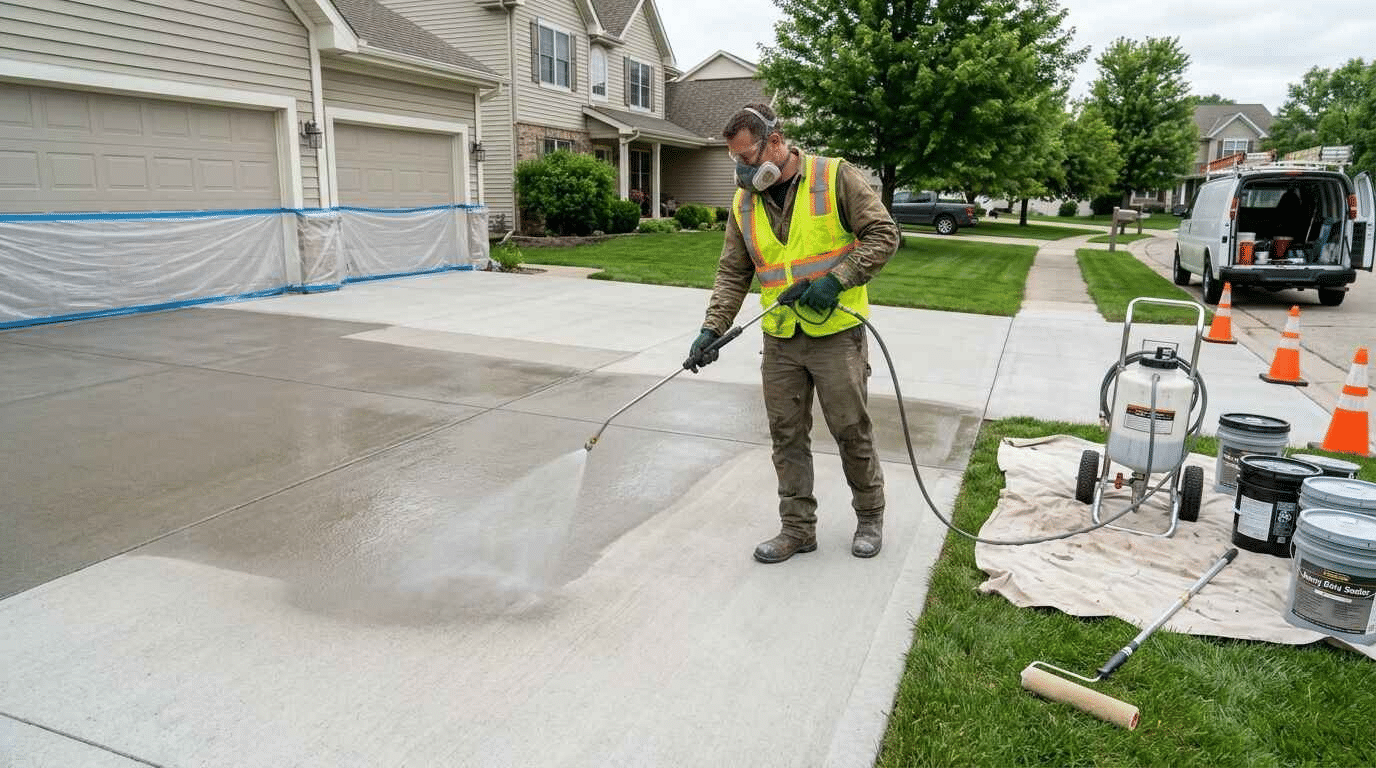
The cost to seal concrete typically runs about $1.35 to $2.50 per square foot for professional installation in 2026, with broader project pricing commonly falling around $1 to $3 per square foot when surface preparation, sealer type, and job conditions vary. A typical professional concrete sealing project can cost around $1,350 to $3,500, with an average near $1,500.
For materials alone, concrete sealer may cost roughly $0.10 to $0.75 per square foot, while professional labor can add about $1.25 to $1.75 per square foot. Small projects may cost more per square foot because contractors often apply minimum service charges.
The final concrete sealing cost per square foot depends on the surface size, existing concrete condition, sealer type, number of coats, cleaning and preparation, accessibility, labor rates, and local market conditions.
How Much Does It Cost to Seal Concrete in 2026?
For a standard residential concrete surface in reasonable condition, a practical 2026 budgeting range is:
| Project Type | Typical Cost Range |
| Basic professional sealing | 1.00–1.75 per sq. ft. |
| Typical professional sealing | 1.35–2.50 per sq. ft. |
| Premium/decorative systems | 1.50–3.00+ per sq. ft. |
| DIY materials | 0.10–0.75 per sq. ft. |
| Old sealer removal | 1.00–3.00 per sq. ft. |
| Surface preparation | Often 0.35–1.75+ per sq. ft., depending on condition |
Published 2026 cost guides show some variation because one contractor may price only the sealing application while another includes cleaning, preparation, multiple coats, and equipment.
For example, a 1,000-square-foot surface at $1.35 to $2.50 per square foot would produce an estimated installed sealing cost of:
1,000 × $1.35 = $1,350
1,000 × $2.50 = $2,500
Estimated range: 1,350–2,500
This calculation is useful for early budgeting, but a contractor’s actual estimate should be based on the specific surface, sealer system, preparation requirements, and site conditions.
What Is the Cost to Seal Concrete Per Square Foot?
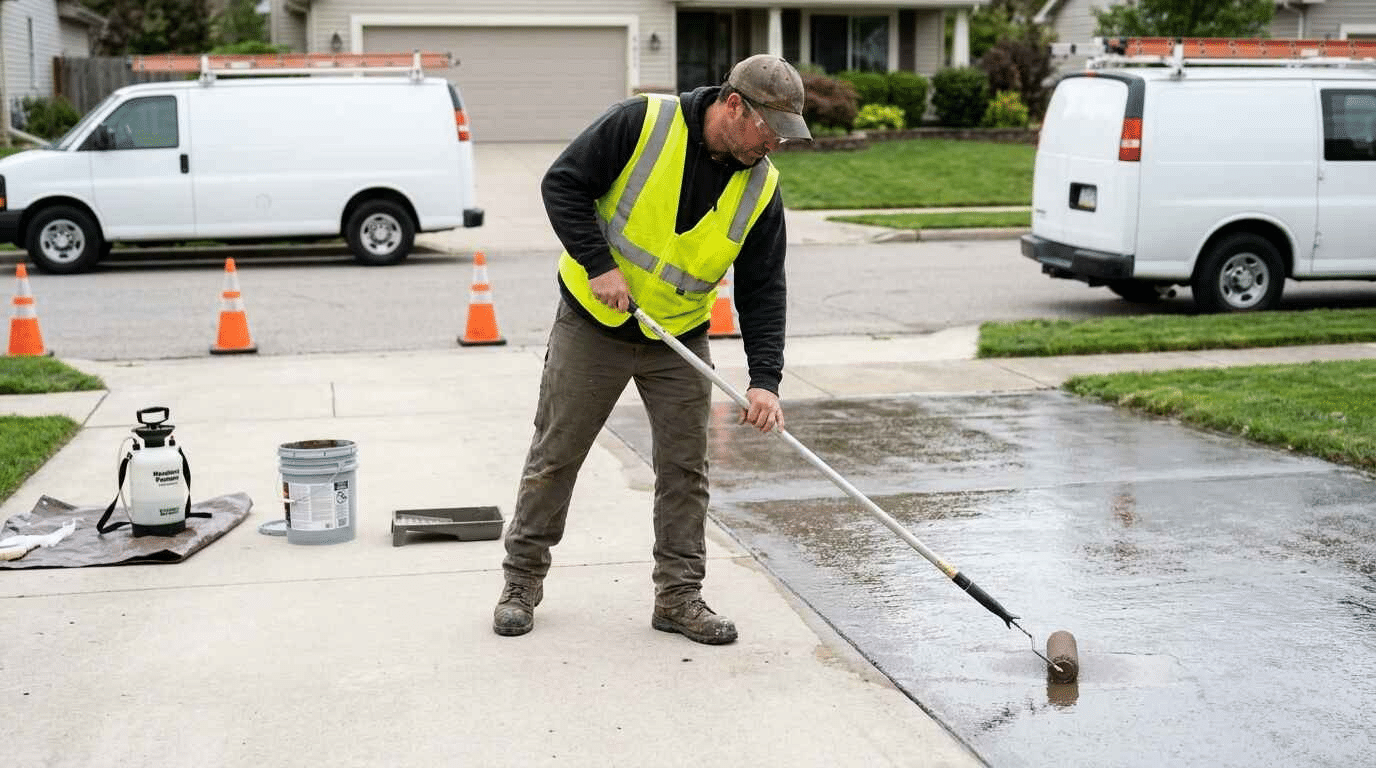
The most useful way to estimate concrete sealing is to separate material cost, labor, and preparation rather than applying one price to every project.
For a typical professional job:
| Cost Component | Typical 2026 Range |
| Sealer materials | 0.10–0.75/sq. ft. |
| Professional labor | 1.25–1.75/sq. ft. |
| Cleaning/preparation | Varies by condition |
| Existing sealer removal | 1.00–3.00/sq. ft. |
| Typical installed sealing | About 1.35–2.50/sq. ft. |
Material-only pricing can be substantially lower than the final customer price because the installed price also accounts for labor, preparation, equipment, mobilization, overhead, and contractor profit.
A contractor should therefore avoid using a material price alone when preparing a bid.
How Much Does Concrete Sealer Cost?
Concrete sealer pricing varies considerably by formulation and application.
For example, published 2026 pricing shows:
| Sealer Type | Example Material Cost |
| Acrylic | About 16–75 per gallon |
| Polyurethane | About 25–110 per gallon |
| Epoxy | About 40–175 per gallon |
| Penetrating sealer | Varies by formulation and coverage |
Current retail examples also show why gallons alone are not enough to calculate a project. Coverage varies by product and concrete porosity. For example, a commercial acrylic concrete cure-and-seal product can specify coverage around 200 square feet per gallon, while other products have different coverage rates.
When estimating material quantities, use the manufacturer’s stated coverage rather than assuming every gallon covers the same area.
Example: Estimating Sealer Quantity
Suppose a contractor needs to seal 1,000 square feet and the selected product covers 200 square feet per gallon per coat.
1,000 ÷ 200 = 5 gallons per coat
If two coats are required:
5 × 2 = 10 gallons
The final material quantity should also account for the actual manufacturer’s coverage, surface porosity, waste, and application method.
What Does Professional Concrete Sealing Cost?
Professional concrete sealing generally costs more than buying the sealer yourself because the contractor is pricing the complete service.
Professional concrete sealing can include:
- Surface inspection
- Cleaning
- Pressure washing
- Removal of existing sealer
- Minor preparation
- Masking and protection
- Sealer application
- Additional coats
- Non-slip additives
- Equipment
- Labor
- Cleanup
- Contractor overhead and profit
For typical projects, published 2026 sources place professional installed pricing around $1.35 to $2.50 per square foot, while broader concrete cleaning and sealing estimates can reach $1 to $3 per square foot depending on the scope.
This is why two contractors can quote different prices for the same square footage without either quote necessarily being wrong.
How Much Does It Cost to Seal a Concrete Driveway?
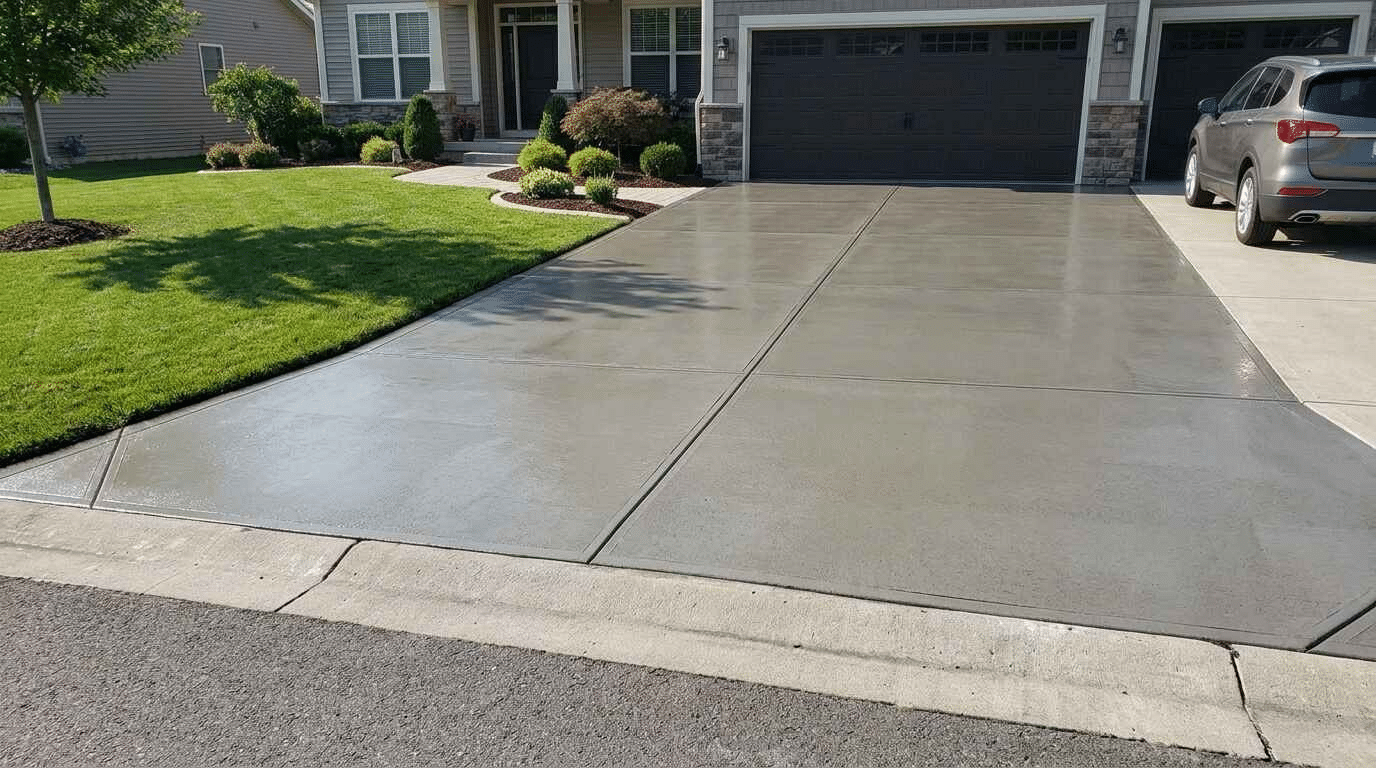
A concrete driveway is usually more demanding than a small patio because it is exposed to vehicles, weather, water, road salt, and repeated surface wear.
For a two-car driveway of approximately 576–600 square feet, published 2026 estimates range from roughly $575 to $1,700 for common acrylic or polyurethane sealing, depending on preparation and location. Premium epoxy or polyaspartic systems can cost considerably more.
A practical budgeting example:
| Driveway Size | Approx. Area | Potential Sealing Cost |
| 1-car driveway | 288 sq. ft. | 290–850 |
| 2-car driveway | 576 sq. ft. | 575–1,700 |
| 3-car driveway | 864 sq. ft. | 850–2,600 |
These figures should be treated as budgeting ranges rather than guaranteed contractor prices.
Cracks, oil contamination, previous coatings, stains, surface deterioration, and additional coats can increase the final estimate.
How Much Does It Cost to Seal a Concrete Patio?
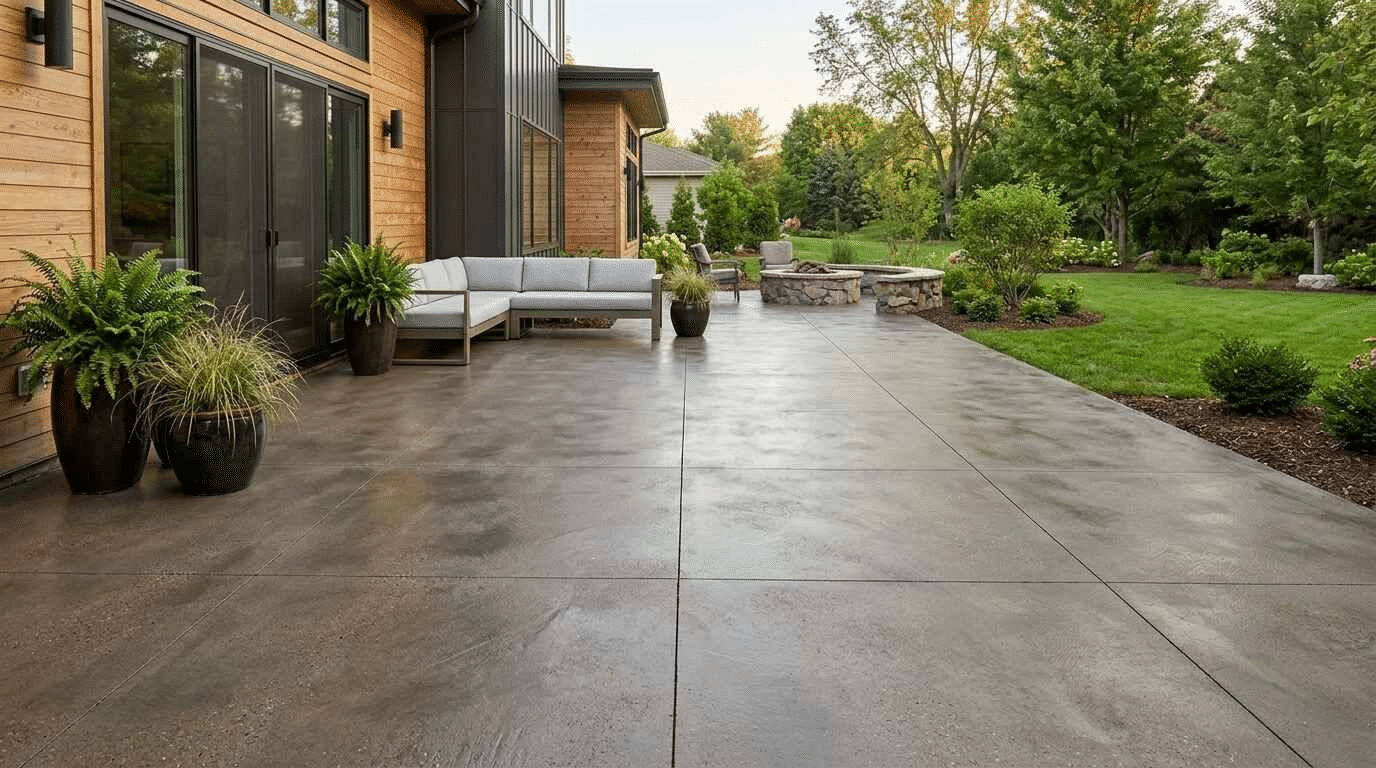
A typical concrete patio may be less expensive than a driveway because it usually receives less vehicle traffic.
For a 10 × 20-foot patio, the surface area is:
10 × 20 = 200 square feet
Using a broad installed range of approximately $1.25 to $3.00 per square foot:
200 × $1.25 = $250
200 × $3.00 = $600
So a reasonable starting budget for a basic 200-square-foot patio is approximately 250–600, before unusual repairs or premium coating systems.
HomeGuide similarly reports about 250–600 for a 200-square-foot concrete patio using common acrylic or polyurethane sealing.
Stamped, decorative, heavily weathered, or high-traffic patios may require different products and preparation.
How Much Does It Cost to Seal a Concrete Garage Floor?
Garage floors often require a different approach from outdoor concrete.
A basic penetrating sealer may be appropriate for some floors, while homeowners seeking a decorative, chemical-resistant, or high-performance finish may consider epoxy or polyaspartic systems.
For a typical 360-square-foot two-car garage floor, a basic sealing system may fall around 360–1,080, while premium epoxy or polyaspartic systems can be substantially higher.
The estimate should clearly identify whether the price covers:
- Grinding
- Cleaning
- Crack repair
- Primer
- Base coat
- Topcoat
- Decorative flakes
- Non-slip additive
- Moisture testing
- Final cleanup
Calling every garage-floor project simply “concrete sealing” can lead to inaccurate comparisons because a basic sealer and a multi-layer coating system are not equivalent scopes of work.
What Factors Affect the Cost of Sealing Concrete?
The biggest cost differences usually come from the following factors.
1. Surface Size
Larger areas require more material and labor, but they can have a lower effective price per square foot because fixed setup costs are spread across more area.
A 50-square-foot project may still require travel, setup, cleaning, and equipment. A 1,000-square-foot project can spread those costs over a much larger surface.
2. Concrete Condition
Clean, sound concrete is easier to seal.
Older concrete may require:
- Pressure washing
- Degreasing
- Stain removal
- Crack repair
- Grinding
- Existing sealer removal
- Additional preparation
For older surfaces, preparation alone can materially change the estimate. Angi reports roughly 1–1.75 per square foot for cleaning and preparation on older concrete in situations requiring more extensive preparation.
3. Sealer Type
Acrylic, polyurethane, penetrating sealers, epoxy, and other systems have different material costs, application requirements, durability, and appearance.
A contractor should select the product based on the surface and expected use rather than simply choosing the cheapest gallon.
4. Number of Coats
Some projects require more than one coat.
Additional coats increase:
- Material quantities
- Labor hours
- Application time
- Drying or curing time
- Project cost
5. Accessibility
A large, open patio is easier to work on than a narrow area surrounded by landscaping, walls, furniture, or other obstacles.
Limited access can increase labor and protection costs.
6. Existing Sealer
If the concrete already has a coating that is incompatible with the new product, removal may be required.
Existing sealant removal is commonly estimated around 1–3 per square foot.
7. Location
Labor markets, transportation, local demand, weather, and operating costs vary throughout the United States.
A concrete sealing project in a major metropolitan market may not carry the same labor cost as an equivalent project in a smaller market.
What Are the Different Types of Concrete Sealers?
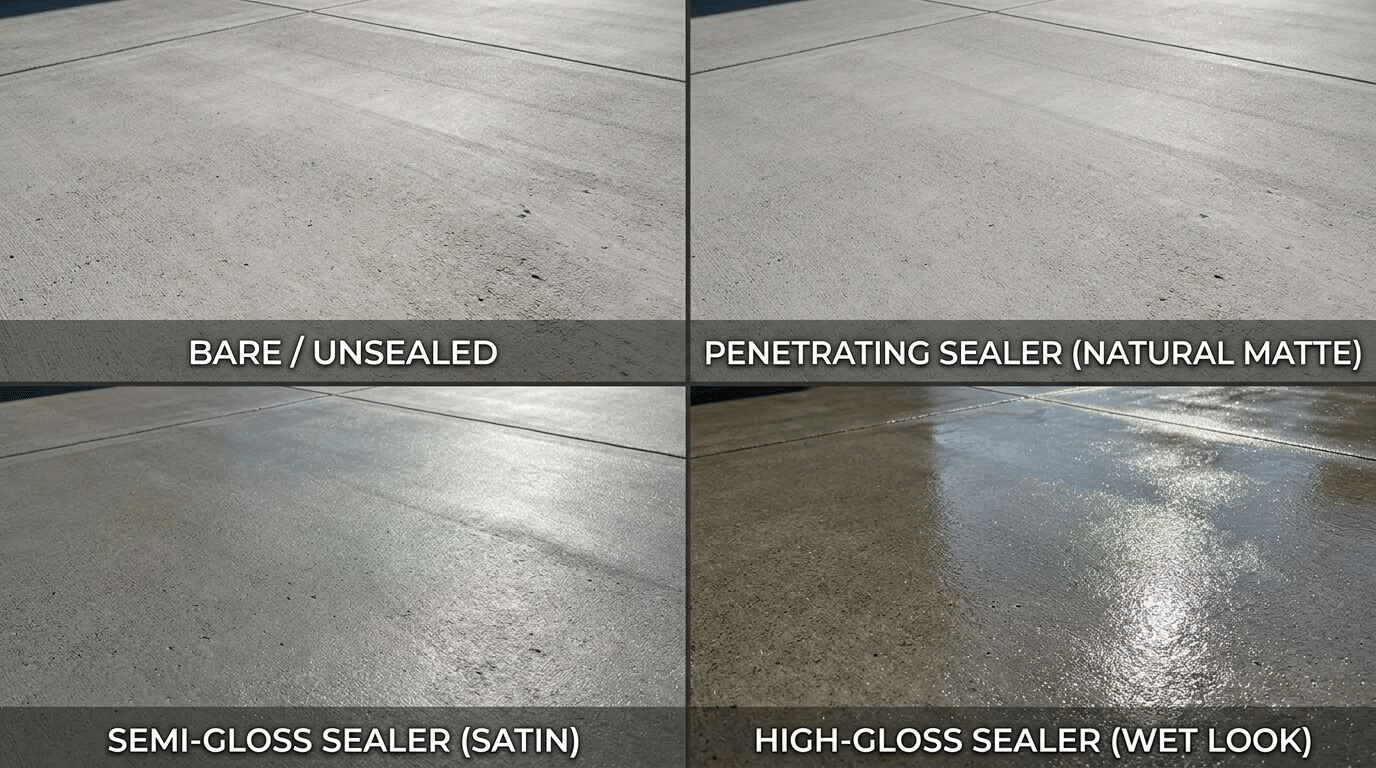
The right sealer depends on the surface, exposure, desired appearance, and performance requirements.
Acrylic Concrete Sealer
Acrylic sealers are commonly used for decorative and exterior concrete because they can provide a visible finish and are available in different formulations.
They can work well for:
- Patios
- Decorative concrete
- Driveways
- Walkways
- Stamped concrete
Polyurethane Concrete Sealer
Polyurethane systems can provide a durable film-forming finish and may be used where greater wear resistance is required.
They can be appropriate for:
- Patios
- Walkways
- High-use surfaces
- Decorative concrete
Penetrating Concrete Sealer
Penetrating sealers work differently from topical film-forming products. They penetrate the concrete and are often selected where the owner wants protection without a strong visible coating.
Silane and siloxane products are examples of penetrating systems.
Epoxy Concrete Coating
Epoxy is generally better considered a coating system than a basic penetrating sealer.
It may be used for:
- Garage floors
- Commercial floors
- High-traffic areas
- Decorative flooring
Because epoxy systems can require more preparation and multiple application steps, they should not be compared directly with a basic concrete sealer on a per-gallon basis.
How Much Does Concrete Sealing Labor Cost?
Labor can represent a significant portion of the installed price.
Published 2026 estimates put professional labor around 1.25–1.75 per square foot for concrete sealing, although the actual billing rate can vary based on the project and contractor.
It is important to distinguish three different numbers:
Worker wage: what the employee earns.
Payroll burden: payroll taxes, workers’ compensation, benefits, and related costs.
Contractor billing rate: what the customer is charged for labor.
These are not the same number.
A contractor’s final labor charge also needs to account for supervision, travel, equipment, insurance, overhead, scheduling, and profit.
How Much Does Concrete Surface Preparation Cost?
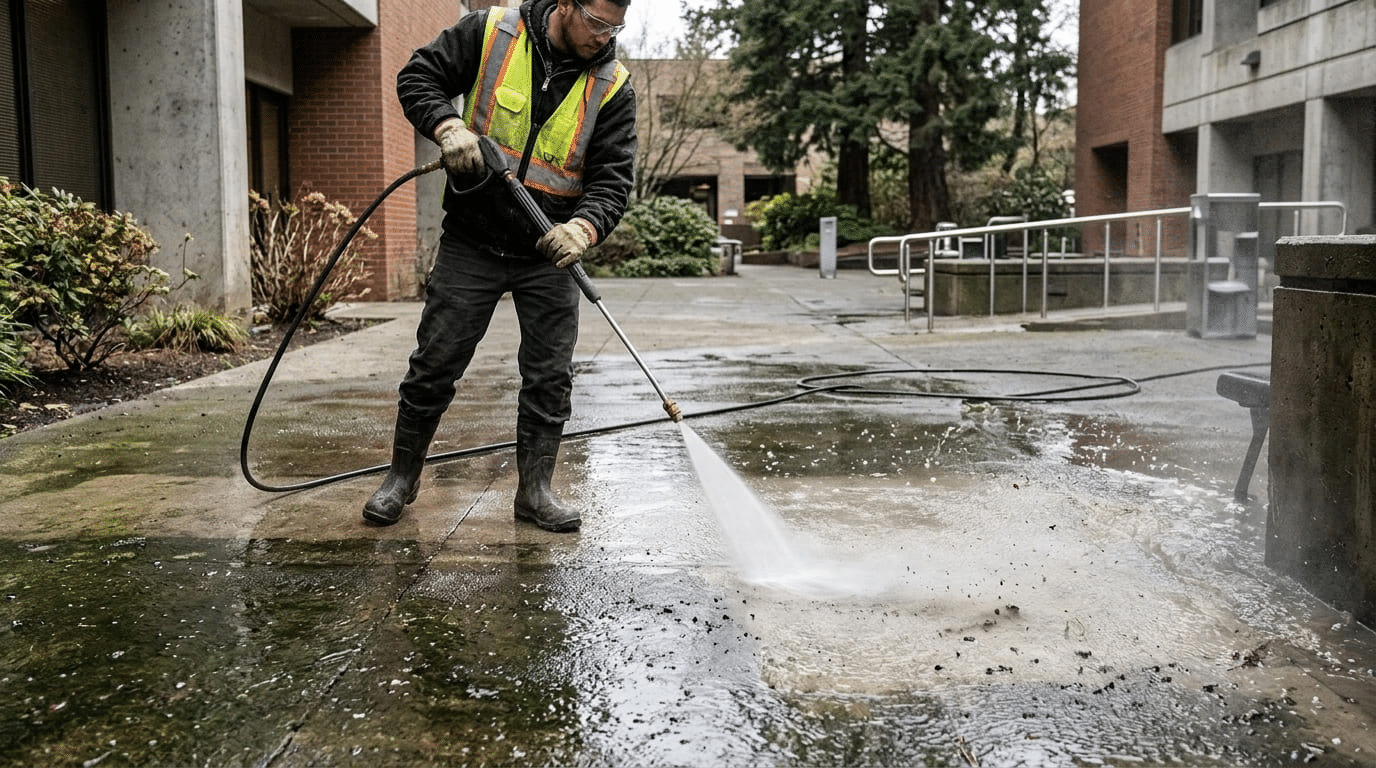
Surface preparation is one of the easiest costs to underestimate.
Before sealing, the concrete may need to be:
- Swept and cleaned
- Pressure washed
- Degreased
- Dried
- Repaired
- Mechanically prepared
- Stripped of incompatible coatings
- Protected around the work area
Pressure washing alone may add approximately 0.35–0.75 per square foot in some published estimates, while more extensive preparation can cost substantially more.
A contractor should inspect the existing surface before giving a final price.
How Much Does Concrete Sealing Cost by Project Size?
The following examples use common installed pricing ranges to illustrate how project size affects budgeting.
| Surface Size | Example Calculation | Approx. Budget |
| 100 sq. ft. | 100 × 1.35–2.50 | 135–250 |
| 250 sq. ft. | 250 × 1.35–2.50 | 338–625 |
| 500 sq. ft. | 500 × 1.35–2.50 | 675–1,250 |
| 1,000 sq. ft. | 1,000 × 1.35–2.50 | 1,350–2,500 |
| 2,000 sq. ft. | 2,000 × 1.35–2.50 | 2,700–5,000 |
These are mathematical examples based on the stated unit range, not fixed contractor quotes.
Small projects can have higher effective per-square-foot pricing because of minimum service charges. HomeGuide reports minimum service fees of approximately 150–300 for some concrete cleaning and sealing work.
What Are the Hidden Costs of Concrete Sealing?
A project can appear inexpensive until preparation and additional work are included.
Common costs that may be missed during initial budgeting include:
- Pressure washing
- Specialized cleaning
- Oil and grease removal
- Crack repair
- Existing coating removal
- Grinding
- Additional sealer coats
- Masking and protection
- Non-slip additives
- Equipment
- Mobilization
- Minimum service charges
- Waste
- Cleanup
- Difficult access
- Weather delays
For example, quoting a 1,000-square-foot surface at $1.50 per square foot may produce a $1,500 starting figure. But if the surface requires $1,000 in preparation and coating removal, the final project is no longer a $1,500 job.
This is why a professional estimate should separate the base sealing work from additional scope.
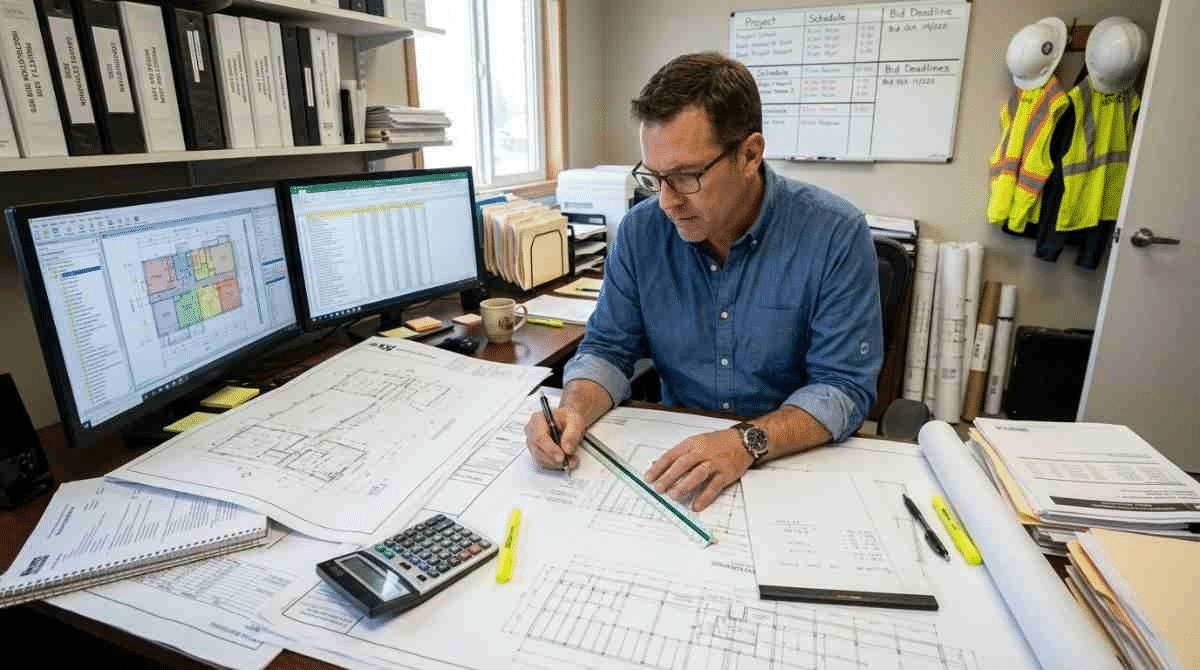
How Do Contractors Calculate the Cost to Seal Concrete?
A basic estimating formula is:
Total Cost = Area × Installed Unit Price + Additional Preparation + Repairs + Other Project Costs
For example:
A contractor has a 1,200-square-foot patio.
Base sealing:
1,200 × $1.50 = $1,800
Additional preparation:
$450
Minor repairs:
$250
Estimated direct project cost:
$1,800 + $450 + $250 = $2,500
The contractor then needs to account for overhead, profit, taxes where applicable, and any other project-specific costs when developing the final customer price.
The exact markup should not be confused with the direct cost of labor and materials.
What Should Be Included in a Professional Concrete Sealing Estimate?
A professional estimate should make it clear exactly what the contractor is pricing.
A useful estimate can include:
- Project location
- Surface type
- Total square footage
- Sealer type
- Number of coats
- Material quantity
- Material unit cost
- Labor hours
- Labor cost
- Surface preparation
- Cleaning
- Existing coating removal
- Repairs
- Equipment
- Mobilization
- Delivery
- Waste
- Cleanup
- Overhead
- Profit
- Exclusions
- Payment terms
- Schedule assumptions
An itemized estimate is much easier to evaluate than a single lump-sum number.
For example:
| Estimate Item | Quantity | Unit | Unit Cost | Total |
| Surface preparation | 1,000 | SF | $0.75 | $750 |
| Sealer material | 10 | Gal. | $35 | $350 |
| Sealing labor | 1,000 | SF | $1.25 | $1,250 |
| Equipment/mobilization | 1 | LS | $200 | $200 |
| Cleanup | 1 | LS | $100 | $100 |
| Estimated direct cost | $2,650 |
The actual numbers will depend on the project. The important point is that the estimate shows how the total was developed.
How Do You Compare Two Concrete Sealing Bids?
A lower bid is not automatically the better bid.
Before comparing two contractors, check whether both bids include the same:
- Square footage
- Sealer type
- Number of coats
- Surface preparation
- Cleaning
- Crack repairs
- Existing coating removal
- Equipment
- Warranty
- Cleanup
- Schedule
- Exclusions
For example:
Contractor A: $1,800
Contractor B: $2,500
At first glance, Contractor A appears cheaper.
But if Contractor A includes one coat with minimal preparation while Contractor B includes two coats, extensive cleaning, crack preparation, and a higher-grade coating, the two bids are not actually pricing the same scope.
The right comparison is scope against scope, not simply price against price.
How Much Does DIY Concrete Sealing Cost?
DIY concrete sealing can reduce labor costs, but the homeowner still needs to purchase the sealer, tools, cleaning products, protective materials, and other supplies.
Published 2026 estimates put DIY material costs around 0.10–0.75 per square foot, depending on the product and application.
For a 500-square-foot surface:
500 × $0.10 = $50
500 × $0.75 = $375
That does not necessarily mean the complete DIY project will cost only 50–375 because equipment, cleaning products, repair materials, and waste can add to the total.
DIY also carries the risk of:
- Uneven coverage
- Incorrect product selection
- Poor surface preparation
- Peeling
- Blushing
- Premature failure
- Incorrect application thickness
For larger or more complex projects, professional installation can provide a more predictable result.
How Does Location Affect Concrete Sealing Cost?
Concrete sealing prices vary across the United States.
A contractor’s pricing can change based on:
- Local labor rates
- Material availability
- Transportation
- Climate
- Contractor demand
- Insurance costs
- Business overhead
- Local competition
- Surface conditions
- Project accessibility
For example, a project in California may have a different labor and operating-cost structure from a similar project in Texas or the Midwest.
Rather than applying one national number to every project, contractors should use national ranges for preliminary budgeting and then adjust the estimate using local labor and material pricing.
When Is Professional Construction Estimating Useful?
Professional estimating becomes particularly valuable when the project is large enough that small pricing errors can affect the bid.
Contractors, builders, developers, and subcontractors may need an estimate that clearly identifies:
- Material quantities
- Labor requirements
- Equipment
- Scope
- Unit costs
- Project quantities
- Potential cost gaps
- Bid requirements
- Overhead
- Profit
- Exclusions
For contractors bidding multiple projects, the difference between a rough number and an itemized estimate can affect whether the bid is competitive and whether the project remains profitable.
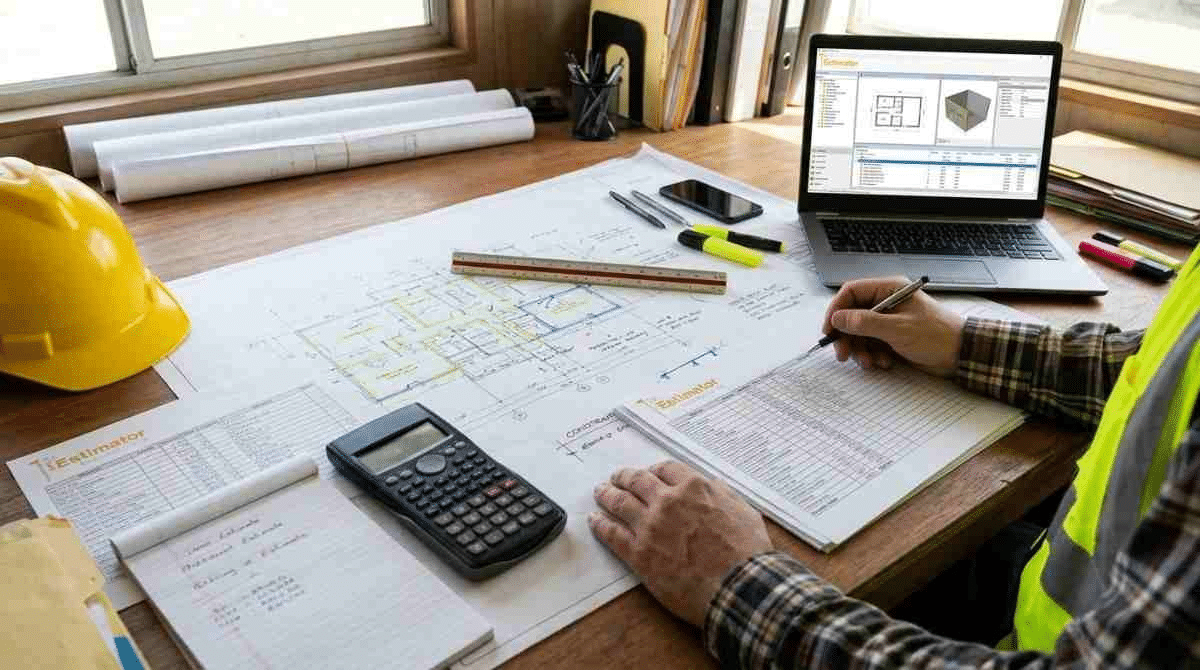
1st Estimator LLC provides professional construction estimating and quantity takeoff services for contractors and construction businesses. Estimates can help organize project quantities, materials, labor, and other costs before a bid is submitted.
Need a Concrete Project Estimate?
If you are preparing a concrete project budget or contractor bid, the most useful starting point is not simply the square footage.
You also need to know:
- What type of concrete surface is being sealed?
- What condition is the existing concrete in?
- What sealer system will be used?
- How many coats are required?
- What preparation is needed?
- How much material is required?
- What labor is required?
- Are repairs included?
- What equipment is needed?
- What costs should be included in the bid?
For larger or more detailed construction projects, a professional estimating team can help turn plans, specifications, and project scope into an organized cost estimate.
Need a detailed estimate for your upcoming project? 1st Estimator provides professional construction estimating and quantity takeoff services for residential, commercial, and industrial projects.
Frequently Asked Questions About Concrete Sealing Cost
How much does it cost to seal concrete per square foot?
Professional concrete sealing commonly costs about 1.35–2.50 per square foot in 2026, although broader project estimates can range from approximately 1–3 per square foot depending on the sealer, preparation, surface condition, and location.
How much does it cost to seal a concrete driveway?
A typical two-car concrete driveway can cost approximately 575–1,700 to seal with common acrylic or polyurethane systems. Premium systems can cost more.
What factors affect the cost of sealing concrete?
The biggest factors include surface size, concrete condition, sealer type, number of coats, surface preparation, existing coatings, accessibility, labor rates, and local market conditions.
What is the average labor cost for sealing concrete?
Published 2026 estimates place professional labor around 1.25–1.75 per square foot, although actual contractor billing rates vary by project and market.
How much does concrete sealer cost per gallon?
Published 2026 ranges vary by product. Acrylic sealers may cost around 16–75 per gallon, polyurethane around 25–110, and epoxy around 40–175. Product coverage and the number of coats should also be included when calculating material costs.
Is it cheaper to seal concrete yourself or hire a professional?
DIY sealing generally costs less because you avoid professional labor charges. Material costs can be around 0.10–0.75 per square foot, but equipment, preparation, repairs, and application risks can increase the actual DIY cost.
How much does it cost to reseal old concrete?
Resealing old concrete can cost more than sealing clean, new concrete because the existing surface may require cleaning, repairs, or removal of the old sealer. Existing sealant removal alone may cost around 1–3 per square foot.
How do contractors calculate the cost of sealing concrete?
Contractors generally calculate the surface area, determine the required sealer quantity, estimate labor, add preparation and repair costs, and then account for equipment, overhead, profit, and other project-specific expenses.
What should be included in a concrete sealing estimate?
A detailed estimate should identify the square footage, sealer type, number of coats, material quantities, labor, preparation, repairs, equipment, cleanup, exclusions, overhead, and profit.
How can contractors prepare an accurate concrete sealing estimate for a bid?
Contractors should begin with accurate quantities and project scope, then price materials and labor using current local costs. Preparation, waste, equipment, subcontractor work, overhead, and project-specific conditions should also be considered before finalizing the bid.
Final Cost Takeaway
For a typical U.S. concrete sealing project in 2026, a practical starting point is about 1.35–2.50 per square foot for professional installation, with broader pricing around 1–3 per square foot depending on the project.
A 500-square-foot surface could therefore start around 675–1,250, while a 1,000-square-foot surface could fall around 1,350–2,500 before unusual repairs, extensive preparation, premium coating systems, or other project-specific costs.
The most accurate estimate comes from pricing the actual scope, not just multiplying square footage by a generic online number.
For contractors and construction businesses preparing a bid, a detailed estimate should account for material quantities, labor, preparation, equipment, overhead, profit, and exclusions so the final number reflects the actual project requirements.