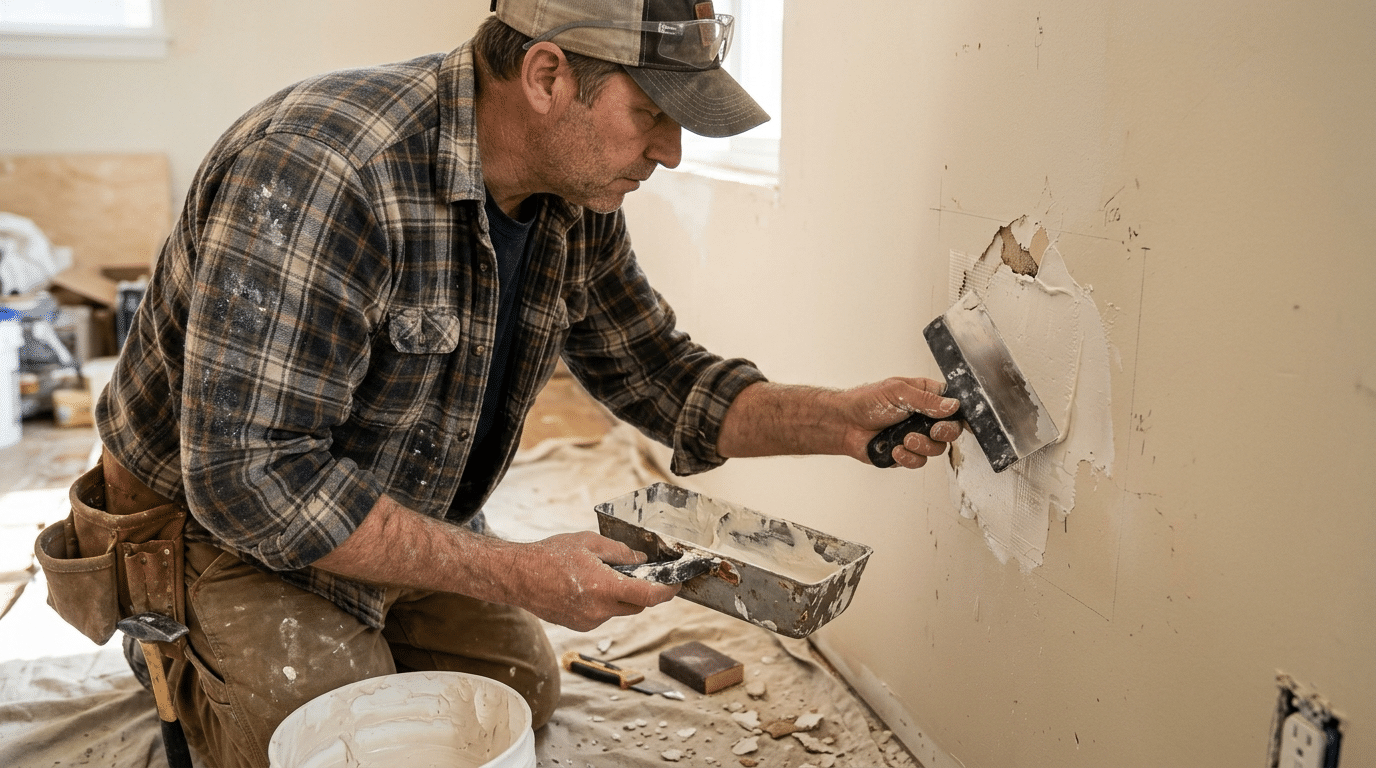
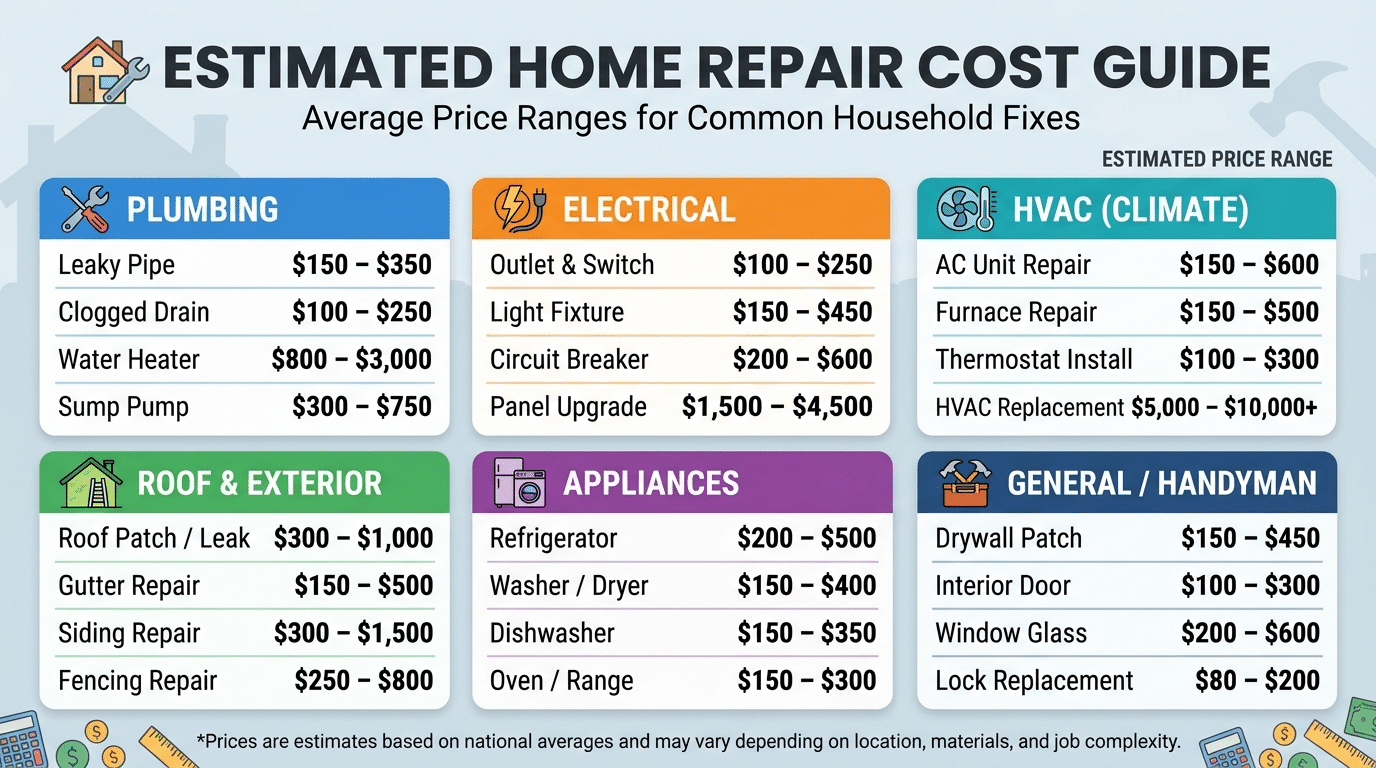
Drywall repair cost in 2026 runs about $150 to $1,000 for most jobs, with a planning average of roughly $350 to $600. Tiny fixes like nail pops can come in under $100, while large water-damage jobs can reach $2,500 or more. Published averages disagree because each source samples different jobs. Some report around $350, others around $610, so treat any single “national average” as a starting point, not a quote.
The final price depends on how big the damage is, whether it’s on a wall or ceiling, how much finishing is needed (texture, primer, paint), the contractor’s minimum charge, and where you live. Water damage is its own category because the repair is only as good as the leak fix behind it.
This guide covers drywall repair prices by damage type, cost per square foot and per hour, material and labor breakdowns, worked examples, regional differences, hidden costs, and how to compare bids.
What these figures assume: U.S. national pricing, interior residential drywall (1/2″ standard board), a professional doing the work, and repair only. Painting is separate unless noted. Figures are based on 2026 published cost guides and BLS wage data, then adjusted with estimating judgment. They are not guaranteed contractor quotes.
How Much Does Drywall Repair Cost in 2026?
Most homeowners pay between $150 and $1,000. The wider band of $75 to $2,500+ covers everything from a single nail pop to water damage across a ceiling.
| Repair Type | Typical Specification | Cost Range |
| Nail pops, dents, small anchor holes | Fill, sand, prime | $75 – $200 |
| Small hole (under 4″) | Patch kit or cut-in patch, finish, prime | $100 – $250 |
| Medium hole (4″–12″) | Cut-and-patch, tape, 2–3 coats | $200 – $500 |
| Large hole (12″+) | New section, framing check, full finish | $400 – $1,000 |
| Cracks and failed seams | Re-tape, mud, sand | $100 – $400 |
| Ceiling repair | Patch or section replacement, overhead finish | $250 – $1,300 |
| Water-damaged drywall | Cut out wet board, dry, replace, finish | $500 – $2,500+ |
| Texture matching (add-on) | Orange peel, knockdown, etc. | $1 – $2 per sq ft, plus minimums |
Ranges here blend several 2026 sources. For example, one 2026 pricing guide puts the average job at about $611 with a typical range of $150 to $2,000, while another lists a national average near $500 with a $100 to $1,000 range. Where sources conflict, I’ve used the overlap.
Planning rule of thumb: a lone small patch usually lands at the contractor’s minimum service charge (100–200). Cost climbs from there as finishing steps and access difficulty are added.
What Does Drywall Repair Cost Per Square Foot?
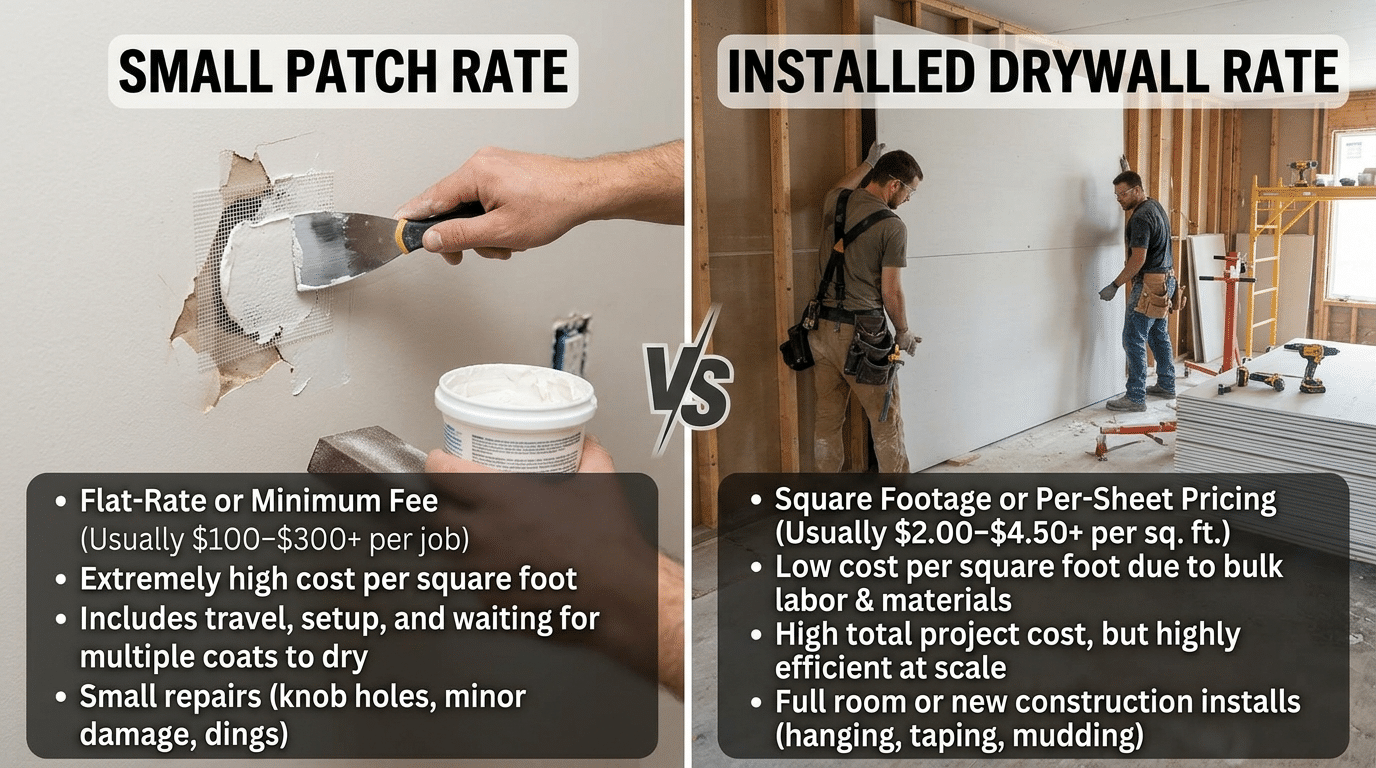
Here’s the part that confuses people. Many 2026 guides quote $50 to $80 per square foot for drywall repair. That is not the price of new drywall. It’s an effective rate for small patches, where a contractor’s minimum charge is spread over just a few square feet.
| Pricing Basis | Typical Range | What It Means |
| Small patch repair (effective rate) | $50 – $80 / sq ft | Cut, patch, tape, 1–2 coats of compound; minimums baked in |
| Installed new drywall (hang and finish) | roughly $2 – $4 / sq ft | Whole-sheet work on open areas, no painting |
| Texture matching | $1 – $2 / sq ft | Orange peel, knockdown, etc. |
| Painting after repair | $2 – $6 / sq ft | Varies by number of coats and prep |
Why the huge gap? Small repairs are labor-heavy relative to their size. A 2-square-foot hole still needs a trip, setup, cutting, taping, three coats of compound with drying time between them, sanding, and priming. The contractor is paid for the process, not the square footage.
Examples using the effective patch rate:
- 4 sq ft × $50 = $200; 4 × $80 = $320. Estimated range: 200–320
- 10 sq ft × $50 = $500; 10 × $80 = $800. Estimated range: 500–800
- 20 sq ft × $50 = $1,000; 20 × $80 = $1,600. Estimated range: 1,000–1,600
Don’t push this rate much past 20–25 square feet. At that point you’re replacing sections of board, and the cost curve flattens toward installed-drywall pricing plus finishing. A contractor quoting $60/sq ft on a 100-square-foot wall is either padding the number or pricing a very difficult job.
What Is the Cost Breakdown?
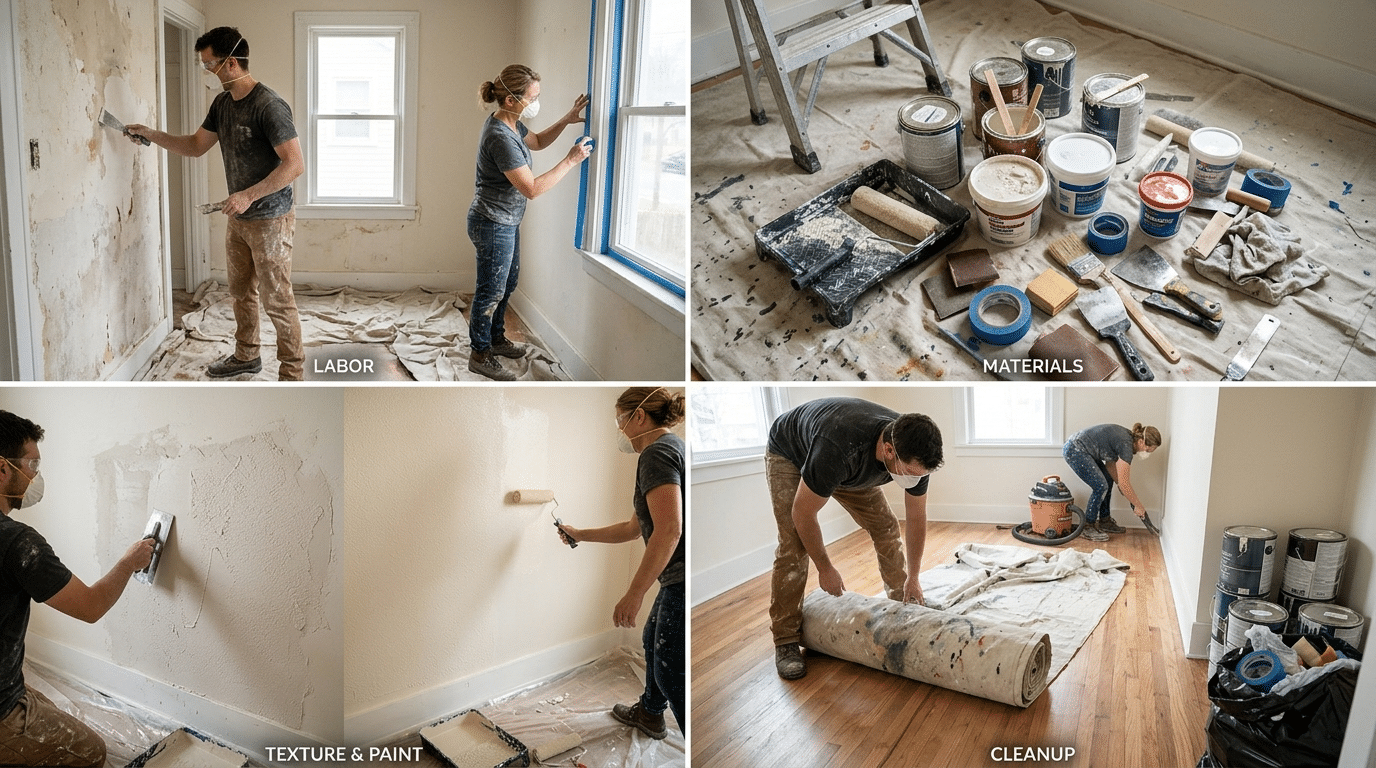
For a typical small-to-medium repair, the money splits roughly like this. These shares are planning estimates based on how repair jobs are priced, not published statistics.
| Cost Component | Typical Share |
| Labor (cutting, taping, mudding, sanding) | 55–70% |
| Materials (board, compound, tape, primer) | 8–15% |
| Texture and paint matching | 10–20% |
| Cleanup, dust protection, disposal | 2–5% |
| Overhead and profit | Built into the labor rate |
Labor dominates because compound has to dry between coats. A “30-minute patch” turns into several hours of work spread across two visits. Contractors price the visits, the drying gaps, and the sanding.
Materials are cheap. A bucket of joint compound, a roll of mesh or paper tape, a scrap of board, and primer rarely exceed 30–60 for a small job.
Equipment is minimal for most repairs: knives, a sander, a dust-control setup. Ceiling work may add scaffolding or a rolling platform on high ceilings.
Overhead and profit are part of the hourly rate, not usually a separate line. That includes insurance, vehicle, tools, and scheduling.
Material Costs
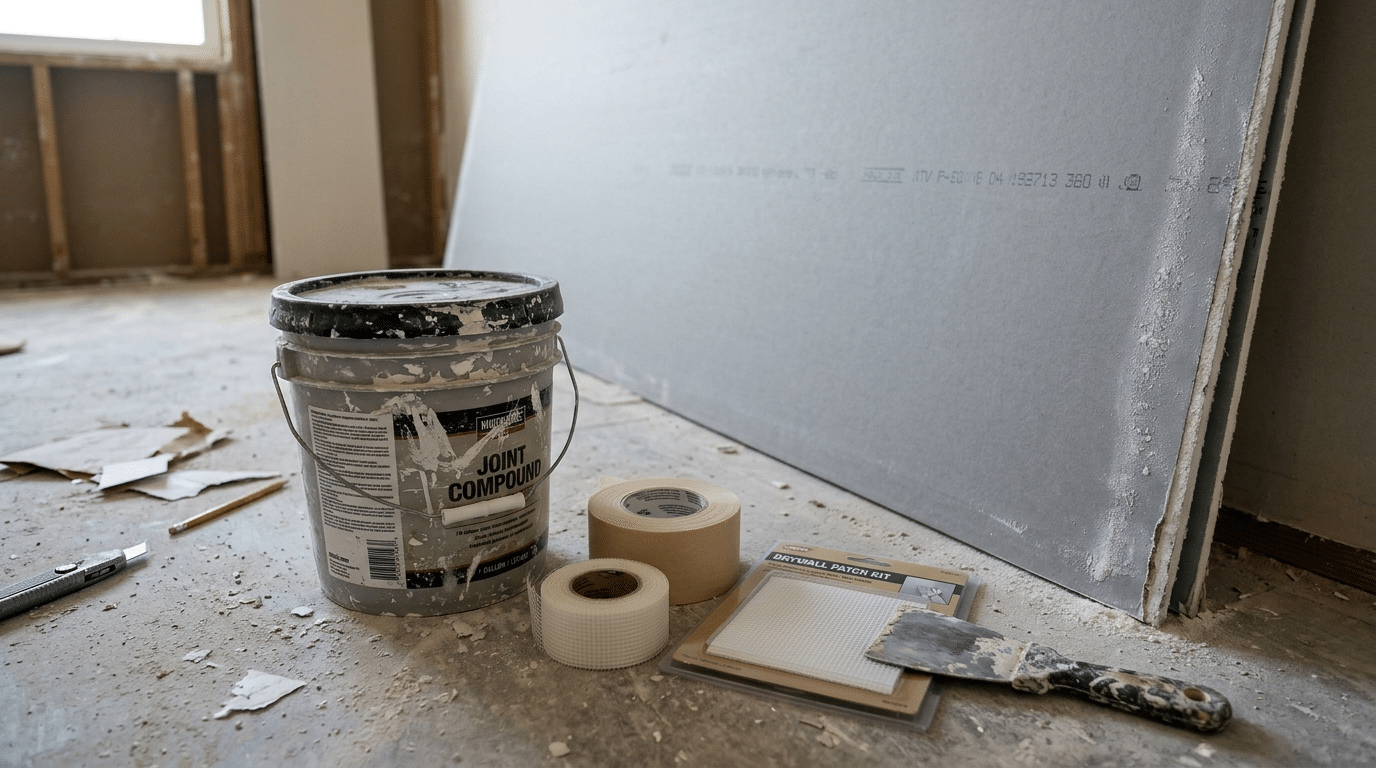
Prices below are approximate retail ranges. Check your local supplier before using them for a bid.
| Material | Unit | Approx. Price | What Changes It |
| Drywall patch kit | Each | $5 – $15 | Size, self-adhesive vs. metal-backed |
| Joint compound (premixed) | 4.5-gal bucket | $15 – $25 | Lightweight vs. all-purpose vs. setting-type |
| Drywall tape (paper or mesh) | Roll | $4 – $10 | Mesh is easier; paper is stronger at seams |
| 1/2″ standard drywall | 4×8 sheet | roughly $12 – $20 | Region, supplier, current demand |
| Moisture-resistant (green/purple) board | 4×8 sheet | modestly higher | Bathrooms, kitchens |
| 5/8″ fire-rated board | 4×8 sheet | higher than 1/2″ | Garages, shared walls, code-required areas |
| Texture spray / primer | Can or gallon | $10 – $40 | Match quality, coverage |
A 4×8 sheet covers 32 square feet, so a repair that needs a half sheet of board still means buying a full one, which is why material cost per repaired square foot looks high on small jobs.
Standard board runs about 2–4 per square foot installed in most published guides. Moisture-resistant, fire-rated, and soundproof panels push that higher, up to 3–7 per square foot installed.
Labor Costs
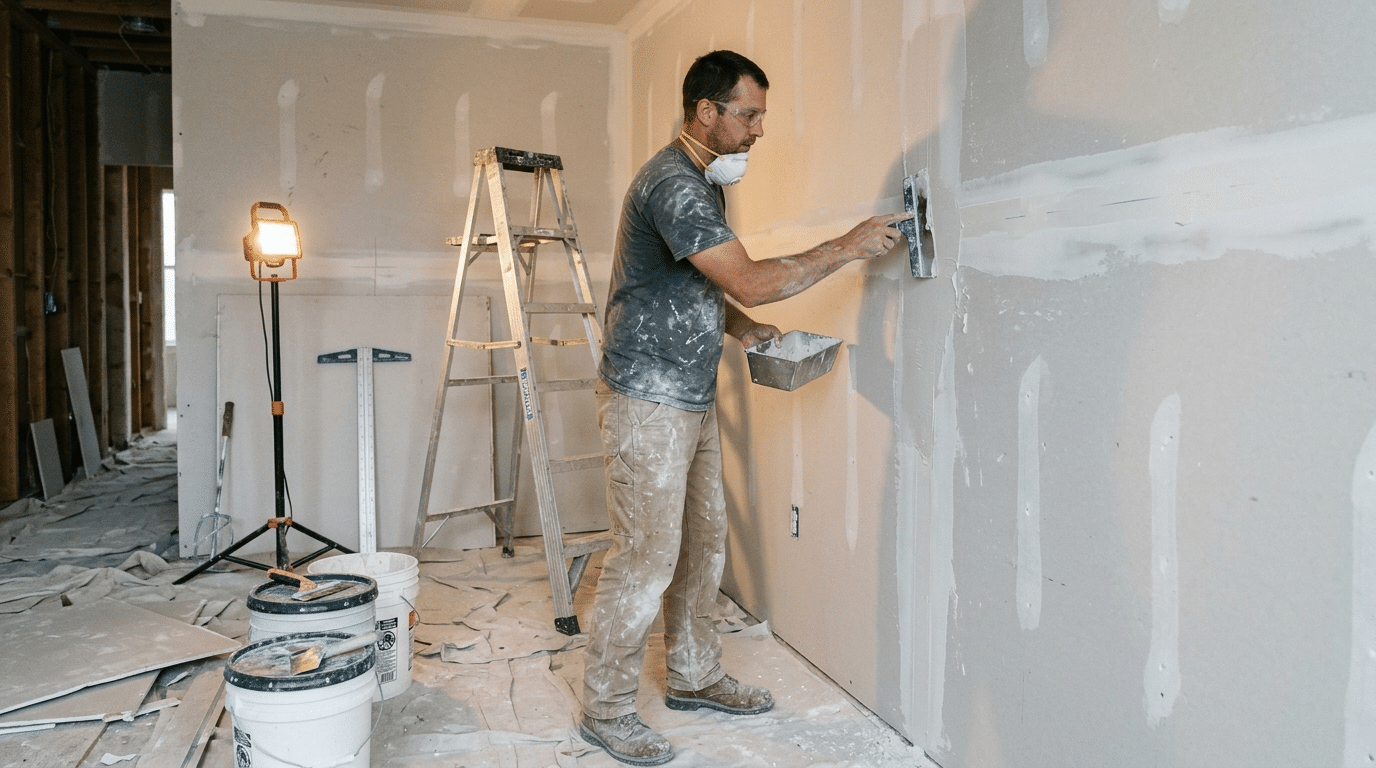
Labor is where people mix up numbers, so here are three different figures:
- Worker wage. The BLS reports a national median of about $28.33 per hour for drywall and ceiling tile installers (OEWS, May 2025), with the middle half earning roughly $22.81 to $35.69.
- Payroll burden. Employers add payroll taxes, workers’ comp, insurance, and benefits. In my experience this commonly adds 25–40% on top of wages, depending on state and trade.
- Contractor billing rate. After burden, overhead, tools, travel, and profit, the customer-facing rate is typically $60 to $100 per hour for handymen and drywall pros, and up to roughly $120 for specialists on ceiling or water damage work.
So the $28 wage becomes a 70–90 billing rate. That isn’t gouging. It’s how the business stays solvent.
Labor hours for common repairs (estimating ranges):
| Repair | Typical Labor Hours |
| Nail pops or small dents | 0.5 – 1.5 |
| Small hole patch | 1.5 – 3 |
| Medium hole or cracked seam | 2.5 – 5 |
| Large hole, section replacement | 4 – 8 |
| Ceiling patch (4×4) | 5 – 8 |
Drying time stretches the calendar, but the billed hours reflect only working time.
What pushes labor up: overhead work, high ceilings, furnished rooms that need protecting, popcorn or heavy textures, tight access, and tight schedules. What brings it down: bundling several repairs in one visit, empty rooms, and smooth finishes.
What Does Site Preparation Cost?
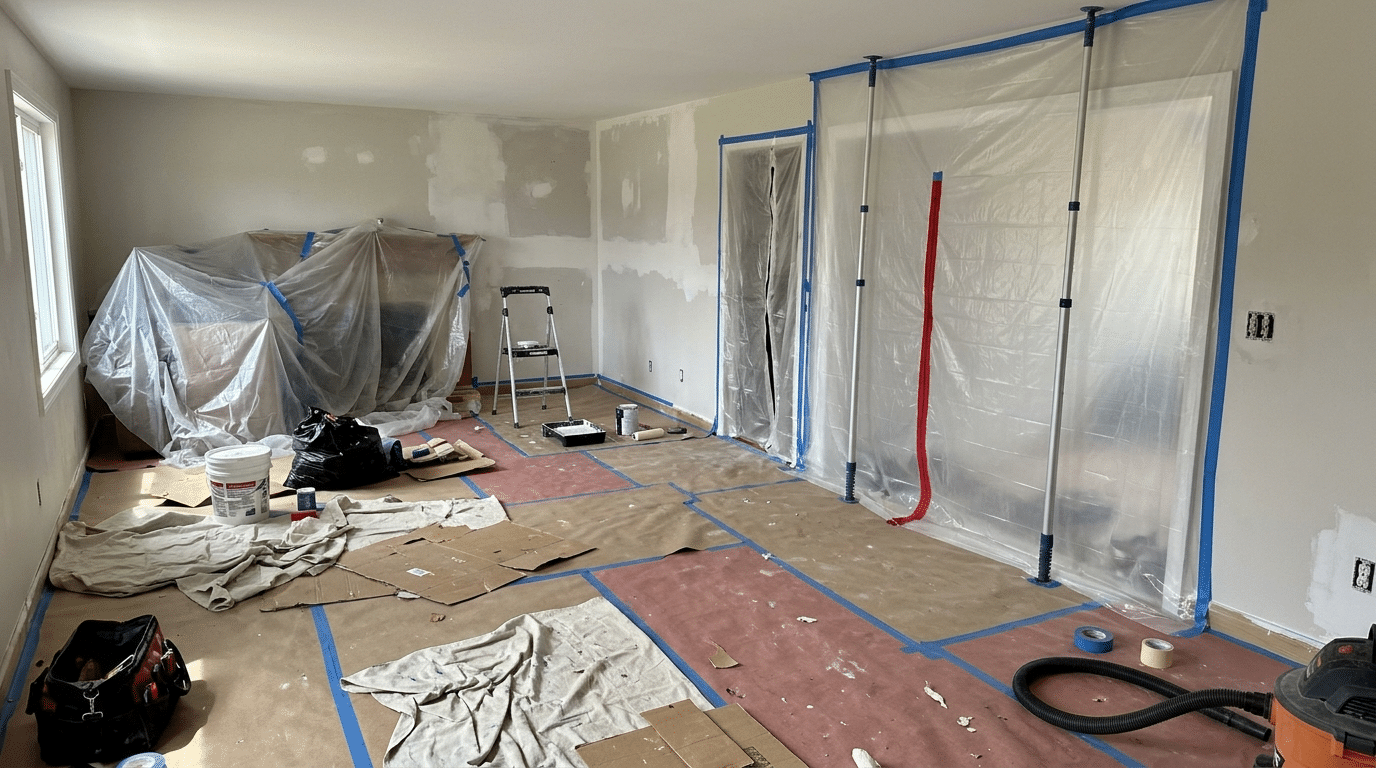
Drywall repair doesn’t involve excavation, but prep still shows up on the invoice:
- Furniture moving and floor protection: often included, sometimes 50–150 extra in cluttered rooms.
- Dust containment: plastic sheeting and tape, especially in finished living areas.
- Access: stairwells, vaulted ceilings, or two-story foyers may require scaffolding or a rented lift.
- Demolition: cutting out wet or damaged board, removing insulation, and bagging debris.
- Moisture drying: water-damaged areas need to be dry before new board goes in. Skipping this is how mold shows up later.
Two repairs of identical size can differ by hundreds of dollars based on prep alone.
What Does Drywall Repair Cost by Size?
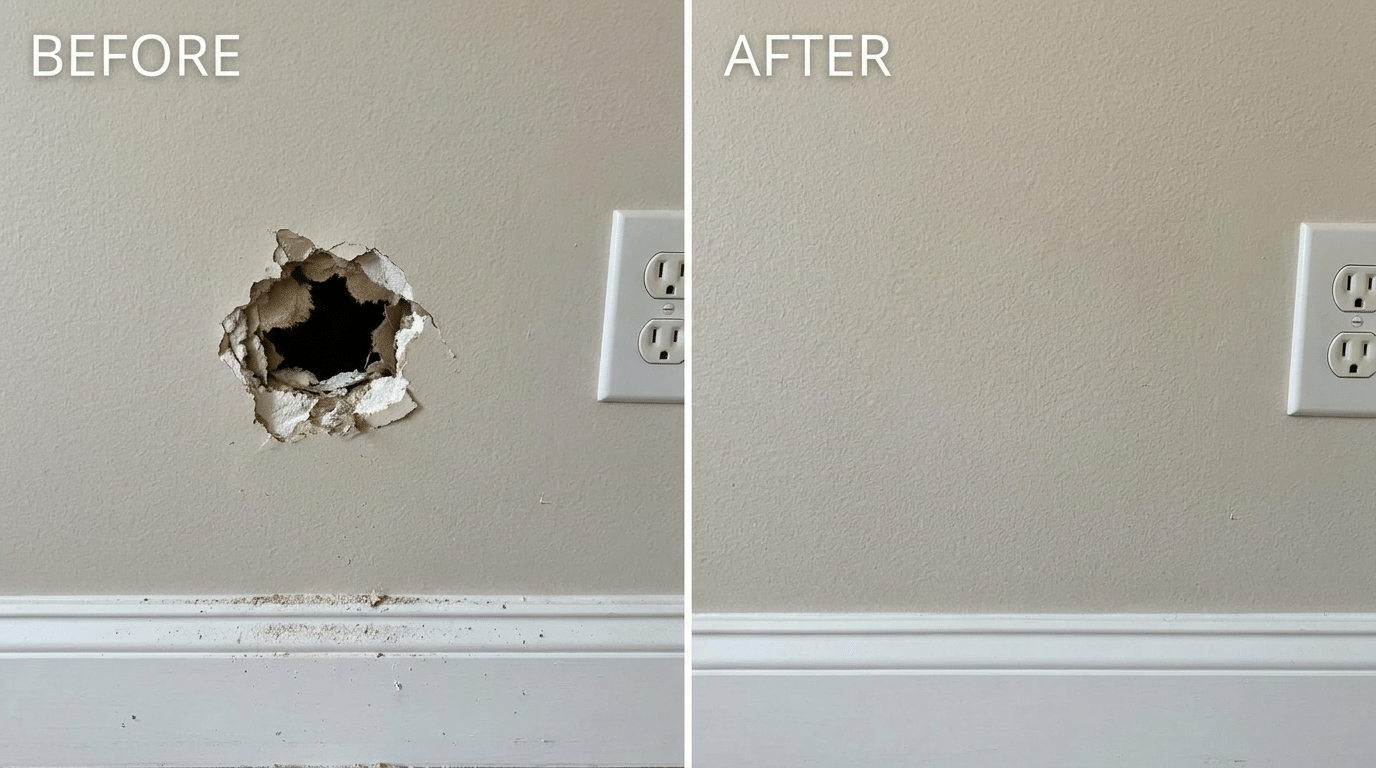
These examples assume a professional repair with basic finishing, using the pricing logic above. Labor is billed at $75 per hour for the calculations.
Example 1: Doorknob hole (4″)
- Labor: 2.5 hours × $75 = $187.50
- Materials: $15
- Total: about 200–250 (often priced at a flat minimum)
Example 2: Fist-size hole (8″)
- Labor: 4 hours × $75 = $300
- Materials: $25
- Texture and primer: $50
- Total: about 375–450
Example 3: Water-damaged ceiling section (4 ft × 4 ft = 16 sq ft)
- Labor: 6 hours × $80 = $480
- Materials: $60
- Texture matching and paint: $120
- Total: about $660 (a realistic range is 500–900, excluding the leak repair itself)
Example 4: Full-room replacement (12 × 12 room, 8 ft walls)
- Wall area: 48 ft perimeter × 8 ft = 384 sq ft
- Ceiling area: 12 × 12 = 144 sq ft
- Total drywall area: 528 sq ft
- Hang and finish at 2–4 per sq ft: 528 × $2 = $1,056 to 528 × $4 = $2,112
- Painting walls at 2–6 per sq ft: 384 × $2 = $768 to 384 × $6 = $2,304
- Total: about 1,800–4,400
| Size | Typical Use | Estimated Cost |
| Small | Doorknob hole, nail pops | $100 – $250 |
| Medium | Fist-size hole, cracked seam | $250 – $500 |
| Large | 12″+ hole, ceiling patch | $400 – $1,300 |
| Extra large | Water damage across a section | $1,000 – $2,500+ |
| Full room replacement | Walls and ceiling, with paint | $1,800 – $4,400 |
Notice the numbers don’t scale in a straight line. Small jobs hit a minimum charge. Larger jobs spread mobilization over more work. And water damage bundles remediation steps that a plain hole doesn’t have.
How Does Damage Type and Finish Affect Cost?
| Factor | Effect on Cost |
| Wall vs. ceiling | Ceiling work often costs more because of overhead labor |
| Smooth finish | Lowest cost; easiest to blend |
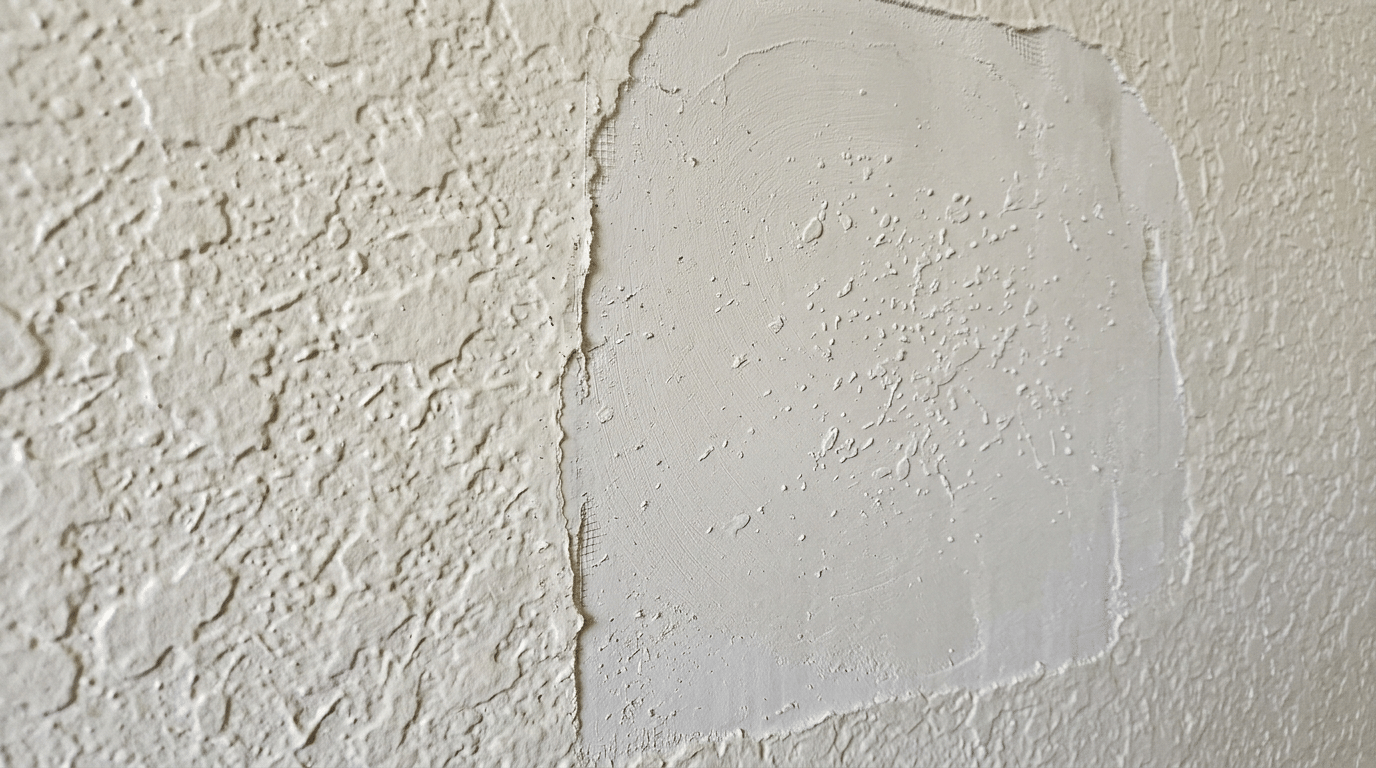
| Orange peel / knockdown | Adds roughly 1–2 per sq ft and requires skill to match |
| Popcorn ceiling | Harder to match; may require scraping a larger area, and older ceilings need asbestos testing |
| Moisture-resistant board | Higher material cost, usually needed in wet rooms |
| Fire-rated 5/8″ | Required in some assemblies (garages, shared walls); costs more |
| Painting | 2–6 per sq ft; matching old paint can mean painting the whole wall |
The finish is the hidden price driver. A patch that blends invisibly on a smooth, freshly painted wall can look terrible on a 15-year-old knockdown texture, and fixing that takes real skill.
What Are the Different Types of Drywall Repair and Their Costs?
| Type | Typical Use | Cost Range | Main Cost Driver |
| Nail pop / dent repair | Settling, impact | $75 – $200 | Minimum service charge |
| Hole repair (small to large) | Doorknobs, furniture, plumbing access | $100 – $1,000 | Hole size, backing needed |
| Crack and seam repair | Settling, humidity, framing movement | $100 – $400 | Re-taping, whether the crack recurs |
| Ceiling repair | Sagging, leaks, cracks | $250 – $1,300 | Overhead labor, texture |
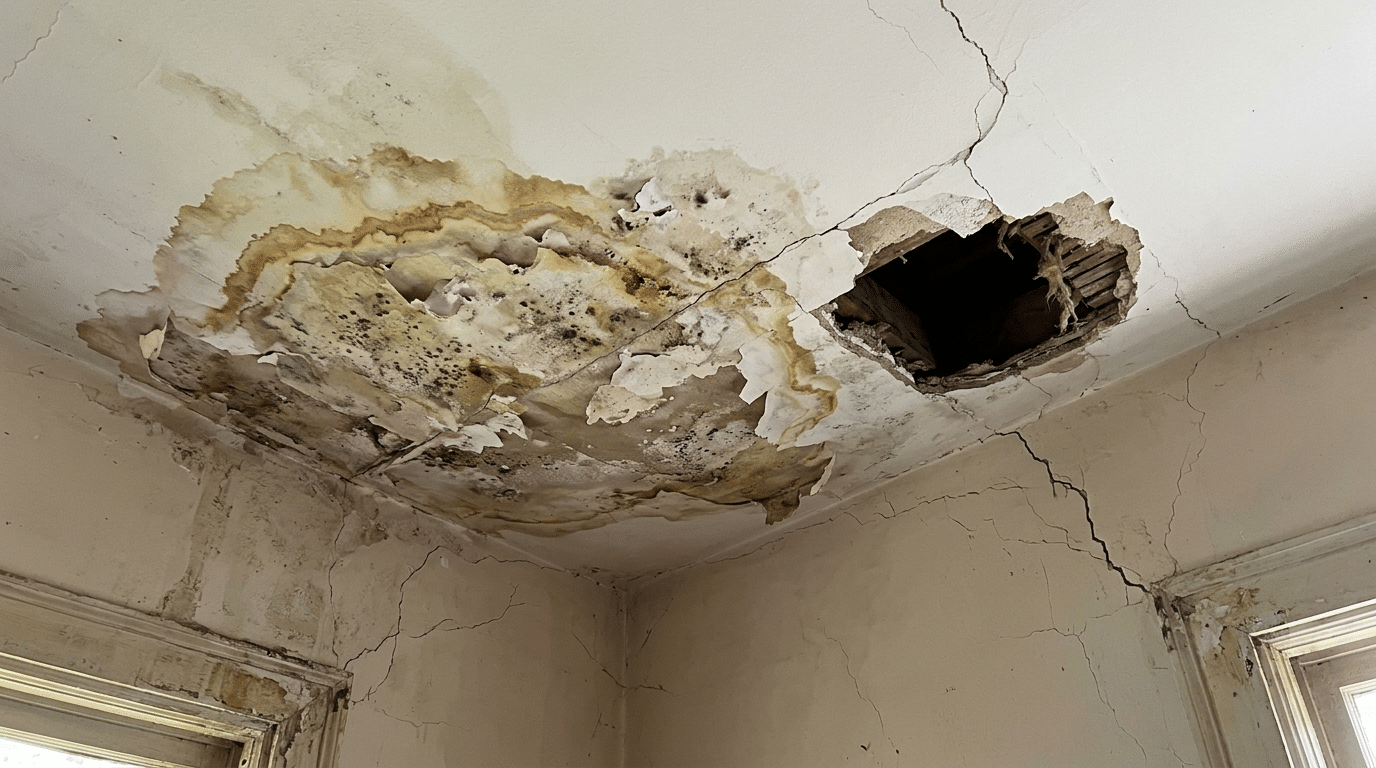
| Water damage repair | Leaks, floods | $500 – $2,500+ | Demo, drying, insulation, leak source |
| Mold-affected drywall | Persistent moisture | Often higher, plus testing | Containment and remediation |
| Full replacement | Extensive damage, renovation | $1,800 – $4,400 (room) | Area, finishing, paint |
Repair or replace? Repair when damage is localized and the board is structurally sound. Replace when the board is saturated, crumbling, moldy, or damaged across large areas. Patching over wet or moldy board is a mistake. For reference, EPA mold guidance suggests that areas smaller than roughly 10 square feet can often be handled by a homeowner, while larger affected areas call for professional help.
How Much Does Drywall Repair Cost in Different U.S. Regions?
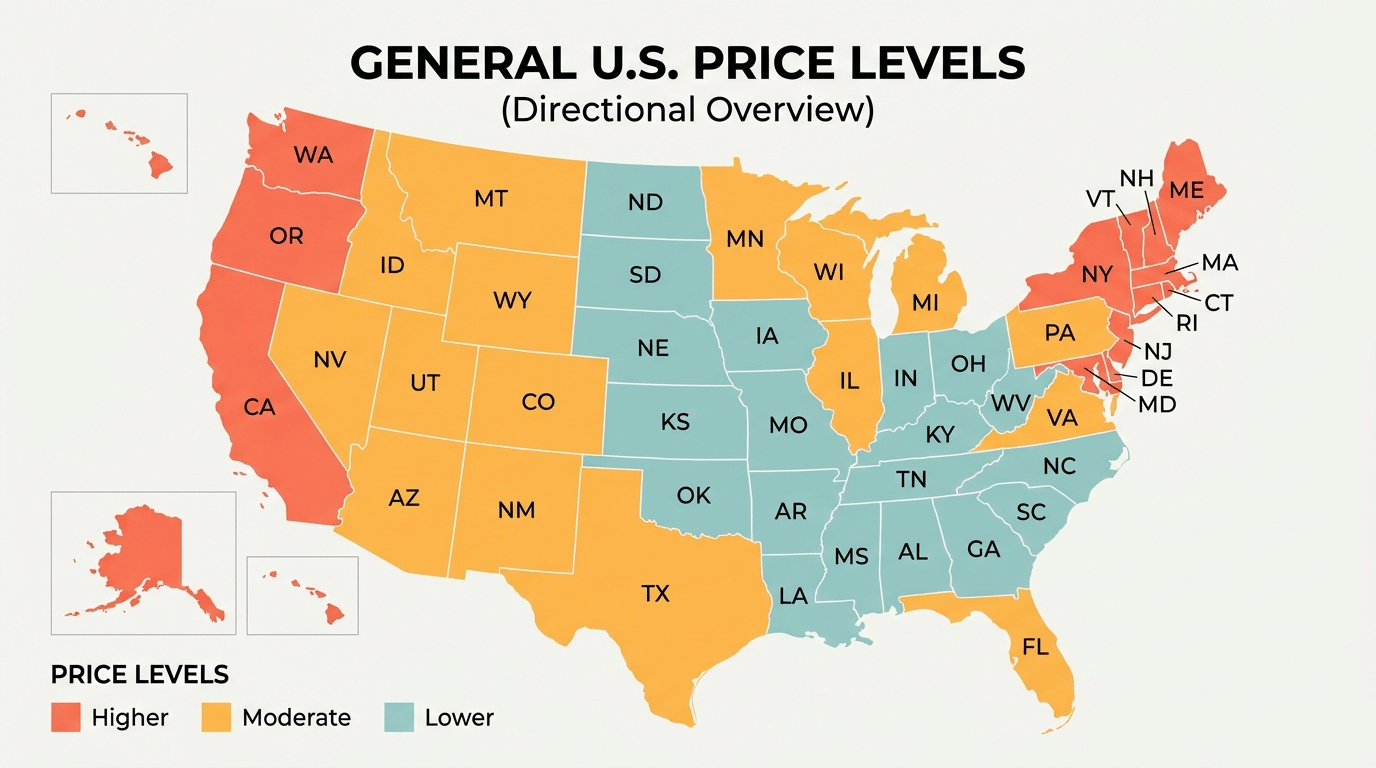
I don’t have reliable, apples-to-apples regional dollar figures for drywall repair, so I won’t invent them. What can be said is directional and tied to what drives local prices:
| Region | Relative Price Direction | Why |
| California, Pacific Northwest | Higher | Higher wages, stricter regulation, cost of living |
| Northeast / New York metro | Higher | Wages, access issues in older buildings, union labor in some markets |
| Mountain West | Moderate to higher | Labor shortages in fast-growing metros |
| Texas, Southeast | Moderate | Large labor pools, but demand spikes after storms |
| Florida | Moderate to higher | Hurricane-related demand surges |
| Midwest | Generally lower to moderate | Lower wage levels in many markets |
Wage differences are the biggest factor. BLS data shows drywall installer pay varies widely by state and metro, and the national 90th percentile is far above the 10th. Local demand also matters: after floods and storms, drywall contractors book up, and prices rise.
For a real local number, get three written quotes from contractors in your area.
What Are the Hidden Costs of Drywall Repair?
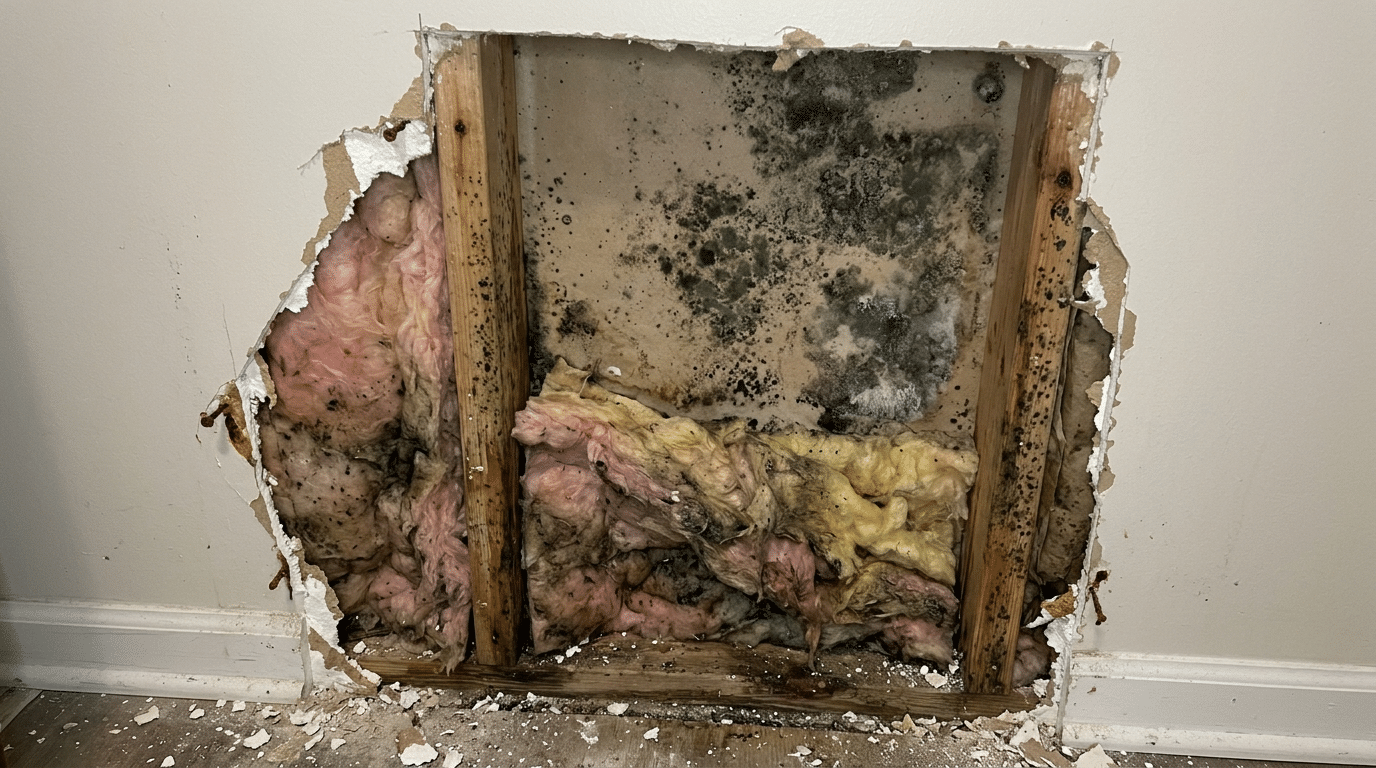
- Minimum service charge (100–200): Many contractors won’t come out for less, regardless of how small the fix is.
- Texture matching: can take as long as the patch itself.
- Painting: often excluded from “drywall repair” quotes. A patched spot usually needs the whole wall repainted for a consistent look.
- Leak or source repair: a plumber may be needed before drywall work begins. Plumbing and roofing fixes are separate trades.
- Electrical checks: if damage is near wiring, an electrician at roughly 50–100 per hour may need to inspect before closing the wall.
- Insulation replacement: wet insulation in ceilings or exterior walls often has to be replaced.
- Mold testing or remediation: extra cost if mold is found.
- Asbestos or lead concerns: older homes may require testing before disturbing ceiling texture or old paint.
- Disposal and cleanup: usually small, but not always included.
- Multiple visits: drying time between coats means more scheduling and sometimes a trip charge.
What Should a Professional Drywall Repair Estimate Include?
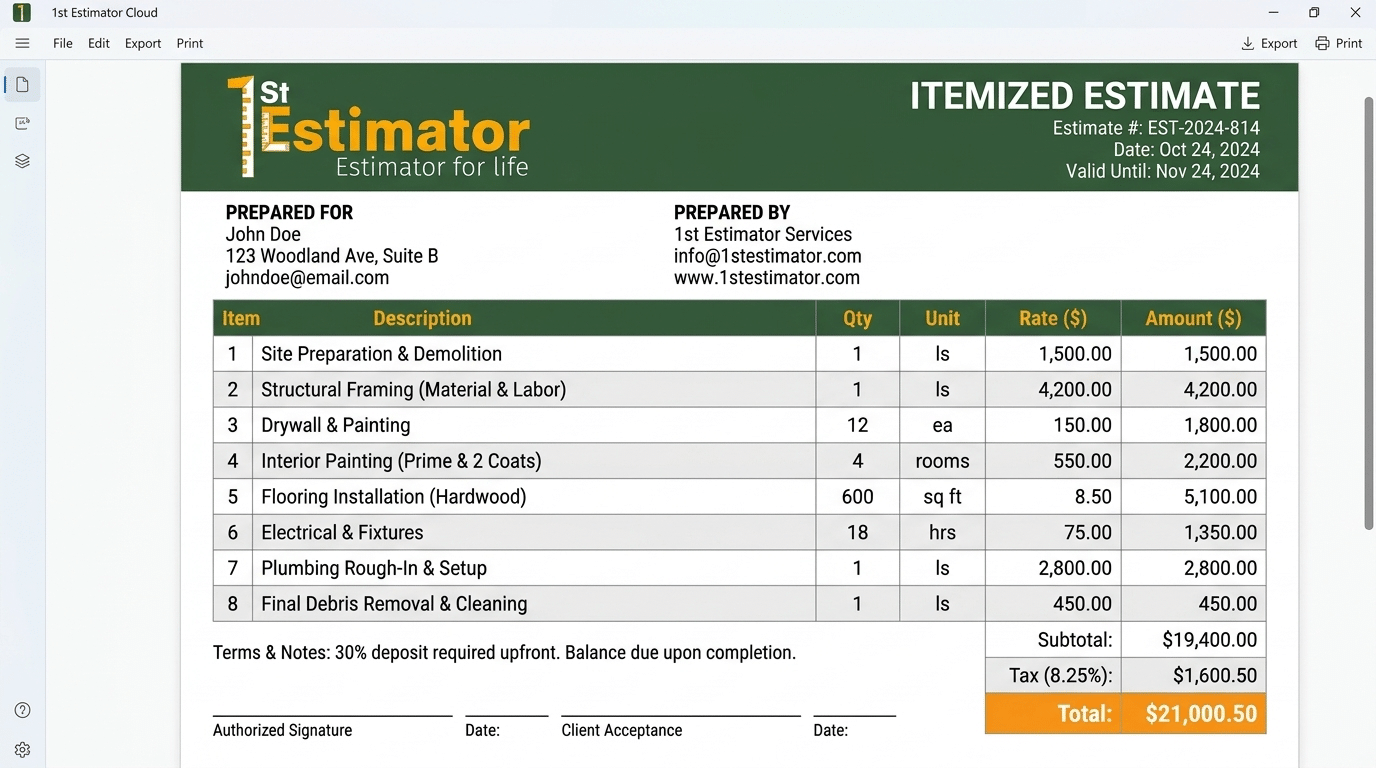
A decent estimate lists, at minimum:
- Location and size of each repair (in inches or square feet)
- Repair method (patch, section replacement, re-tape)
- Board type and thickness
- Labor hours and hourly rate, or a clear flat price per repair
- Materials
- Texture type and matching method
- Primer and paint, or a clear exclusion
- Demolition, disposal, and cleanup
- Dust and floor protection
- Access equipment, if needed
- Permits, if applicable
- Insulation, moisture, or mold-related scope
- Number of visits and expected timeline
- Warranty or touch-up policy
- Exclusions in writing
An itemized estimate beats a lump-sum number because you can see what you’re paying for, compare quotes line by line, and spot gaps before they become change orders.
How Do You Compare Two Drywall Repair Bids?
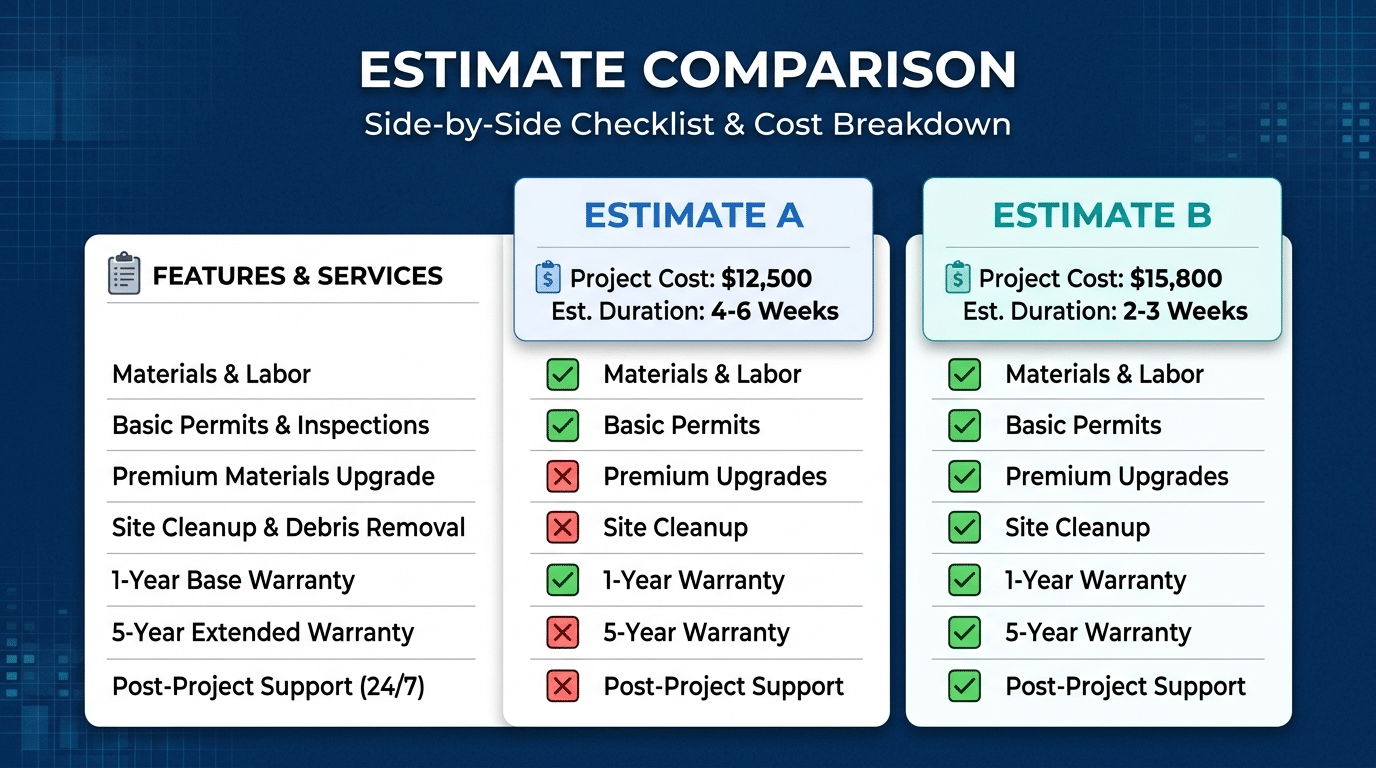
Two quotes for “the same” repair can differ by 50% or more. Before assuming one is a rip-off, check:
| Bid Item | What to Verify |
| Scope | Same repairs, same locations, same quantity? |
| Method | Patch vs. full-sheet replacement vs. skim coat |
| Materials | Standard vs. moisture-resistant vs. fire-rated board |
| Finishing | Texture match, primer, paint, or none |
| Labor | Hours, rate, number of visits |
| Prep and cleanup | Dust control, furniture, disposal |
| Source of damage | Is the leak fixed, or will it recur? |
| Exclusions | What’s not included? |
| Warranty | Who fixes cracks or nail pops if they return? |
| Schedule | Start date and drying time |
A low bid isn’t automatically bad, and a high bid isn’t automatically padded. A low number often means paint is excluded, texture is skipped, or the leak wasn’t addressed. A high number might include full-wall repainting, multiple visits, and a warranty.
When Is a Professional Estimate Worth It?
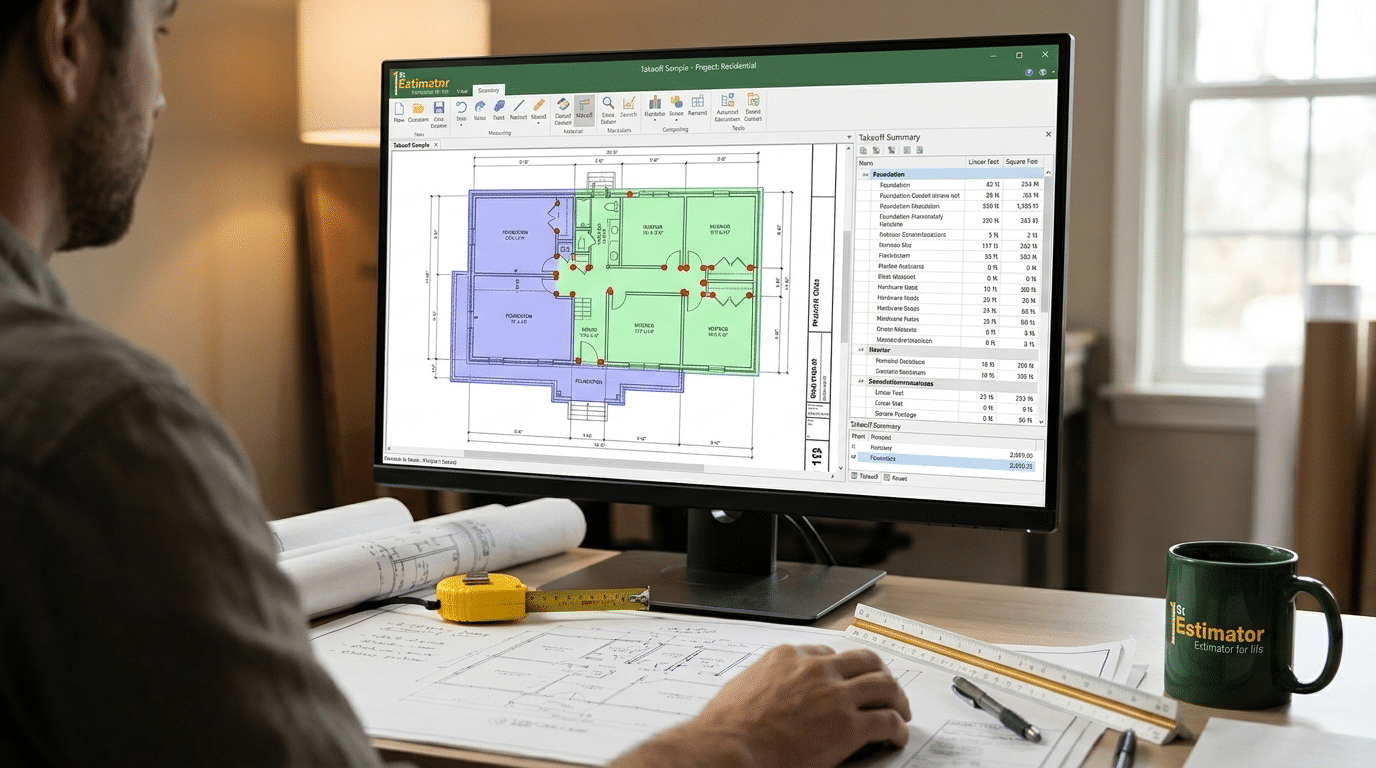
For a single small hole, a phone quote is fine. For multi-room repairs, post-flood restoration, rental turnovers, insurance claims, or a contractor bidding on a larger job, a detailed estimate with quantities, labor hours, and itemized costs avoids budget gaps.
A professional construction estimate helps contractors, builders, developers, subcontractors, and project owners understand material quantities, labor requirements, equipment, project scope, cost breakdown, bid preparation, potential cost gaps, and budget requirements.
Need a detailed estimate for your upcoming project? 1st Estimator provides professional construction estimating and quantity takeoff services for residential, commercial, and industrial projects.
DIY vs. Professional Drywall Repair
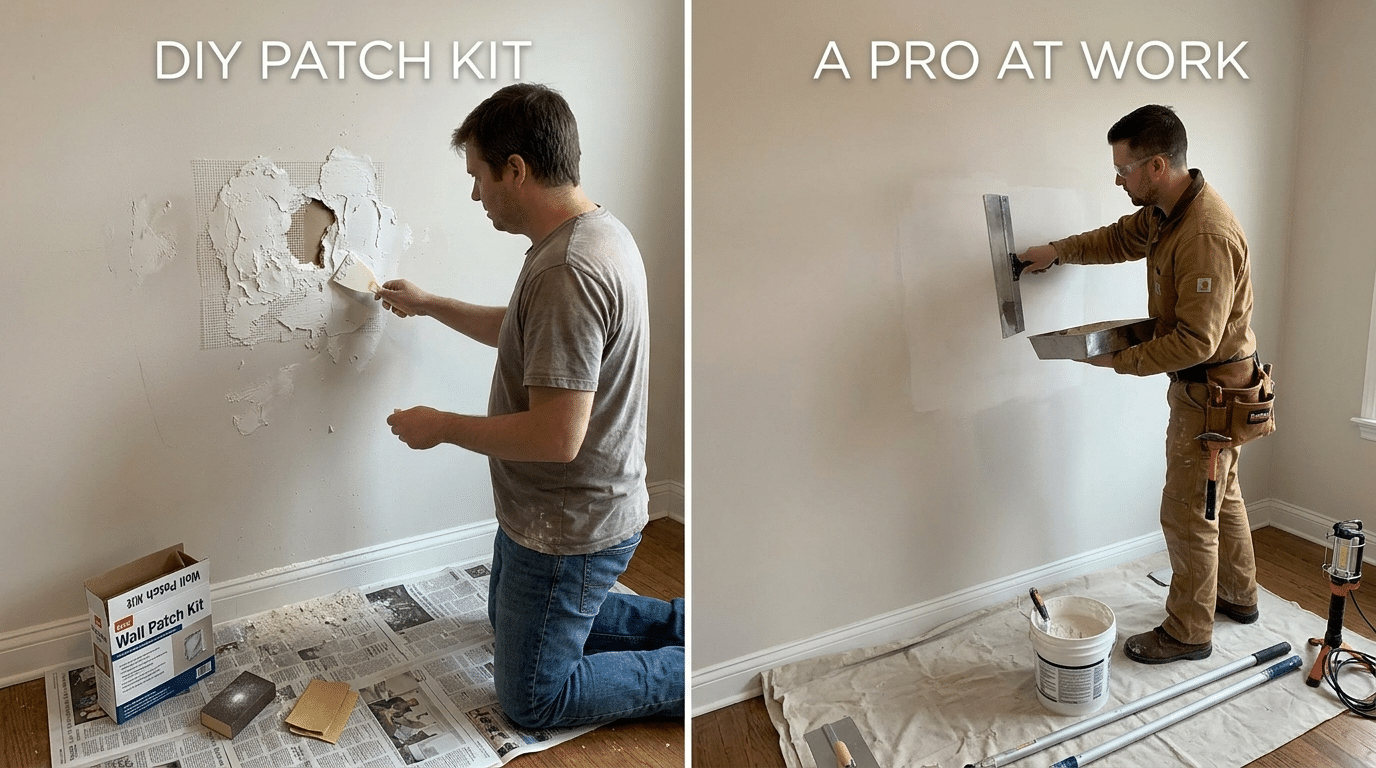
DIY works for small holes, nail pops, and dents. Material cost is typically 10–50 for a patch kit, compound, and sandpaper. The trade-off is time (multiple coats, drying) and finish quality, especially on textured walls.
Hire a pro for:
- Large holes (12″+)
- Ceiling repairs
- Water damage or mold
- Textured surfaces that need matching
- Anything near wiring or plumbing
A bad DIY patch can cost more to fix than hiring someone the first time.
Frequently Asked Questions
How much does drywall repair cost in 2026? Most jobs run $150 to $1,000, with a planning average of about 350–600. Simple nail pops can be under $100, and large water-damage jobs can exceed $2,500.
How much does it cost to repair a hole in drywall? Roughly 100–250 for a small hole, 200–500 for a medium hole, and 400–1,000 for a large hole over 12 inches.
How much does drywall repair cost per square foot? Small patches commonly price at an effective 50–80 per square foot because of minimum charges. Installing new drywall on larger areas runs roughly 2–4 per square foot, before painting.
How much does ceiling drywall repair cost? Typically 250–1,300. Ceiling work costs more than walls because of overhead labor, texture matching, and sometimes scaffolding.
How much does water-damaged drywall repair cost? About $500 to $2,500 or more, depending on how much board is affected, whether insulation needs replacing, and whether mold is present. This usually excludes fixing the leak itself.
How much do drywall contractors charge per hour? Generally 60–100 per hour, up to about $120 for specialists. That is far above the BLS median wage of roughly $28 per hour because it covers burden, overhead, insurance, and profit.
Is it cheaper to repair or replace drywall? Repair is cheaper for localized damage. Replacement makes more sense when board is saturated, moldy, or damaged across large areas.
Can I repair drywall myself? Small holes, dents, and nail pops are manageable DIY projects for about 10–50 in materials. Ceilings, water damage, and textured surfaces are usually better left to professionals.
Does homeowners insurance cover drywall repair? Often, if the damage comes from a sudden, covered event such as a burst pipe, subject to your deductible. Gradual leaks, neglect, and wear are commonly excluded. Check your own policy and talk to your insurer.
Why is drywall repair so expensive? Because the work is labor-intensive: multiple coats with drying time, sanding, texture matching, painting, and minimum service charges. The materials are cheap; the time and skill are what you pay for.
What hidden costs should I expect? Painting, texture matching, leak repair, insulation replacement, mold testing, asbestos or lead testing in older homes, and minimum trip charges.