The cost to paint a 1500 sq ft house interior in 2026 is typically $3,000 to $7,500, with a common average of about $4,500 for walls, ceilings and basic trim in a standard single-story or two-story home. That works out to roughly $2.00 to $5.00 per square foot of floor area. Painting the exterior of the same house usually lands in a similar range, around $3,500 to $8,000, depending on siding, height and condition.
The final number moves with surface condition, ceiling height, how many coats are needed, paint grade, trim and door counts, furniture handling, local labor rates, and what the contractor includes or excludes. A house with sound drywall and a simple color refresh can come in under $3,500. A house with heavy patching, dark-to-light color changes, tall ceilings and painted cabinets can pass $9,000.
This guide explains where the money goes, how to size up your own house, what typical bids include, and how to compare one painting estimate against another. All figures are 2026 national planning ranges for the United States, not guaranteed contractor quotes. Local pricing will differ.
How Much Does It Cost to Paint a 1,500 Sq Ft House in 2026?
For a typical interior repaint, expect $3,000 to $7,500 installed, meaning labor, paint, supplies and contractor overhead and profit. The average sits near $4,500.
That range assumes:
- 8-foot ceilings
- Drywall in fair condition (minor nail pops and small patches)
- Two coats of mid-grade acrylic latex on walls
- Ceilings painted in flat white
- Standard baseboards, window and door casings, and interior doors
- Empty or mostly cleared rooms, with light furniture moving
- No lead paint, wallpaper removal, or cabinet refinishing
Here is how the cost shifts with scope on a 1,500 sq ft home:
| Scope | Typical Specification | Estimated Cost |
| Walls only, same color refresh | Light prep, 1–2 coats, no ceilings or trim | 2,500–4,000 |
| Walls and ceilings | Two coats walls, one to two coats ceilings | 3,500–5,500 |
| Walls, ceilings, trim and doors | Full standard repaint, semi-gloss trim | 4,500–7,500 |
| Full repaint with heavy prep | Wall repairs, primer, color changes, tall ceilings | 6,500–10,000+ |
| Exterior only (1,500 sq ft living area) | Pressure wash, scrape, caulk, prime spots, two coats | 3,500–8,000 |
These ranges overlap on purpose. Two houses with the same floor area can have very different wall surface, trim footage and prep needs.
What Is the Painting Cost Per Square Foot?
Contractors price painting two ways, and it helps to know which one you are looking at.
Per square foot of floor area is the easiest way for homeowners to compare. National interior pricing usually looks like this:
| Level | Cost per Sq Ft of Floor Area | 1,500 Sq Ft House |
| Low-end | 1.50–2.00 | 2,250–3,000 |
| Typical | 2.00–5.00 | 3,000–7,500 |
| High-end | 5.00–7.00+ | 7,500–10,500+ |
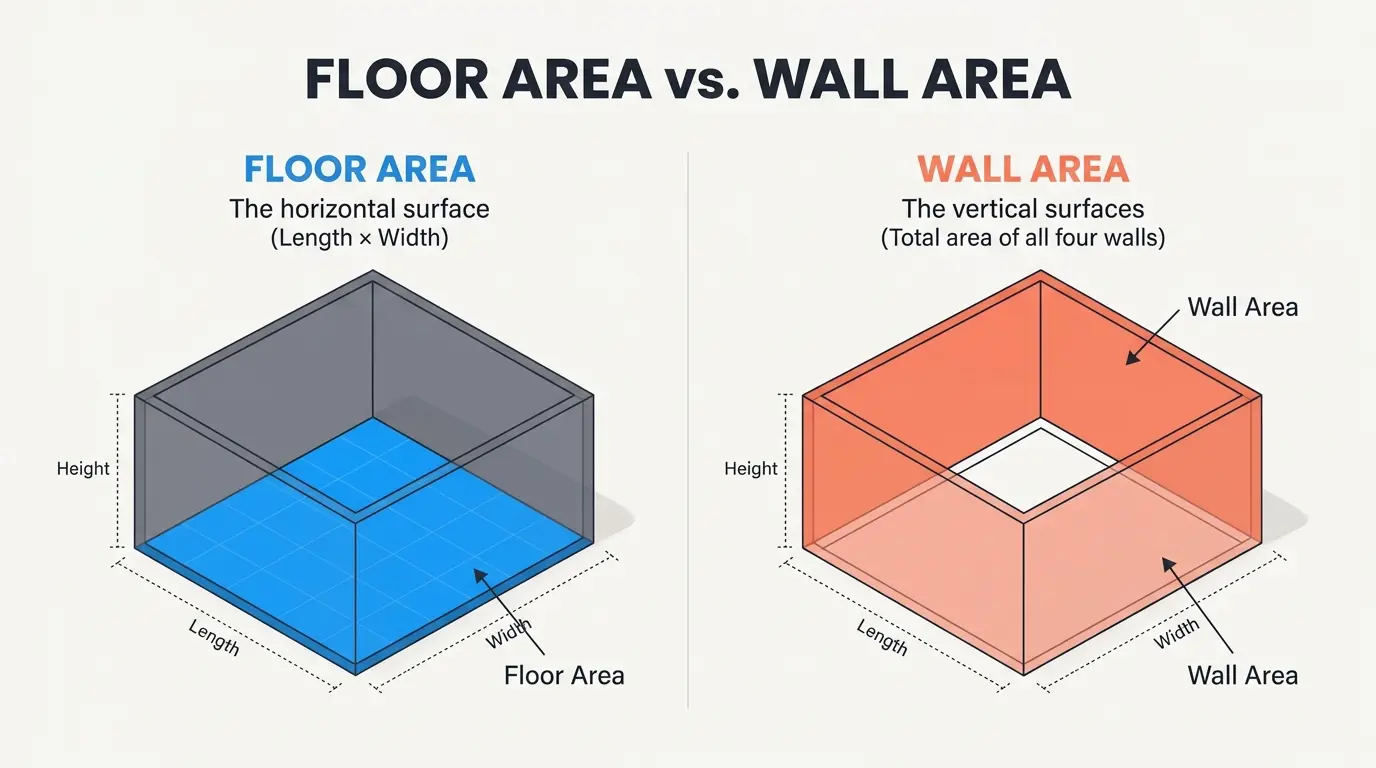
Per square foot of paintable wall area is how estimators actually think. Interior walls typically run about $0.80 to $2.00 per square foot of wall surface for a complete two-coat job including materials.
A quick way to estimate wall area from floor area: multiply floor area by about 2.5 to 3.2, depending on layout and ceiling height. For a 1,500 sq ft house with 8-foot ceilings and a normal room count, 2.5 is a fair starting point:
- 1,500 × 2.5 = 3,750 sq ft of wall surface
- 3,750 × $0.80 = $3,000
- 3,750 × $2.00 = $7,500
Same range, different route. If a bid is far outside it, ask why.
Painting labor cost per sq ft alone usually runs about $1.20 to $3.00 per square foot of floor area, or roughly $0.60 to $1.50 per square foot of wall surface. Labor is the largest single piece of nearly every painting estimate.
Why contractors quote differently: some price by floor area, some by wall area, some by room, and some by hours. Some include ceilings and trim in the per-foot number, and some add them as separate line items. That is why a per-square-foot figure only works when scope is written out.
What Is the Cost Breakdown for Painting a House Interior?
Painting is a labor-heavy trade. Equipment is minor, and site preparation is really surface preparation.
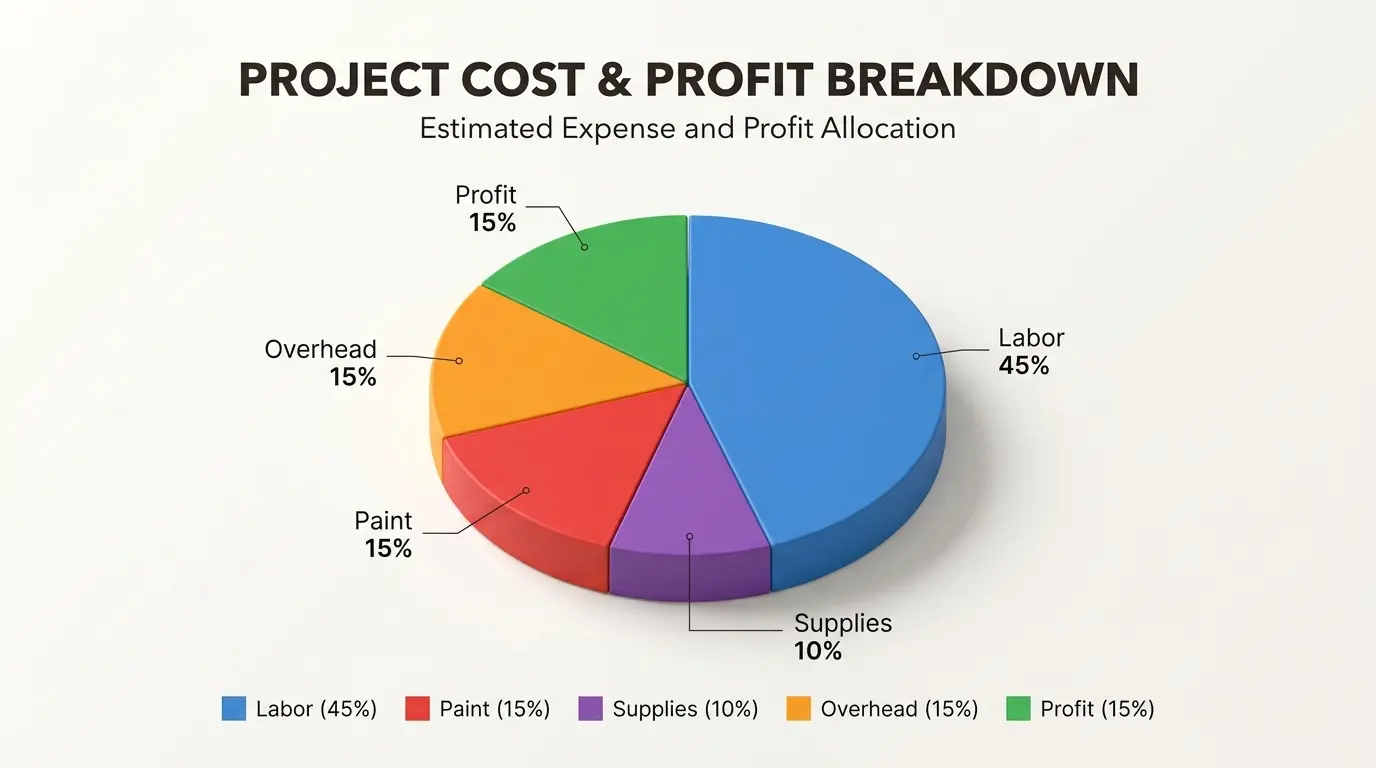
| Cost Component | Typical Share of Customer Price |
| Labor (wages plus payroll burden) | 48–55% |
| Paint and primer | 22–30% |
| Supplies, equipment and consumables | 3–8% |
| Overhead and profit | 15–22% |
Here is a worked example for a mid-range 1,500 sq ft interior repaint:
| Line | Calculation | Cost |
| Direct labor | 60 hours × $38/hour (wage plus burden) | $2,280 |
| Paint and primer | See material table below | $1,300 |
| Supplies and equipment | Tape, plastic, caulk, patch, rollers, drop cloths, ladders | $200 |
| Subtotal | $3,780 | |
| Overhead and profit | 20% of $3,780 | $756 |
| Total | $4,536 |
Rounded, that is the roughly $4,500 average quoted earlier. Labor works out to about 50% of the price, paint 29%, supplies and equipment 4%, and overhead and profit 17%.
Overhead and profit covers the things a customer does not see on a line item: liability insurance, workers’ compensation, vehicles, estimating time, scheduling, warranty callbacks, and the contractor’s margin. Established painting companies commonly build in 15% to 25%. A very low bid may be skipping some of it.
How Much Does Paint Cost for a 1,500 Sq Ft House?
As a rough guide, a gallon of paint covers 350 to 400 square feet per coat, though the label on your specific product is the final word. Porous or freshly patched surfaces soak up more.
Using the 3,750 sq ft wall estimate and 1,500 sq ft of ceilings:
| Item | Quantity Logic | Gallons | Typical Price per Gallon | Estimated Cost |
| Wall paint (2 coats) | 3,750 × 2 ÷ 375 | 20 | $40 | $800 |
| Ceiling paint (2 coats) | 1,500 × 2 ÷ 375 | 8 | $30 | $240 |
| Trim and door paint | Semi-gloss, 2 coats | 3 | $55 | $165 |
| Primer (patches, stains, spot priming) | Spot use | 3 | $30 | $90 |
| Total paint | 34 | $1,295 |
So plan on roughly 30 to 35 gallons for a typical whole-house repaint. Contractors often buy 5-gallon buckets for the main colors, which lowers the per-gallon price.
Paint grades, nationally, fall into rough bands:
| Grade | Typical Price per Gallon | Notes |
| Builder/economy | 20–35 | Thinner coverage, may need a third coat |
| Mid-grade | 35–55 | Best value for most repaints |
| Premium | 55–90+ | Better hide, washability and durability |
The paint is typically the smaller part of the budget. Moving from mid-grade to premium on this house might add $400 to $700 in materials, but it can save a coat in some color changes and last longer. Cheap paint that needs an extra coat costs more in labor than it saves in material.
Other material costs to expect: painter’s tape, plastic sheeting, drop cloths, caulk, spackle, sandpaper and roller covers. These typically total $150 to $300 on a house this size.
How Much Does Painting Labor Cost?
It helps to separate three numbers that often get mixed up:
- Worker wage. What the painter earns per hour. The U.S. Bureau of Labor Statistics publishes wage data for painters; typical hourly wages are in the low-to-mid $20s nationally, and experienced lead painters in high-cost metros earn more. Check the BLS Occupational Outlook Handbook for current figures.
- Payroll burden. Payroll taxes, workers’ compensation, and insurance typically add roughly 25% to 40% on top of the wage.
- Contractor billing rate. What the customer effectively pays per hour of labor after overhead and profit. In 2026 this commonly runs $45 to $75 per hour, depending on market.
So a painter earning $26 per hour might cost the contractor about $35 to $36 once burden is added, and might be billed at $50 or more. Do not compare a worker wage to a contractor’s billing rate.
Typical labor hours for a 1,500 sq ft interior:
| Task | Approximate Hours |
| Furniture moving, covering floors, masking | 4–8 |
| Patching, caulking, sanding | 6–16 |
| Priming (spot or full) | 3–10 |
| Painting walls (2 coats) | 20–32 |
| Painting ceilings | 6–10 |
| Painting trim and doors | 10–24 |
| Cleanup and touch-up | 3–6 |
| Total | 50–100+ |
A two-person crew commonly finishes a 1,500 sq ft home in 3 to 6 working days. Spraying walls can speed things up in empty houses, but masking and back-rolling take time, so spraying is not always cheaper.
What increases labor: high or vaulted ceilings, stair halls that need scaffolding, lots of trim, dark colors going to light, heavy patching, occupied rooms, small rooms with many cut-in edges, and detailed work like crown molding, wainscoting or built-ins.
Geography: labor rates vary widely by metro area and with demand. See the regional section below.
Does Surface Preparation Add to the Painting Cost?
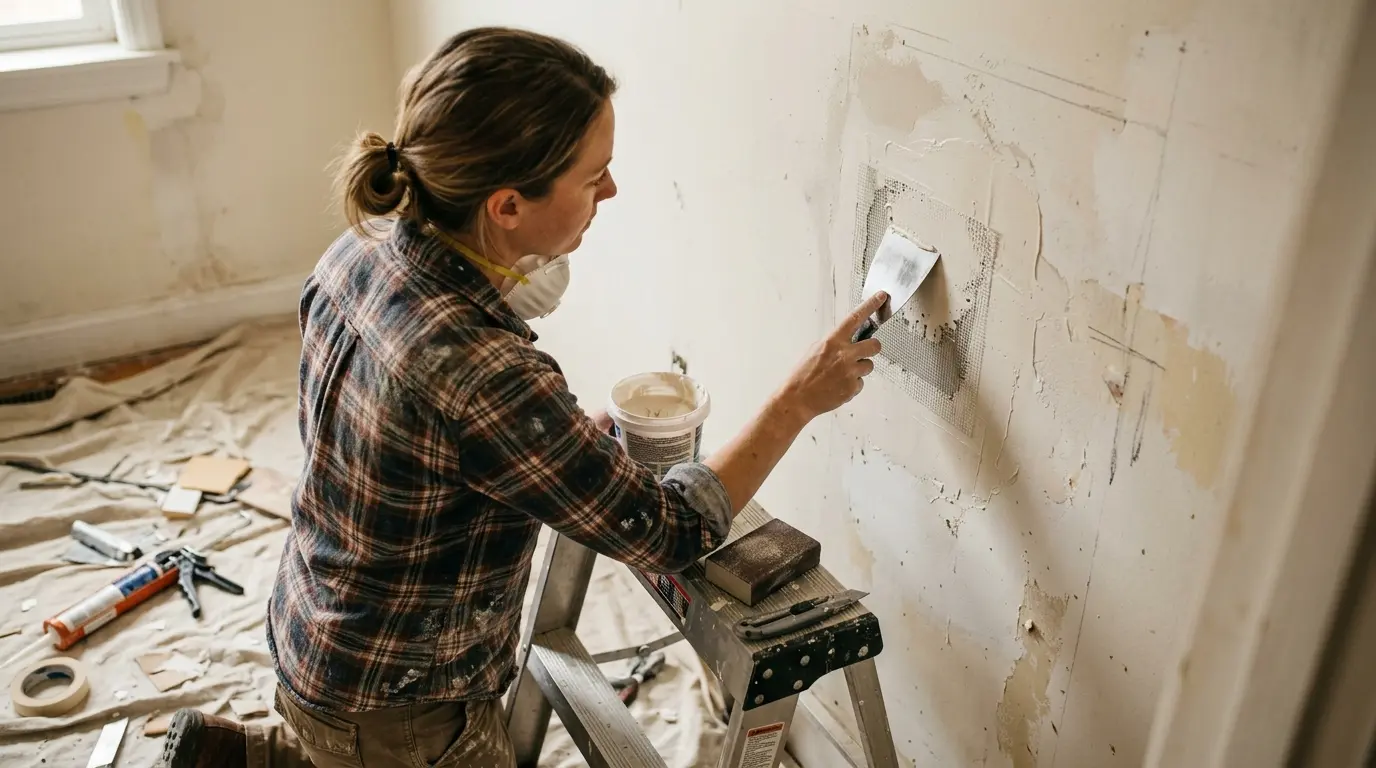
Yes. Prep is the “site preparation” of painting, and it is the main reason two houses of the same size can be priced thousands of dollars apart.
| Prep Item | Typical Added Cost |
| Minor patching (nail holes, small dings) | Often included in base bid |
| Moderate drywall repair | 200–800 across the house |
| Caulking trim gaps | 150–500 |
| Spot priming stains and patches | 100–400 |
| Full-house priming (new drywall or drastic color change) | 500–1,500 |
| Wallpaper removal | roughly 1–3 per sq ft of wall, plus repair |
| Popcorn ceiling removal | Usually a separate job; price it separately |
| Moving and protecting heavy furniture | 0–400 depending on who does it |
Prep also depends on what is under the existing paint. Glossy or oil-based finishes need sanding or a bonding primer. Water stains need stain-blocking primer. Smoke damage or heavy nicotine film needs cleaning and specialty primer.
If the home was built before 1978, lead paint becomes a real consideration. The EPA’s Renovation, Repair and Painting (RRP) rule requires certified firms and lead-safe work practices when paint is disturbed in most pre-1978 housing. Compliance can add several hundred to a couple thousand dollars to a job, depending on how much paint is disturbed. Ask any contractor you hire about it.
What Does It Cost to Paint a House by Size?
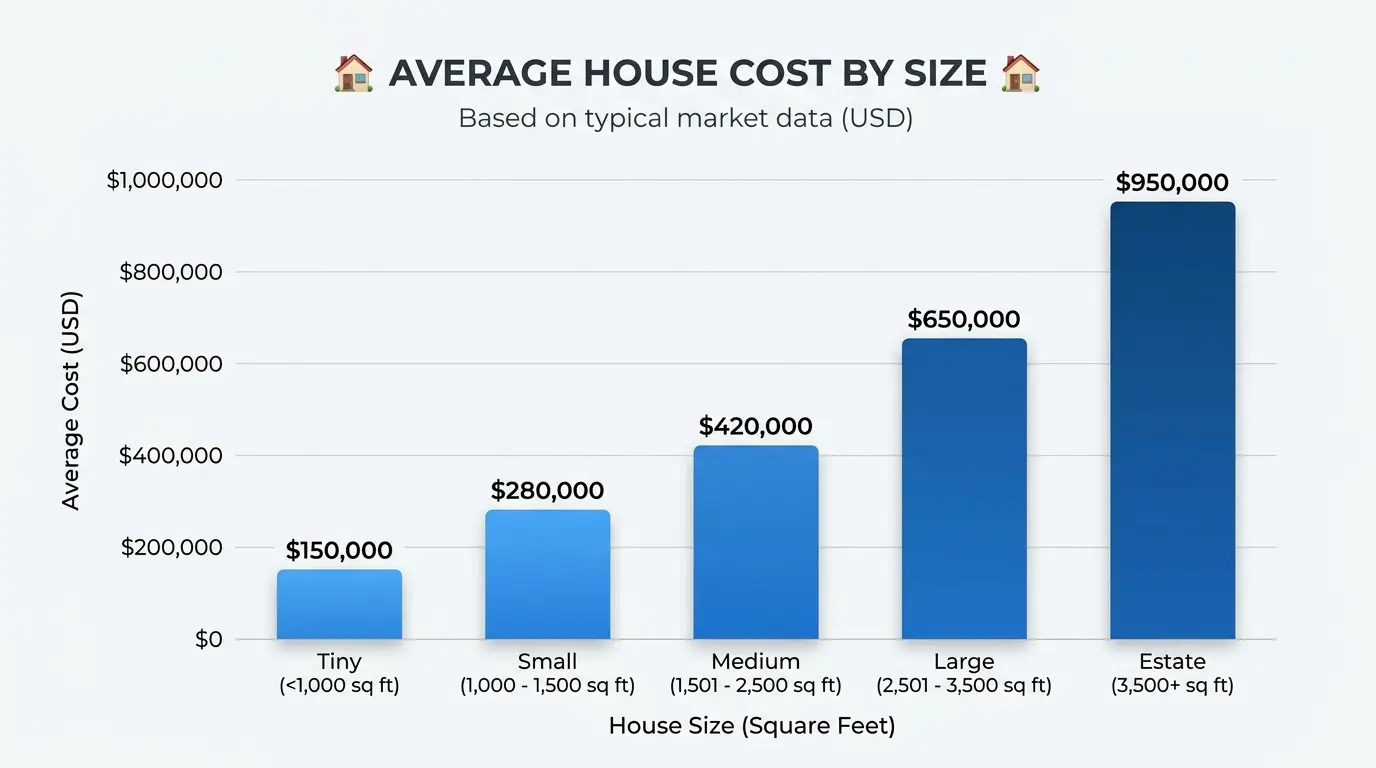
Painting does not scale in a perfectly straight line. Very small jobs carry minimum charges and fixed setup time. Larger jobs spread setup across more area, so the rate per square foot usually drifts down.
| House Size | Typical Use | Estimated Interior Cost |
| 1,000 sq ft | Small home, condo, townhouse | 2,500–5,500 |
| 1,500 sq ft | Typical 3-bedroom ranch or small two-story | 3,000–7,500 |
| 2,000 sq ft | Mid-size family home | 3,800–9,500 |
| 2,500 sq ft | Larger two-story | 4,500–11,500 |
| 3,000 sq ft | Large home, more trim and stair areas | 5,200–13,500 |
The implied rates are about $2.50 to $5.50 per square foot at 1,000 sq ft, falling to around $1.75 to $4.50 at 3,000 sq ft. Complexity still matters more than size alone. A 3,000 sq ft open-plan house with 8-foot ceilings can be cheaper to paint than a 1,800 sq ft house with 10-foot ceilings and lots of trim.
To estimate your own house, try this:
Example A: Simple repaint. 1,500 sq ft, walls and ceilings, minimal prep.
- Wall area: 1,500 × 2.5 = 3,750 sq ft × $1.00 = $3,750
- Ceilings: 1,500 sq ft × $0.60 = $900
- Total: about $4,650
Example B: Walls only, same color. 3,750 sq ft × $0.80 = $3,000
Example C: Full repaint with trim. Walls 3,750 × $1.40 = $5,250, ceilings 1,500 × $0.70 = $1,050, trim and doors $1,200 = $7,500
How Do Scope and Quality Affect the Cost?
Scope and specification decisions often swing the price more than the house size does.
| Variable | Effect on a 1,500 Sq Ft Job |
| Painting ceilings | Adds roughly 600–1,500 |
| Painting trim and baseboards | Adds roughly 700–2,000, depending on footage and profile |
| Interior doors | Roughly 60–150 per door, both sides, depending on type |
| Paint grade (mid to premium) | Adds roughly 400–700 in materials |
| Dark-to-light or bold color change | Adds a primer coat or an extra coat: 500–1,500 |
| 9–10 foot ceilings | Adds roughly 10–25% to labor |
| Vaulted ceilings or open stairwells | Scaffolding or specialty ladders; can add several hundred to over $1,000 |
| Kitchen cabinet painting | Often 3,000–7,000 as a separate scope |
| Accent walls, two-tone, decorative finishes | Adds cut-in time per room |
A “complete” quote should state what is included in each of these. If a contractor quotes $3,200 and does not mention ceilings or trim, they probably are not in the number.
Interior vs. Exterior: Which Costs More?
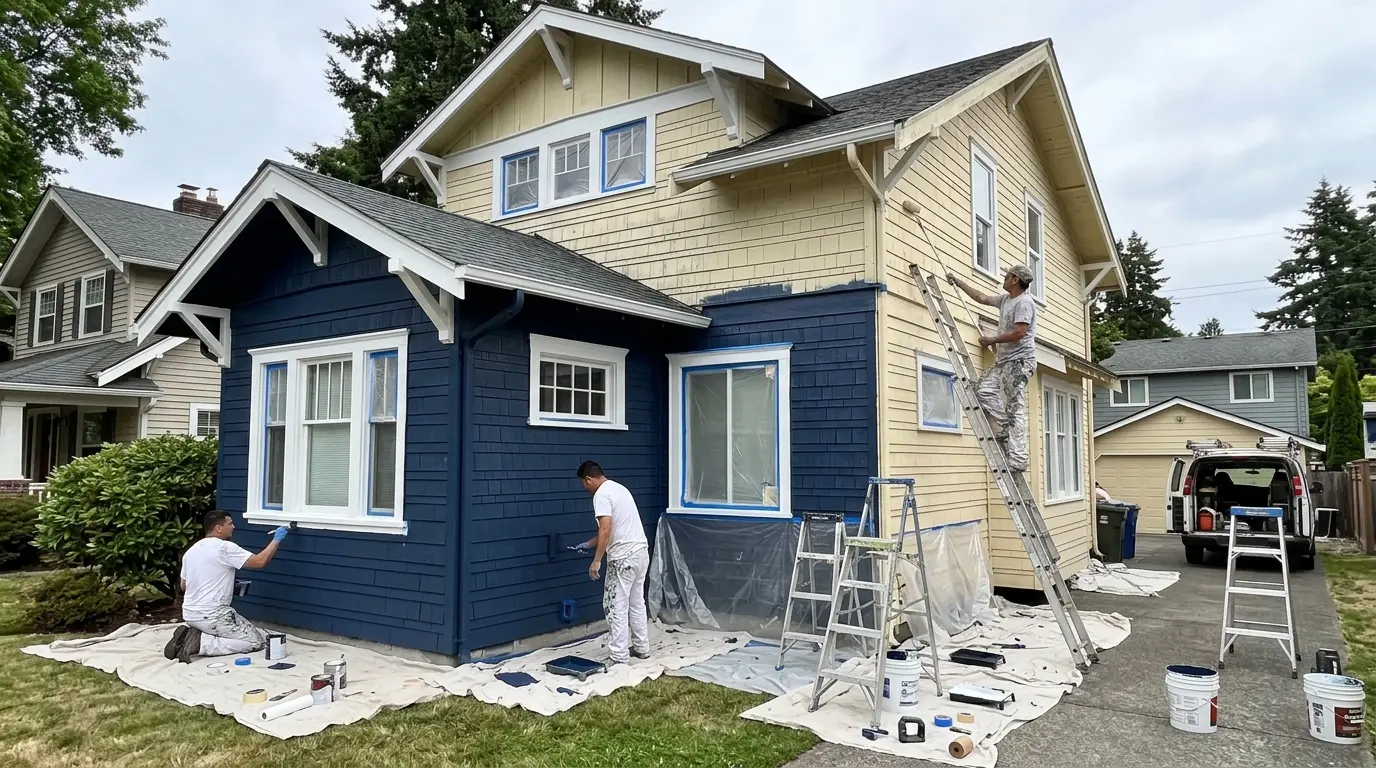
For a 1,500 sq ft home, interior and exterior painting often come out within a couple thousand dollars of each other, but the cost drivers are different.
| Type | Typical Cost | Main Cost Driver |
| Interior repaint (standard) | 3,000–7,500 | Prep, trim, ceilings |
| Exterior repaint (siding and trim) | 3,500–8,000 | Siding material, height, prep, weather exposure |
| Interior new construction | 2,500–5,500 | Bare drywall needs primer and finish; fewer repairs |
| Cabinet refinishing | 3,000–7,000 | Number of doors and drawers, finish system |
| Interior plus exterior together | 6,500–14,000 | Combined scope; sometimes a small discount |
Exterior jobs add pressure washing, scraping, caulking, ladder or lift work, and weather risk. Two-story exteriors cost noticeably more than single-story because of the extra equipment and slower work.
How Much Does Painting Cost in Different U.S. Regions?
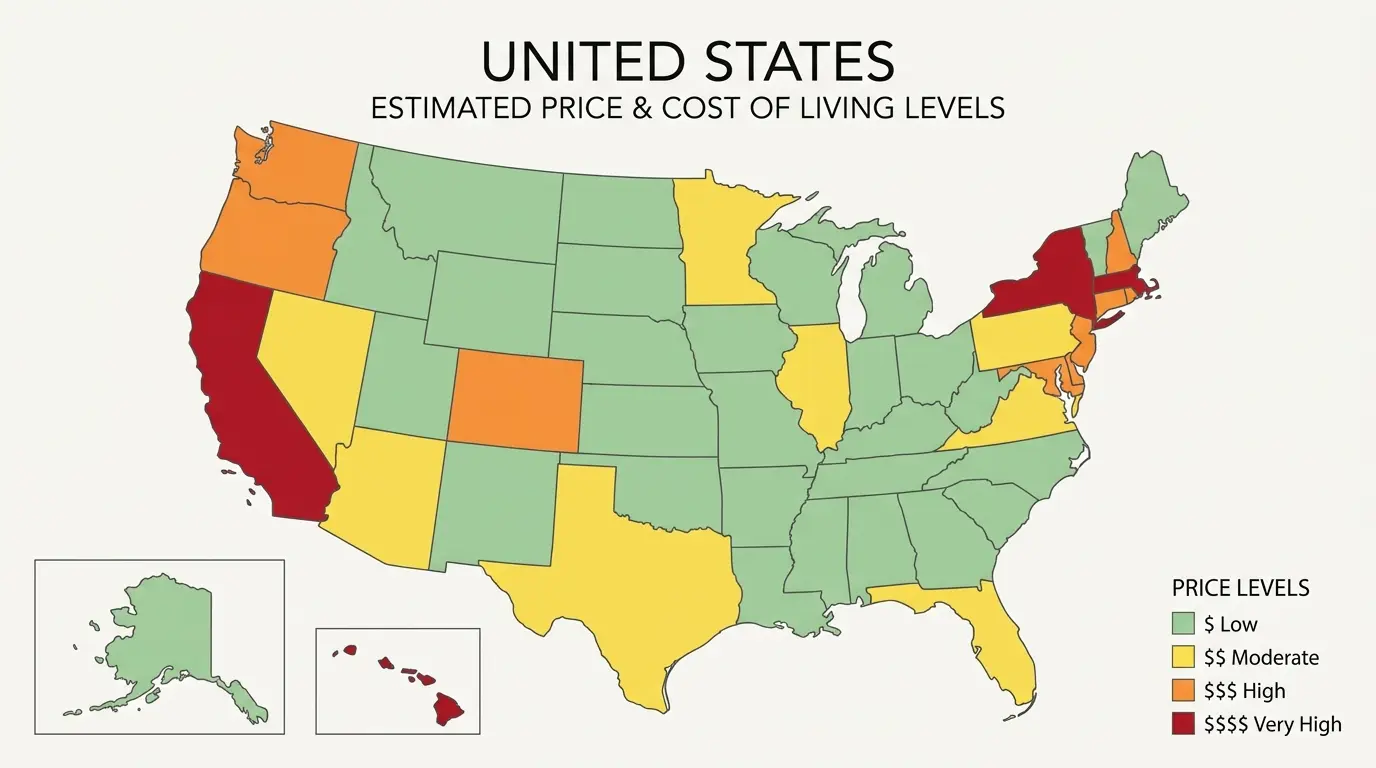
Painting is a local business. Labor is the largest cost component, so regional labor markets drive most of the variation. Reliable region-by-region price data for painting is limited, and the rankings below reflect general labor-cost patterns, not guaranteed numbers.
| Region | Relative Price Level | Main Reasons |
| California, New York metro, Northeast metros | Higher | High wages, high insurance and overhead costs, strong demand |
| Pacific Northwest, Mountain West (growth metros) | Moderately higher | Rising wages, population growth, tight labor |
| Florida, Texas | Near national average, wide variation by metro | Fast growth, seasonal demand, mix of rural and urban rates |
| Southeast (non-metro) | Lower to average | Lower wage and overhead levels |
| Midwest | Lower to average | Lower cost of living, steady but less peaked demand |
As a rule of thumb, high-cost metros commonly run 20% to 40% above the national average, and lower-cost markets often run 10% to 20% below. Applied to a $4,500 national average:
- High-cost metro: $4,500 × 1.30 = about $5,850
- Lower-cost market: $4,500 × 0.85 = about $3,825
Treat that as a sanity check, not a quote. Local bids always beat national averages. Seasonality matters too. In northern climates, exterior work is limited by weather, and in hot regions, contractors may be busier in spring and fall.
What Are the Hidden Costs of Painting a House?
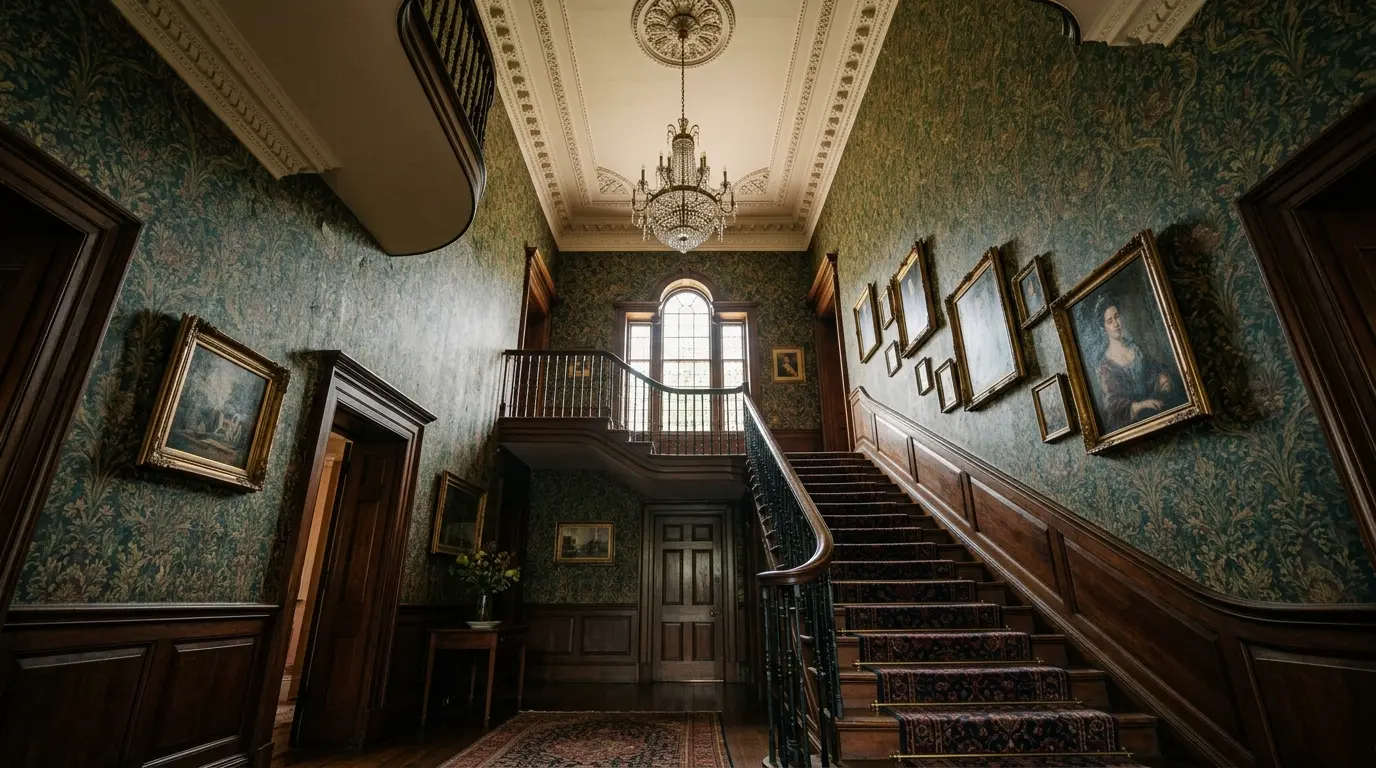
These are the items that turn a $4,500 expectation into a $6,000 invoice.
- Drywall repair beyond “minor.” Cracks, water damage and old anchors can add $200 to $800 or more.
- Extra coats for color changes. Red, deep blue or dark green going to white often needs primer plus two finish coats.
- Lead-safe work in pre-1978 homes. Certified contractors must follow RRP practices. Costs vary with scope.
- Wallpaper removal. Often a day or more of work, and walls usually need skim repair afterward.
- Furniture and decor. Some contractors charge extra to move heavy items. Others will not do it at all.
- High-access areas. Two-story foyers, stair walls and tall windows may need scaffolding or lift rental.
- Mold, mildew or stain remediation. Painting over moisture problems fails. The underlying cause must be fixed first.
- Minimum and mobilization charges. Small add-ons, like a single room, often cost more per square foot than the whole house.
- Premium or specialty paint. Low-VOC, stain-blocking, scrubbable, or zero-VOC lines cost more.
- Schedule constraints. Evening or weekend work, tight deadlines or phased painting in occupied homes can add labor.
- Change orders. Added rooms, color revisions after prep, or new scope usually come at a higher per-hour rate than the original bid.
Permits are rarely required for interior painting itself, but HOA rules, condo association requirements and historic district rules can affect exteriors.
Is It Cheaper to Paint a House Yourself?
Usually yes in cash cost, but not in time.
A DIY interior repaint of a 1,500 sq ft house typically costs about $1,300 to $2,000 in paint and supplies, plus $150 to $400 if you need to buy ladders, brushes, rollers, a paint sprayer or similar tools. That compares with $3,000 to $7,500 for a professional job.
The tradeoff is time. A homeowner doing 60 to 100 hours of painting, usually over several weekends, does not have a crew to share the work. Cut lines are slower, ceilings are tiring, and mistakes in prep show up in the finish. DIY makes the most sense for walls in good condition, simple color changes and homeowners who have painted before.
What Should a Professional Painting Estimate Include?
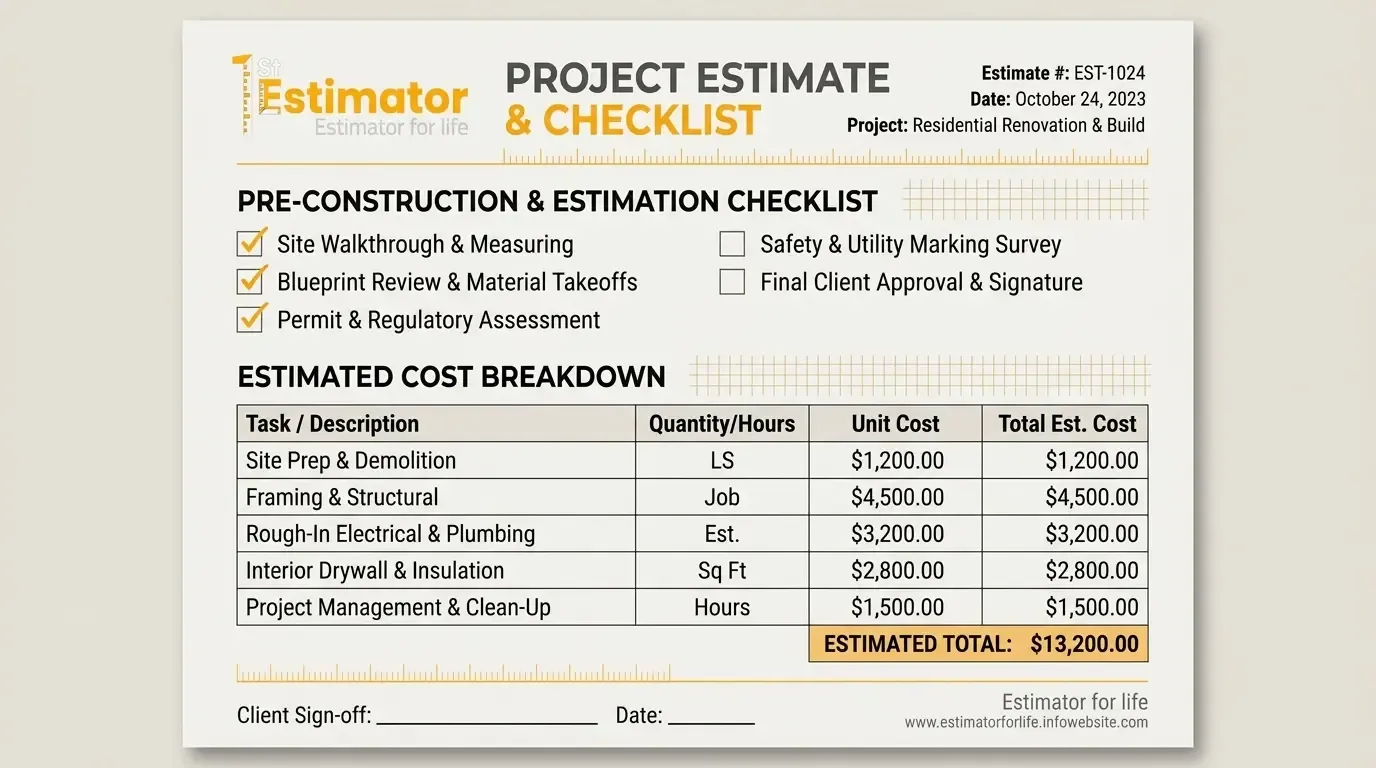
A solid residential painting estimate should be specific enough that a second contractor could price the same scope. Look for:
- Rooms and surfaces covered: each room listed, with walls, ceilings, trim, doors, closets
- Measurements or square footage: wall area, ceiling area, linear feet of trim
- Number of coats: and whether primer is included
- Paint brand, product line and sheen: for each surface type
- Prep work: patching, sanding, caulking, stain-blocking, wallpaper or old finish removal
- Labor: crew size and estimated days or hours
- Materials and supplies: paint quantities and consumables
- Equipment: scaffolding, lifts or sprayers where needed
- Furniture handling: who moves what
- Protection: floors, fixtures, adjacent areas
- Cleanup and disposal
- Permits or lead-safe requirements if applicable
- Insurance and licensing details
- Warranty terms
- Payment schedule, start date and completion date
- Exclusions: anything not covered, such as repairs beyond a stated threshold, cabinet painting, or wallpaper removal
An itemized estimate is more useful than a lump-sum number. It lets you compare apples to apples, adjust scope without guessing, and spot where a bid is thin.
How Do You Compare Two Painting Bids?
Two painters can look at the same house and quote $3,800 and $6,200. The gap usually has an explanation.
| Factor | What to Verify |
| Scope | Are ceilings, trim, doors, closets and garage included? |
| Prep | Is patching, caulking and sanding described, or just “light prep”? |
| Coats | Two coats of finish, or one coat over existing paint? |
| Product | Brand and line named? Same sheen and grade? |
| Labor | Crew size, days on site, and who is doing the work (employees or subs) |
| Overhead | Insurance, license and workers’ compensation proof |
| Exclusions | What triggers a change order? |
| Warranty | Duration and what it covers (peeling, blistering, workmanship) |
| Schedule | Start date, duration, how they handle weather or delays |
A low bid is not automatically a bargain, and a high bid is not automatically a ripoff. A low number may reflect a smaller scope, thinner paint, or less prep. A high number may reflect higher-grade product, better prep, or a stronger warranty. The right question is not “Who is cheapest?” but “What exactly is each price buying?”
A useful test: ask both contractors the same set of questions, including paint brand, number of coats, prep steps and whether ceilings and trim are included. If one answer is vague, that is information.
When Are Professional Estimating Services Useful?
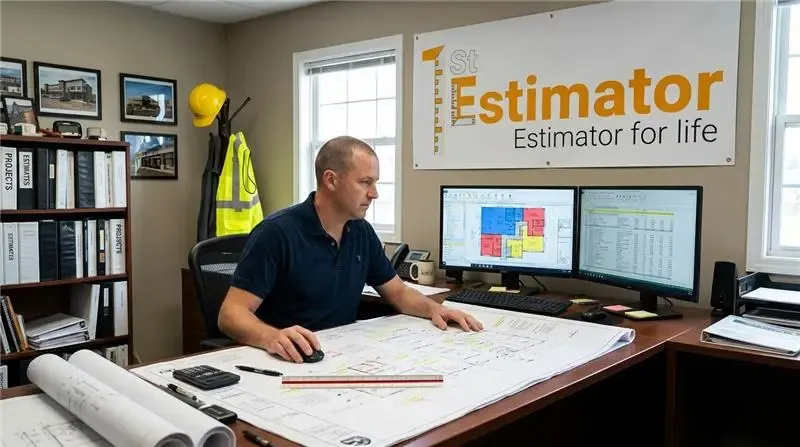
For a single-family repaint, a homeowner can get by with two or three local bids. For contractors, builders, developers, property managers and subcontractors pricing multiple units, phases or larger buildings, the details matter much more. A professional construction estimate can clarify:
- Wall, ceiling and trim quantities
- Labor hours and crew requirements
- Material and equipment needs
- Scope boundaries and exclusions
- Cost breakdown by trade and phase
- Gaps between bid numbers and actual budget
That matters when a finishing package covers dozens of units, a renovation involves many trades, or a bid deadline is tight. Accurate quantity takeoffs also help avoid underbidding and the change-order disputes that follow.
Need a detailed estimate for your upcoming project? 1st Estimator provides professional construction estimating and quantity takeoff services for residential, commercial and industrial projects.
Frequently Asked Questions
How much does it cost to paint a 1,500 sq ft house?
In 2026, the national range for an interior repaint is about $3,000 to $7,500, with an average near $4,500. Exterior painting for a similar-size home usually runs about $3,500 to $8,000. Your price depends on prep, ceilings, trim, paint grade and local labor rates.
How much does it cost to paint the interior of a 1,500 sq ft house?
Most homeowners pay between $3,000 and $7,500. Walls only can come in around $2,500 to $4,000. Walls, ceilings, trim and doors together typically land between $4,500 and $7,500.
What is the average painting cost per square foot?
Interior painting averages about $2.00 to $5.00 per square foot of floor area, or about $0.80 to $2.00 per square foot of wall surface, including labor and materials. Premium work and heavy prep push higher.
How much does labor cost to paint a 1,500 sq ft house?
Labor typically accounts for about half the total price, roughly $2,200 to $3,800 for a standard interior. Contractor billing rates commonly run $45 to $75 per hour, and a typical job takes 50 to 100 labor hours.
How much paint is needed for a 1,500 sq ft house?
About 30 to 35 gallons for a whole-house repaint: roughly 20 gallons for walls, 8 for ceilings, 3 for trim and doors, and a few for primer. One gallon typically covers 350 to 400 square feet per coat, so always check the product label.
What factors affect the cost of painting a 1,500 sq ft house?
The biggest are surface condition and prep, ceiling height, number of coats, whether ceilings and trim are included, paint quality, color changes, house layout, and local labor rates. Lead-safe work in older homes can also add cost.
Does the number of rooms affect the cost of painting a house?
Yes. More rooms mean more edges to cut in, more trim and doors, and more masking. A 1,500 sq ft house with eight small rooms often costs more than one with three large open spaces, even though the floor area is identical.
How much does surface preparation add to the painting cost?
Light prep is usually built into the bid. Moderate repairs often add $200 to $800, caulking $150 to $500, and full priming $500 to $1,500. Wallpaper removal or major repairs can add more.
Is it cheaper to paint a house yourself or hire a professional?
DIY costs about $1,300 to $2,000 in materials plus tools, versus $3,000 to $7,500 for a professional. The savings are real, but you are trading 60 to 100 hours of labor and giving up a contractor’s warranty and experience.
How do contractors calculate a house painting estimate?
They measure wall, ceiling and trim areas, apply production rates (square feet per hour), calculate paint quantities from coverage rates, add supplies and equipment, then apply labor burden, overhead and profit. Some shortcut this with a per-square-foot or per-room rate.
How can I get an accurate painting cost estimate?
Get two or three written bids from licensed and insured painters, with the same scope described for each. Walk the house with each contractor, point out problem areas, and ask for itemized line items. Online calculators are a starting point, not a quote.
What is included in a professional house painting estimate?
A complete estimate lists rooms and surfaces, measurements, prep work, number of coats, paint brand and sheen, labor, supplies and equipment, cleanup, schedule, warranty, payment terms and exclusions.