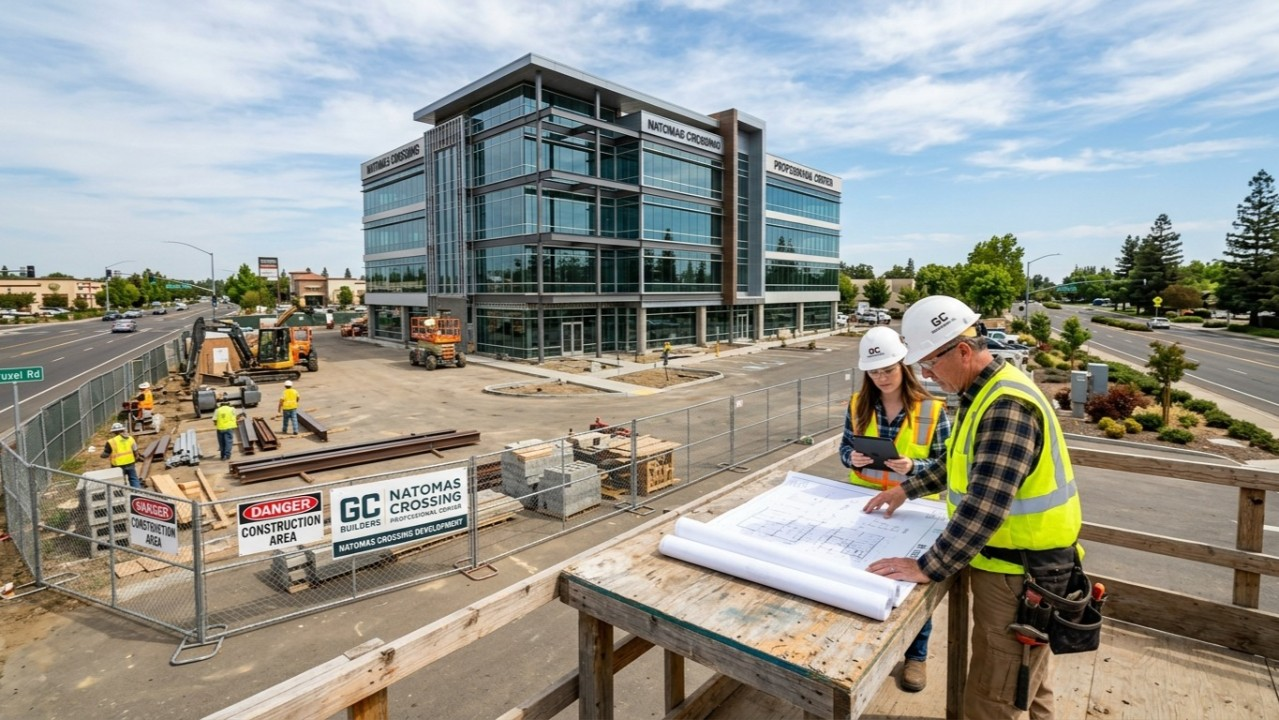
It’s worth distinguishing commercial inspections from the residential inspections most people are more familiar with:Picture this: a general contractor closes out a commercial tenant improvement project in Natomas Crossing, the final walkthrough looks clean, and the keys get handed over. Six months later, the HVAC system fails during a heat wave, water starts showing up behind a wall that was never opened during construction, and now everyone the GC, the subs, the owner, even the architect is pointing fingers over who missed what.
This scenario plays out more often than the construction industry likes to admit, and it’s almost always preventable. A qualified commercial building inspector, a Natomas Crossing professional, isn’t a bureaucratic checkbox tacked onto the end of a project. It’s risk management for the general contractor’s reputation, the subcontractor’s liability exposure, the developer’s investment, and the architect’s design integrity.
This article breaks down exactly why commercial inspections matter, who they protect, and what to look for when choosing the right inspector for a property in Natomas Crossing.
What Does a Commercial Building Inspector in Natomas Crossing Actually Do?

For an audience of GCs, subs, developers, and architects, the basics of “what an inspector does” aren’t news, but it’s worth being precise about scope, because commercial inspections cover far more ground than most people assume.
A thorough commercial building inspection typically evaluates:
- Structural systems: foundation, framing, load-bearing elements
- Roofing: membrane condition, drainage, flashing, signs of leaks
- Electrical systems: panel capacity, code compliance, wiring condition
- HVAC systems: age, efficiency, maintenance history, capacity for occupancy load
- Plumbing: supply lines, drainage, water heaters, backflow prevention
- Building envelope: windows, doors, insulation, moisture intrusion points
- ADA and accessibility compliance: a frequent pain point for commercial properties
- Life safety systems: fire suppression, alarms, egress pathways
Reputable inspectors follow standardized frameworks, most notably the International Standards of Practice for Inspecting Commercial Properties (ComSOP), which sets a consistent bar for scope and reporting quality across the industry.
Commercial vs. Residential Inspections: Not the Same Job

It’s worth distinguishing commercial inspections from the residential inspections most people are more familiar with:

Commercial properties simply carry more complexity, more code layers, and more parties with a financial stake in the outcome, which is exactly why the inspection itself carries more weight.
Why Natomas Crossing Specifically? Local Context Matters

Not all commercial inspections are created equal, and location-specific knowledge makes a real difference in Natomas Crossing.
A few local factors worth flagging:
- Flood zone history: Natomas has a well-documented history of flood risk designations tied to levee certification status. An inspector unfamiliar with this history may overlook moisture-related risk factors that a locally experienced inspector would flag immediately.
- Mixed-use and retail growth: Natomas Crossing has seen ongoing commercial and mixed-use development, meaning many properties are relatively young, but “newer” doesn’t mean “defect-free.” Fast-tracked builds sometimes carry more latent issues than older, more thoroughly vetted structures.
- City of Sacramento permitting nuances: Local jurisdiction familiarity matters. An inspector who regularly works with the City of Sacramento’s building department understands common friction points in permitting and final sign-off, and can flag issues before they become approval delays.
- Seasonal and climate factors: Central Valley heat cycles put real strain on aging HVAC systems and roofing membranes, both of which show up disproportionately often in inspection findings.
Hiring an inspector who understands these local variables rather than a generic, out-of-area inspector means the findings are contextualized correctly from day one.
Why Commercial Building Inspector Natomas Crossing Matters to General Contractors
For GCs, a solid inspection isn’t just about passing final sign-off. It’s a tool that protects the business on multiple fronts.
Key benefits for general contractors:
- Fewer callbacks: Catching issues before substantial completion means fewer post-handoff service calls eating into margin.
- Reduced liability exposure: A documented, third-party inspection report creates a paper trail that protects the GC if disputes arise later.
- Smoother permit closeout: Clean inspection findings speed up the path to final approval instead of triggering re-inspection cycles.
- Stronger client relationships: Owners and developers remember contractors who deliver clean, well-documented projects, and that reputation drives repeat business and referrals.
In a competitive Sacramento-area market, the GCs who build inspection quality into their process rather than treating it as an afterthought are the ones who win repeat contracts.
Why It Matters to Subcontractors & Trade Specialists
Subs carry unique risk in commercial projects: when something goes wrong, it’s often unclear which trade is responsible until someone investigates.
How a third-party commercial inspection protects subcontractors:
- Independent validation of trade-specific work. An inspector’s documentation of electrical, plumbing, or HVAC conditions at a point in time creates an objective record protecting subs from being blamed for issues that predate or postdate their scope of work.
- Fewer finger-pointing disputes. When an issue surfaces post-construction, a detailed inspection report with photos and timestamps often resolves the “who’s responsible” question quickly, without expensive investigation or litigation.
- Protection against scope creep disputes. Clear documentation of existing conditions helps prevent owners from attributing pre-existing issues to recent trade work.
For trade specialists working on multiple commercial jobs simultaneously, this kind of documentation is a quiet but powerful form of professional insurance.
Why It Matters to Real Estate Developers & Owner-Builders
For developers and owner-builders, a commercial inspection is fundamentally a due diligence tool and one that directly affects the bottom line.
Critical reasons developers should never skip this step:
- Avoiding costly post-acquisition surprises. Discovering a failing roof or outdated electrical panel after closing on a property is far more expensive than negotiating around it beforehand.
- Protecting ROI and financing terms. Many lenders require a commercial inspection report as part of underwriting, and issues found can directly affect financing terms or purchase price negotiations.
- Feeding accurate cost estimates. Inspection findings translate directly into renovation and repair budgets. This is where inspection and estimating work hand-in-hand; a detailed inspection report gives estimators (like the team at 1st Estimator) the accurate baseline data needed to build a realistic project budget, rather than guessing at scope after the fact.
- Strengthening negotiating position. A documented list of deficiencies is leverage, whether that means a lower purchase price, seller-funded repairs, or a renegotiated closing timeline.
For owner-builders in particular, who may not have a large internal team of construction experts, a qualified inspector often serves as the single most valuable second opinion throughout the transaction.
Why It Matters to Architects & Designers
Architects and designers benefit from commercial inspections in ways that aren’t always obvious upfront but become critical once a renovation or adaptive reuse project is underway.
- Validating design assumptions against as-built conditions. Existing drawings don’t always reflect what’s actually in the building. An inspection surfaces discrepancies before they become expensive design revisions mid-project.
- Avoiding late-stage redesigns. Discovering a structural or mechanical constraint after design development is finalized can blow up both budget and timeline. Early inspection findings prevent this.
- Supporting code-compliant design decisions. Understanding existing ADA, fire safety, and structural conditions helps architects design renovations that integrate cleanly with what’s already there, rather than fighting against unknown constraints.
In short: the earlier an architect has accurate as-built data, the fewer surprises show up in construction documents.
Common Issues Found by Commercial Building Inspectors in Natomas Crossing
While every property is different, certain issues show up again and again in commercial inspection reports across the Sacramento area:
- Roofing and moisture intrusion: often the single most expensive category of deferred maintenance
- Electrical code violations: outdated panels, insufficient capacity for current occupancy loads
- Aging or inefficient HVAC systems: particularly relevant given Central Valley summer heat
- ADA compliance gaps: parking, signage, restroom access, and pathway clearances
- Structural or foundation concerns: sometimes tied to regional soil conditions and settling
- Plumbing deficiencies: backflow prevention issues, aging supply lines, drainage problems
- Fire and life safety gaps: outdated suppression systems, blocked egress, non-functioning alarms.
Knowing these common failure points in advance helps every stakeholder GC, sub, developer, architect anticipate likely findings and plan accordingly rather than being blindsided.
The Cost of Skipping a Commercial Inspection
Some property owners and developers try to save money by skipping or minimizing the inspection process. In nearly every case, this backfires.
What skipping an inspection typically costs down the line:
- Failed or delayed deals. Buyers who discover major issues post-close often walk away from future deals with the same seller or pursue legal remedies.
- Budget overruns. Unbudgeted repairs discovered mid-renovation routinely blow past original project budgets by significant margins.
- Legal and liability exposure. Undocumented pre-existing conditions create ambiguity that often escalates into disputes between owners, contractors, and subs.
- Safety risks. Life safety and structural issues left unaddressed put occupants and the property owner’s liability exposure directly at risk.
Compared to the overall cost of a commercial construction or acquisition project, a professional inspection is a relatively small expense. Treating it as optional is, in almost every case, a false economy.
How to Choose the Right Commercial Building Inspector in Natomas Crossing
Not every inspector is equipped to handle commercial-scale properties. Here’s what to look for:
- Relevant certifications: Look for credentials such as NACHI (National Association of Certified Home Inspectors) or CCPIA (Commercial and Construction Property Inspectors Association), along with a valid California contractor’s license where applicable.
- Commercial-specific experience: Ask directly how many commercial properties, not just residential homes, the inspector has evaluated.
- Local market knowledge: An inspector familiar with Natomas Crossing and the broader Sacramento permitting environment will catch context that an out-of-area inspector might miss.
- Report quality: Request a sample report. Strong reports include high-resolution photos, clear narrative descriptions, and organized findings, not vague checklists.
- No conflict of interest: Under California law, inspectors should not be positioned to bid on the repair work they identify. This keeps findings objective and trustworthy.
A few good questions to ask before hiring:
- What standards or framework do you inspect to (e.g., ComSOP)?
- Can I see a sample commercial inspection report?
- How familiar are you with Natomas Crossing and City of Sacramento permitting?
- What’s your typical turnaround time for a full report?
- Do you carry E&O insurance?
How 1st Estimator Supports This Process

Inspection findings are only half the equation; turning those findings into an accurate, actionable budget is where projects often get derailed. That’s the gap 1st Estimator helps close.
Once a commercial building inspection identifies deficiencies a failing roof, outdated electrical, HVAC nearing the end of its life the next question is always the same: what will it actually cost to fix, and how does that affect the project budget?
1st Estimator works alongside GCs, developers, and owner-builders to translate inspection findings into precise, defensible cost estimates so decisions about repairs, negotiations, or renovation scope are grounded in real numbers, not guesswork.
Key Takeaways
A commercial building inspector Natomas Crossing engagement isn’t overhead; it’s a strategic checkpoint that protects every party involved in a commercial project:
- GCs avoid callbacks and liability exposure.
- Subs get objective documentation protecting them from unfair blame.
- Developers and owner-builders protect ROI and avoid post-acquisition surprises.
- Architects get accurate as-built data before finalizing design decisions.
Whether you’re closing out a build, acquiring a property, or planning a renovation in Natomas Crossing, a qualified commercial inspection paired with accurate cost estimating is one of the smartest investments you can make in a project’s outcome.
Frequently Asked Questions
- What does a commercial building inspection in Natomas Crossing cost? Costs vary based on property size, age, and complexity, but generally scale with square footage and the number of systems being evaluated (HVAC, electrical, plumbing, structural, etc.).
- How long does a commercial inspection take? Most commercial inspections take anywhere from a few hours to a full day on-site, with a full narrative report typically delivered within 24–72 hours afterward.
- Is a commercial inspection required by lenders? In many cases, yes, lenders financing commercial property purchases often require a property condition assessment as part of the underwriting process.
- What’s the difference between residential and commercial inspections? Commercial inspections cover more complex systems, larger-scale code requirements (including ADA and fire/life safety), and typically produce more detailed, narrative-style reports compared to standard residential checklists.
- How does 1st Estimator help after a commercial building inspection? 1st Estimator takes the findings from a commercial building inspection report and translates them into precise, actionable construction and repair budgets. Once an inspector identifies property deficiencies, 1st Estimator supports the project by:
- Providing defensible cost estimates for necessary repairs
- Giving developers accurate data for purchase price negotiations
- Helping general contractors build realistic project budgets without guesswork